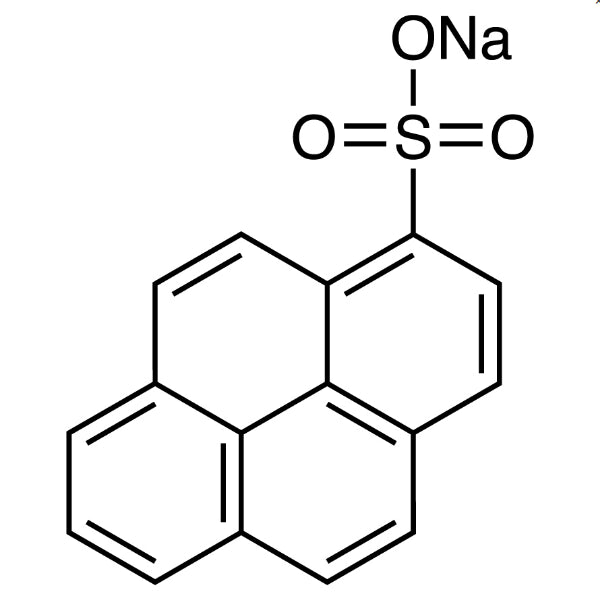
Sodium Pyrene-1-sulfonate is a chemical compound widely used in biochemical and laboratory research applications. It belongs to the category of fluorescent probes and serves as a fluorescent label, enabling the detection and analysis of specific molecules with high sensitivity. In laboratory settings, this compound is essential for visualizing molecular changes during chemical reactions or biological processes. Its fluorescent properties make it a valuable tool for researchers aiming to track molecular interactions in real-time. The compound is particularly useful in studies that require precise and reliable fluorescence-based detection methods.
One of the key features that make Sodium Pyrene-1-sulfonate a preferred choice is its strong fluorescence and chemical stability. These properties ensure consistent performance across various experimental conditions, making it suitable for a wide range of applications. Additionally, its good solubility in organic solvents simplifies its use in different experimental setups. The compound’s ability to bind to specific molecules enhances the accuracy of analytical results, making it a reliable reagent for molecular studies. Its versatility and reliability contribute to its popularity among researchers.
In Indonesian laboratories, Sodium Pyrene-1-sulfonate is commonly used in molecular biology and chemical research. It plays a crucial role in experiments involving fluorescence-based assays, molecular tracking, and biochemical analysis. Researchers in Indonesia rely on this compound for its ability to provide clear and accurate fluorescence signals, supporting both basic and applied research in the life sciences. Its widespread use highlights its importance in the scientific community within the country.
- Fluorescence-Based Assays: Sodium Pyrene-1-sulfonate is ideal for fluorescence-based assays due to its strong and stable fluorescent properties, allowing for precise detection of target molecules in complex samples.
- Molecular Tracking Studies: This compound is used to track molecular interactions and movements in real-time, making it valuable for studying dynamic biological processes.
- Biochemical Analysis: Its ability to bind to specific molecules enhances the accuracy of biochemical analysis, supporting research in enzyme activity and protein interactions.
- Fluorescent Labeling Techniques: Sodium Pyrene-1-sulfonate is commonly used as a fluorescent label in labeling techniques to visualize and monitor molecular structures and functions.
- Cellular Imaging: It is employed in cellular imaging to provide clear fluorescent signals, aiding in the study of cellular processes and molecular behavior.
| Brand | TCI |
|---|---|
| CAS number | 59323-54-5 |
| Molecular formula | — |
| Purity | — |
| Category | Life Science > Biochemicals and Reagents > Fluorescent Probes, Fluorescent Labels, Fluorescent Stains |
| Pack sizes | Available in various quantities as per supplier specifications |
| Physical form | Solid (as per standard product description) |
| Storage | Store in a cool, dry place away from light |
Sodium Pyrene-1-sulfonate should be stored in a cool, dry place away from direct light to maintain its stability and fluorescence properties. It is recommended to keep the compound in a sealed container to prevent moisture absorption and contamination. When handling, it is important to use appropriate personal protective equipment such as gloves and safety goggles to ensure safety. The compound should be stored in a well-ventilated area to minimize exposure to airborne particles. Proper storage conditions help preserve its effectiveness for use in laboratory experiments. Always follow standard laboratory safety protocols when working with fluorescent compounds to ensure safe and efficient research practices.
—
Produk Terkait
-
1-[(2-Propynyloxy)methyl]pyrene TCI P2226
Regular price From Rp 5.485.200,00Regular price -
4,4',4'',4'''-(Pyrene-1,3,6,8-tetrayl)tetrabenzaldehyde TCI T4089
Regular price Rp 5.062.050,00Regular price -
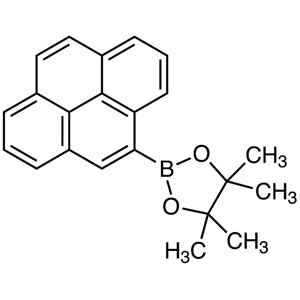
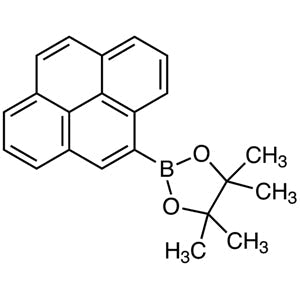
4-(4,4,5,5-Tetramethyl-1,3,2-dioxaborolan-2-yl)pyrene TCI T3857
Regular price Rp 4.399.500,00Regular price -
Benzo[e]pyrene TCI B0086
Regular price From Rp 2.650.200,00Regular price -
Pyrene-4,5-dione TCI P3004
Regular price Rp 4.771.200,00Regular price -
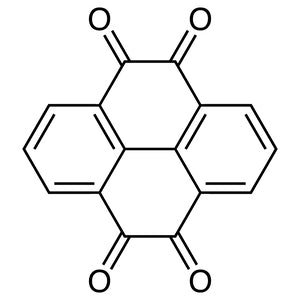
Pyrene-4,5,9,10-tetraone TCI P2947
Regular price Rp 4.743.900,00Regular price -
Pyrene(purifiedbysublimation) TCI P2072
Regular price Rp 1.220.100,00Regular price -
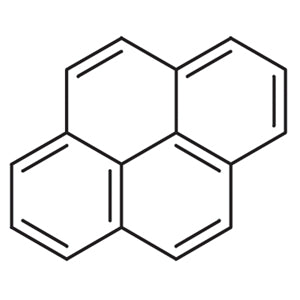
Pyrene TCI P1104
Regular price From Rp 1.035.300,00Regular price
![1115084-83-7 1-[(2-Propynyloxy)methyl]pyrene - AMI Scientific](http://amiscientific.com/cdn/shop/files/TCI2510P2226.jpg?v=1767135944&width=533)

![192-97-2 Benzo[e]pyrene - AMI Scientific](http://amiscientific.com/cdn/shop/files/TCI2510B0086.jpg?v=1767085163&width=533)