![TCI P2226 1115084-83-7 1-[(2-Propynyloxy)methyl]pyrene](http://amiscientific.com/cdn/shop/files/TCI2510P2226_bf1d3e70-c4ac-430c-94a7-45a2914ffce1.jpg?v=1792653426&width=1946)
![1115084-83-7 1-[(2-Propynyloxy)methyl]pyrene - AMI Scientific](http://amiscientific.com/cdn/shop/files/TCI2510P2226.jpg?v=1767135944&width=1946)
![TCI P2226 1115084-83-7 1-[(2-Propynyloxy)methyl]pyrene](http://amiscientific.com/cdn/shop/files/TCI2510P2226_bf1d3e70-c4ac-430c-94a7-45a2914ffce1.jpg?v=1792653426&width=1445)
![1115084-83-7 1-[(2-Propynyloxy)methyl]pyrene - AMI Scientific](http://amiscientific.com/cdn/shop/files/TCI2510P2226.jpg?v=1767135944&width=1445)
1-[(2-Propynyloxy)methyl]pyrene is a chemical compound widely used in organic synthesis applications within laboratory settings. This building block plays a crucial role in the creation of complex molecular structures, enabling researchers to develop new compounds with specific functional groups. Its versatility makes it an essential tool for chemists working on a variety of synthetic pathways, particularly those requiring precise molecular manipulation. As a non-heterocyclic building block, it offers a stable foundation for further chemical modifications and reactions.
The compound's unique molecular structure provides several advantages that make it a preferred choice in laboratory environments. It exhibits stability under various reaction conditions, allowing for consistent results in experimental processes. Its ability to interact effectively with a range of reagents enhances its utility in synthetic chemistry. Additionally, its solid form facilitates easy handling and storage, making it practical for both research and educational purposes. These characteristics contribute to its reliability and efficiency in laboratory workflows.
In Indonesian laboratories, 1-[(2-Propynyloxy)methyl]pyrene is commonly used by researchers and students for organic chemistry projects. Its role in constructing specific molecular frameworks is vital for both academic and industrial applications. The compound's availability and performance make it a reliable choice for those engaged in chemical synthesis, supporting innovation and learning in the field of chemistry.
Advantages (TCI brochure)
- Blue fluorescence (pyrene class)
- Can be labeled to azido groups via click reaction
TCI brochures (PDF)
- Fluorescent Labeling Dyes 2025-11-18 · p. 4
- Click Chemistry 2026-09-08 · p. 13
Related TCI products
- Organic synthesis projects benefit from this compound's ability to form stable molecular frameworks, allowing for the creation of complex structures with high precision.
- It is ideal for research involving molecular modification due to its reactivity and compatibility with various synthetic methods.
- Educational institutions use it to teach students about building blocks in organic chemistry, enhancing practical learning experiences.
- It supports the development of new materials in industrial research by providing a reliable starting point for chemical transformations.
- Its solid form makes it suitable for storage and handling in laboratory environments, ensuring consistent availability for experiments.
From the TCI brochure
- Labeling of azido groups via click reaction
| Brand | TCI |
|---|---|
| CAS number | 1115084-83-7 |
| Molecular formula | — |
| Purity | — |
| Category | Chemistry > Building Blocks > Non-Heterocyclic Building Blocks |
| Pack sizes | — |
| Physical form | Solid |
| Storage | Store in a cool, dry place away from light and moisture |
Data from the TCI brochure
| λex,max | 342 nm |
|---|---|
| λem,max | 386 nm |
Source: TCI brochure LL039 (2025-11-18)
This compound should be stored in a cool, dry place, away from direct light and moisture to maintain its stability and integrity. It is recommended to use airtight containers to prevent exposure to air and humidity, which could affect its performance. As a solid material, it is easy to handle but should be stored in a secure location to avoid accidental spills or contamination. Laboratory personnel should always follow standard safety protocols when working with chemical substances, ensuring proper ventilation and protective equipment are used. Regular inspection of storage conditions is advised to ensure optimal preservation of the compound for use in research and educational settings.
—
Product Categories
- Building BlocksNon-Heterocyclic Building BlocksOxygen Compounds [Non-Heterocyclic Building Blocks]
- Chemical BiologyConjugation Chemistry/Click ChemistryFluorophore Azides/Alkynes [Conjugation Chemistry/Click Chemistry]
- Chemical BiologyConjugation Chemistry/Click ChemistryTerminal Alkynes [Conjugation Chemistry/Click Chemistry]
- Biochemicals and ReagentsFluorescent Probes, Fluorescent Labels, Fluorescent StainsFluorescent Labels
- Pharmaceutical Development and Drug Discovery ResearchConjugation Chemistry/Click ChemistryFluorophore Azides/Alkynes [Conjugation Chemistry/Click Chemistry]
- Pharmaceutical Development and Drug Discovery ResearchConjugation Chemistry/Click ChemistryTerminal Alkynes [Conjugation Chemistry/Click Chemistry]
Produk Terkait
-
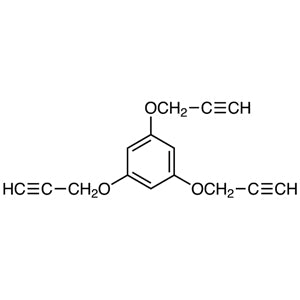
1,3,5-Tris(2-propynyloxy)benzene TCI T3135
Regular price From Rp 4.056.150,00Regular priceRp 2.836.050,00Sale price From Rp 4.056.150,00 -
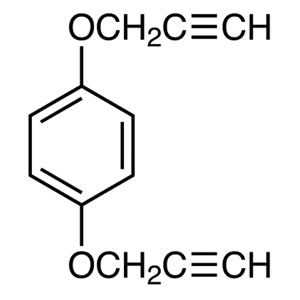
1,4-Bis(2-propynyloxy)benzene TCI B4607
Regular price From Rp 2.597.700,00Regular priceRp 1.816.500,00Sale price From Rp 2.597.700,00 -
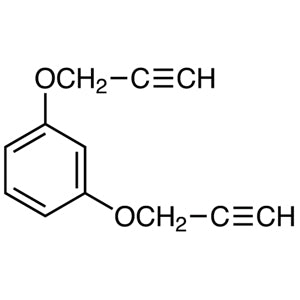
1,3-Bis(2-propynyloxy)benzene TCI B4521
Regular price From Rp 2.332.050,00Regular priceRp 1.630.650,00Sale price From Rp 2.332.050,00 -
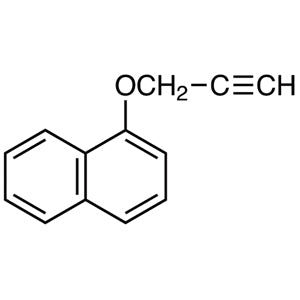
1-(2-Propynyloxy)naphthalene TCI P2227
Regular price From Rp 4.161.150,00Regular priceRp 2.909.550,00Sale price From Rp 4.161.150,00 -
2-(2-Propynyloxy)naphthalene TCI P2190
Regular price From Rp 2.094.750,00Regular priceRp 1.464.750,00Sale price From Rp 2.094.750,00 -
1-Ethynylpyrene TCI E0939
Regular price From Rp 6.228.600,00Regular priceRp 4.355.400,00Sale price From Rp 6.228.600,00 -
2-(2-Propynyloxy)tetrahydropyran TCI P1624
Regular price Rp 2.994.600,00Regular priceRp 2.109.450,00Sale price Rp 2.994.600,00 -
SodiumPyrene-1-sulfonate TCI O0669
Regular price Rp 3.976.350,00Regular priceRp 2.780.400,00Sale price Rp 3.976.350,00