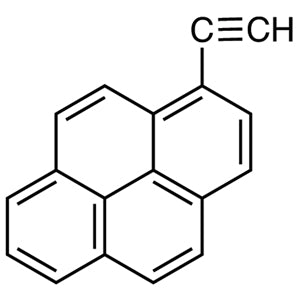
1-Ethynylpyrene is a chemical compound widely used in research applications within the fields of chemical biology and click chemistry. It serves as a key reagent in molecular conjugation processes due to its unique aromatic structure, which enables highly specific chemical reactions. This compound is essential for researchers aiming to achieve precise molecular modifications and functional group attachments. In laboratory settings, it plays a critical role in the development of new compounds and the study of molecular interactions. Its reactivity and specificity make it a valuable tool in various experimental protocols.
The compound's chemical properties, including its stability under specific conditions and reactivity in environments conducive to click chemistry, make it a preferred choice for advanced chemical synthesis. Its ability to form covalent bonds with various functional groups enhances its utility in conjugation reactions. The compound's high reactivity and selectivity allow for controlled and efficient chemical transformations, which are crucial in modern biochemical research. These characteristics make it an indispensable material for laboratories focused on molecular engineering and functional chemistry.
In Indonesian laboratories, 1-Ethynylpyrene is commonly used in biochemical, pharmacological, and materials science research. It is a key component in experiments involving molecular modification, conjugation, and the development of new chemical entities. Researchers in Indonesia rely on this compound for its reliability and effectiveness in achieving precise chemical outcomes. Its application spans across academic and industrial research, making it a standard material in many laboratory workflows.
Advantages (TCI brochure)
- Blue fluorescence (pyrene class)
- Can be labeled to azido groups via click reaction
TCI brochures (PDF)
- Fluorescent Labeling Dyes 2025-11-18 · p. 4
- Reagent for Incorporating a Protecting Group (Ph2P(O)) into Terminal Acetylenes 2025-06-03 · p. 2
- Click Chemistry 2026-09-08 · p. 12
- Building Blocks for Organic Semiconductor 2026-03-24 · p. 12
Related TCI products
- Molecular conjugation studies benefit from 1-Ethynylpyrene due to its ability to form stable covalent bonds with diverse functional groups, enabling precise molecular modifications.
- Click chemistry applications utilize this compound for its high reactivity and specificity, allowing rapid and efficient synthesis of complex molecular structures.
- Bioconjugation experiments leverage its unique aromatic structure for attaching biomolecules, facilitating targeted modifications in biological systems.
- Materials science research employs 1-Ethynylpyrene to develop novel functional materials through controlled chemical interactions and molecular assembly.
- Pharmaceutical research uses this compound for the synthesis of drug candidates, where precise molecular modifications are essential for therapeutic efficacy.
From the TCI brochure
- Labeling of azido groups via click reaction
| Brand | TCI |
|---|---|
| CAS number | 34993-56-1 |
| Molecular formula | — |
| Purity | — |
| Category | Chemistry > Chemical Biology > Conjugation Chemistry/Click Chemistry |
| Pack sizes | Available in various quantities as per supplier specifications |
| Physical form | Solid or liquid, depending on the specific product variant |
| Storage | Store in a cool, dry place away from light and moisture |
Data from the TCI brochure
| λex,max | 342 nm |
|---|---|
| λem,max | 386 nm |
Source: TCI brochure LL039 (2025-11-18)
1-Ethynylpyrene should be stored in a cool, dry environment, away from direct sunlight and sources of heat. It is recommended to keep the compound in a tightly sealed container to prevent exposure to moisture and air. Due to its reactivity, it should be handled in a well-ventilated laboratory setting, preferably under a fume hood. Proper personal protective equipment, including gloves and safety goggles, should be worn when handling this material. Avoid contact with skin and eyes, and ensure that spillage is cleaned up immediately using appropriate safety protocols. The compound should not be stored near incompatible substances to prevent unwanted chemical reactions.
—
Product Categories
- Biochemicals and ReagentsFluorescent Probes, Fluorescent Labels, Fluorescent StainsFluorescent Labels
- Pharmaceutical Development and Drug Discovery ResearchConjugation Chemistry/Click ChemistryFluorophore Azides/Alkynes [Conjugation Chemistry/Click Chemistry]
- Pharmaceutical Development and Drug Discovery ResearchConjugation Chemistry/Click ChemistryTerminal Alkynes [Conjugation Chemistry/Click Chemistry]
Produk Terkait
-
1-[(2-Propynyloxy)methyl]pyrene TCI P2226
Regular price From Rp 5.485.200,00Regular priceRp 3.835.650,00Sale price From Rp 5.485.200,00 -
DansylHydrazine[forHPLCLabeling] TCI A5552
Regular price From Rp 2.199.750,00Regular priceRp 1.554.000,00Sale price From Rp 2.199.750,00 -
9-Ethynylphenanthrene TCI E1301
Regular price From Rp 3.419.850,00Regular priceRp 2.390.850,00Sale price From Rp 3.419.850,00 -
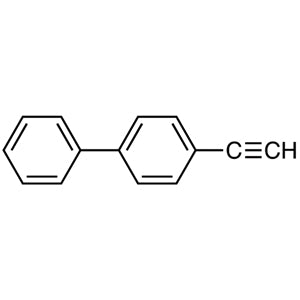
4-Ethynylbiphenyl TCI E1141
Regular price From Rp 1.644.300,00Regular priceRp 1.149.750,00Sale price From Rp 1.644.300,00 -
9-(4-Ethynylphenyl)carbazole TCI E1055
Regular price From Rp 3.232.950,00Regular priceRp 2.276.400,00Sale price From Rp 3.232.950,00 -
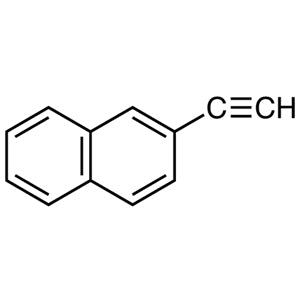
2-Ethynylnaphthalene TCI E0933
Regular price Rp 2.359.350,00Regular priceRp 1.649.550,00Sale price Rp 2.359.350,00 -
1,4-Diethynyl-2,5-dimethoxybenzene TCI D5315
Regular price From Rp 1.458.450,00Regular priceRp 1.019.550,00Sale price From Rp 1.458.450,00 -
1,4-Diethynyl-2,5-dimethylbenzene TCI D5314
Regular price From Rp 3.021.900,00Regular priceRp 2.112.600,00Sale price From Rp 3.021.900,00
![TCI P2226 1115084-83-7 1-[(2-Propynyloxy)methyl]pyrene](http://amiscientific.com/cdn/shop/files/TCI2510P2226_bf1d3e70-c4ac-430c-94a7-45a2914ffce1.jpg?v=1792653426&width=533)
![1115084-83-7 1-[(2-Propynyloxy)methyl]pyrene - AMI Scientific](http://amiscientific.com/cdn/shop/files/TCI2510P2226.jpg?v=1767135944&width=533)
![TCI A5552 33008-06-9 Dansyl Hydrazine [for HPLC Labeling]](http://amiscientific.com/cdn/shop/files/TCI2510A5552_83708efc-ef6b-457b-a68a-d806b6dc1e5c.jpg?v=1792658554&width=533)
![33008-06-9 Dansyl Hydrazine [for HPLC Labeling] - AMI Scientific](http://amiscientific.com/cdn/shop/files/TCI2510A5552.jpg?v=1767084909&width=533)