1,3-Bis(2-propynyloxy)benzene is a chemical compound widely used as a building block in the synthesis of complex molecules. It plays a crucial role in laboratory settings where the creation of aromatic structures and multiple bonds is required. This compound is particularly valuable for its ability to participate in substitution and cross-reaction processes, making it an essential tool for chemists working on molecular design and modification. Its unique molecular structure, featuring two propinyl chains attached to a benzene ring, contributes to its versatility in various synthetic pathways.
The compound's high chemical reactivity and structural flexibility make it a preferred choice for advanced chemical experiments. Its ability to undergo a wide range of reactions, including coupling and functional group transformations, allows researchers to tailor its properties for specific applications. The presence of multiple reactive sites enhances its utility in creating complex organic molecules, which is critical in fields such as pharmaceutical research and materials science. Its stability under controlled conditions further supports its use in a variety of laboratory environments.
In Indonesian laboratories, 1,3-Bis(2-propynyloxy)benzene is extensively used in organic chemistry research. It is particularly relevant for the development of new compounds and the modification of molecular structures. Its applications span across pharmacology, material science, and environmental chemistry, where the synthesis of complex aromatic compounds is essential. Researchers in Indonesia rely on this compound for its reliability and effectiveness in producing high-quality chemical products.
TCI brochures (PDF)
- Click Chemistry 2026-09-08 · p. 13
Related TCI products
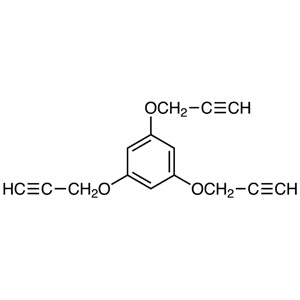
- TCI T3135 114233-80-6 1,3,5-Tris(2-propynyloxy)benzene
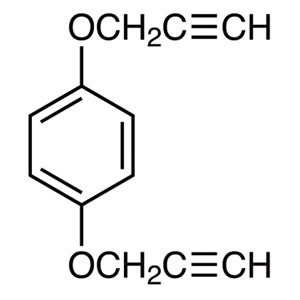
- TCI B4607 34596-36-6 1,4-Bis(2-propynyloxy)benzene
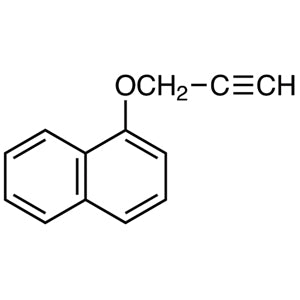
- TCI P2227 18542-45-5 1-(2-Propynyloxy)naphthalene
- TCI P2226 1115084-83-7 1-[(2-Propynyloxy)methyl]pyrene
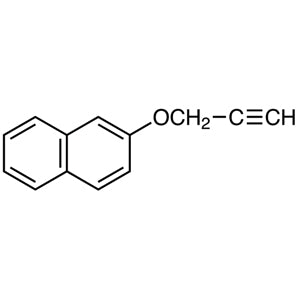
- TCI P2190 20009-28-3 2-(2-Propynyloxy)naphthalene
- TCI B6421 4039-82-1 [(Prop-2-yn-1-yloxy)methyl]benzene
- Synthesis of aromatic compounds with complex structures for pharmaceutical research due to its ability to form stable aromatic frameworks.
- Development of new materials with optical or electronic properties through its reactivity in cross-coupling reactions.
- Modification of molecular structures in organic chemistry to create compounds with desired functional groups and properties.
- Investigation of chemical reactivity in environmental studies to understand the behavior of aromatic compounds in different conditions.
- Creation of novel compounds for drug discovery by enabling the synthesis of diverse molecular architectures.
| Brand | TCI |
|---|---|
| CAS number | 26627-36-1 |
| Molecular formula | — |
| Purity | — |
| Category | Chemistry > Building Blocks > Non-Heterocyclic Building Blocks |
| Pack sizes | Available in various quantities as per standard laboratory supply |
| Physical form | Liquid |
| Storage | Store in a cool, dry place away from light and incompatible materials |
This compound should be stored in a cool, dry place, away from direct sunlight and sources of heat. It is recommended to use airtight containers made of glass or high-density polyethylene to prevent contamination and maintain its chemical integrity. Due to its reactivity, it should be handled in a well-ventilated area and kept away from incompatible substances such as strong oxidizing agents. Proper personal protective equipment, including gloves and safety goggles, should always be worn when handling this material. Regular inspection of storage conditions is advised to ensure long-term stability and safety in the laboratory environment.
—
Product Categories
Produk Terkait
-
1,3,5-Tris(2-propynyloxy)benzene TCI T3135
Regular price From Rp 4.056.150,00Regular priceRp 2.836.050,00Sale price From Rp 4.056.150,00 -
1,4-Bis(2-propynyloxy)benzene TCI B4607
Regular price From Rp 2.597.700,00Regular priceRp 1.816.500,00Sale price From Rp 2.597.700,00 -
1-(2-Propynyloxy)naphthalene TCI P2227
Regular price From Rp 4.161.150,00Regular priceRp 2.909.550,00Sale price From Rp 4.161.150,00 -
1-[(2-Propynyloxy)methyl]pyrene TCI P2226
Regular price From Rp 5.485.200,00Regular priceRp 3.835.650,00Sale price From Rp 5.485.200,00 -
2-(2-Propynyloxy)naphthalene TCI P2190
Regular price From Rp 2.094.750,00Regular priceRp 1.464.750,00Sale price From Rp 2.094.750,00 -
[(Prop-2-yn-1-yloxy)methyl]benzene TCI B6421
Regular price From Rp 2.094.750,00Regular priceRp 1.464.750,00Sale price From Rp 2.094.750,00 -
2-(2-Propynyloxy)tetrahydropyran TCI P1624
Regular price Rp 2.994.600,00Regular priceRp 2.109.450,00Sale price Rp 2.994.600,00 -
1-Ethynyl-4-(phenylethynyl)benzene TCI E0967
Regular price From Rp 3.100.650,00Regular priceRp 2.168.250,00Sale price From Rp 3.100.650,00