

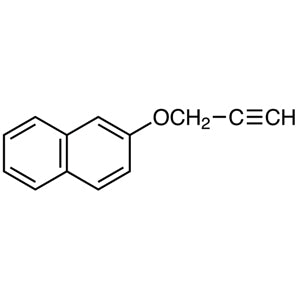
2-(2-Propynyloxy)naphthalene is a chemical compound widely used as a building block in the synthesis of complex molecules. This compound features a naphthalene core extended with a propinyloxy group, making it highly relevant in organic chemistry reactions. Its unique structure allows it to participate in various chemical transformations, making it a versatile tool in synthetic chemistry. In laboratory settings, it serves as a foundational material for creating compounds with specific properties, such as aromaticity or high reactivity.
The compound is valued for its complex chemical structure and high reactivity, which make it a preferred choice among researchers. Its stability under certain conditions and ability to engage in substitution and addition reactions further enhance its utility. These characteristics enable scientists to design and synthesize a wide range of compounds with tailored functionalities. Its reliability and effectiveness in organic synthesis have made it a staple in both academic and industrial research environments.
In Indonesian laboratories, 2-(2-Propynyloxy)naphthalene is commonly used in pure chemical research and industrial applications. It is frequently employed in the development of new compounds with potential applications in pharmaceuticals, materials science, and catalysis. Research institutions and universities in Indonesia rely on this compound to advance their studies and innovation in various scientific fields.
TCI brochures (PDF)
- Click Chemistry 2026-09-08 · p. 13
Related TCI products
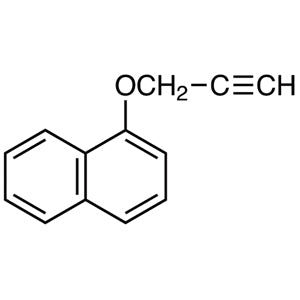
- TCI P2227 18542-45-5 1-(2-Propynyloxy)naphthalene
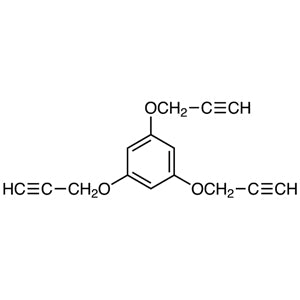
- TCI T3135 114233-80-6 1,3,5-Tris(2-propynyloxy)benzene
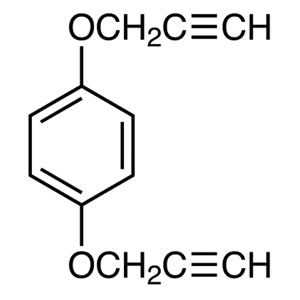
- TCI B4607 34596-36-6 1,4-Bis(2-propynyloxy)benzene
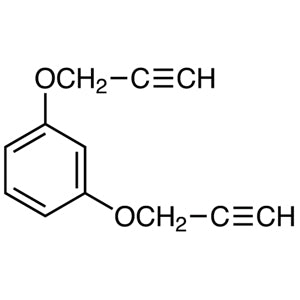
- TCI B4521 26627-36-1 1,3-Bis(2-propynyloxy)benzene
- TCI P2226 1115084-83-7 1-[(2-Propynyloxy)methyl]pyrene
- TCI P1624 6089-04-9 2-(2-Propynyloxy)tetrahydropyran
- Synthesis of complex aromatic compounds for pharmaceutical research due to its reactivity and structural versatility.
- Development of novel materials in industrial chemistry for its ability to participate in diverse chemical reactions.
- Organic synthesis in academic laboratories for creating compounds with specific functional groups and properties.
- Catalytic applications in chemical processes where its stability and reactivity contribute to efficient reaction pathways.
- Research in material science for the creation of advanced polymers and functional materials with tailored properties.
| Brand | TCI |
|---|---|
| CAS number | 20009-28-3 |
| Molecular formula | — |
| Purity | — |
| Category | Chemistry > Building Blocks > Non-Heterocyclic Building Blocks |
| Pack sizes | Available in standard laboratory quantities |
| Physical form | Solid |
| Storage | Store in a cool, dry place away from light and moisture |
This compound should be stored in a cool, dry environment, away from direct light and moisture to maintain its chemical integrity. It is recommended to use airtight containers made of materials that are chemically inert, such as glass or high-density polyethylene, to prevent contamination and degradation. In laboratory settings, it is important to handle the compound with appropriate personal protective equipment, including gloves and safety goggles, to ensure safety. Due to its reactivity, it should be kept away from incompatible substances such as strong oxidizers or acids. Proper labeling and storage conditions are essential to ensure safe handling and long-term stability of the compound.
—
Product Categories
Produk Terkait
-
1-(2-Propynyloxy)naphthalene TCI P2227
Regular price From Rp 4.161.150,00Regular price -
1,3,5-Tris(2-propynyloxy)benzene TCI T3135
Regular price From Rp 4.056.150,00Regular price -
1,4-Bis(2-propynyloxy)benzene TCI B4607
Regular price From Rp 2.597.700,00Regular price -
1,3-Bis(2-propynyloxy)benzene TCI B4521
Regular price From Rp 2.332.050,00Regular price -
1-[(2-Propynyloxy)methyl]pyrene TCI P2226
Regular price From Rp 5.485.200,00Regular price -
2-(2-Propynyloxy)tetrahydropyran TCI P1624
Regular price Rp 2.942.100,00Regular price -
2,6-Bis(hydroxymethyl)naphthalene TCI B3399
Regular price From Rp 3.419.850,00Regular price -
2,3-Bis(hydroxymethyl)naphthalene TCI B1589
Regular price Rp 4.479.300,00Regular price
![1115084-83-7 1-[(2-Propynyloxy)methyl]pyrene - AMI Scientific](http://amiscientific.com/cdn/shop/files/TCI2510P2226.jpg?v=1767135944&width=533)


