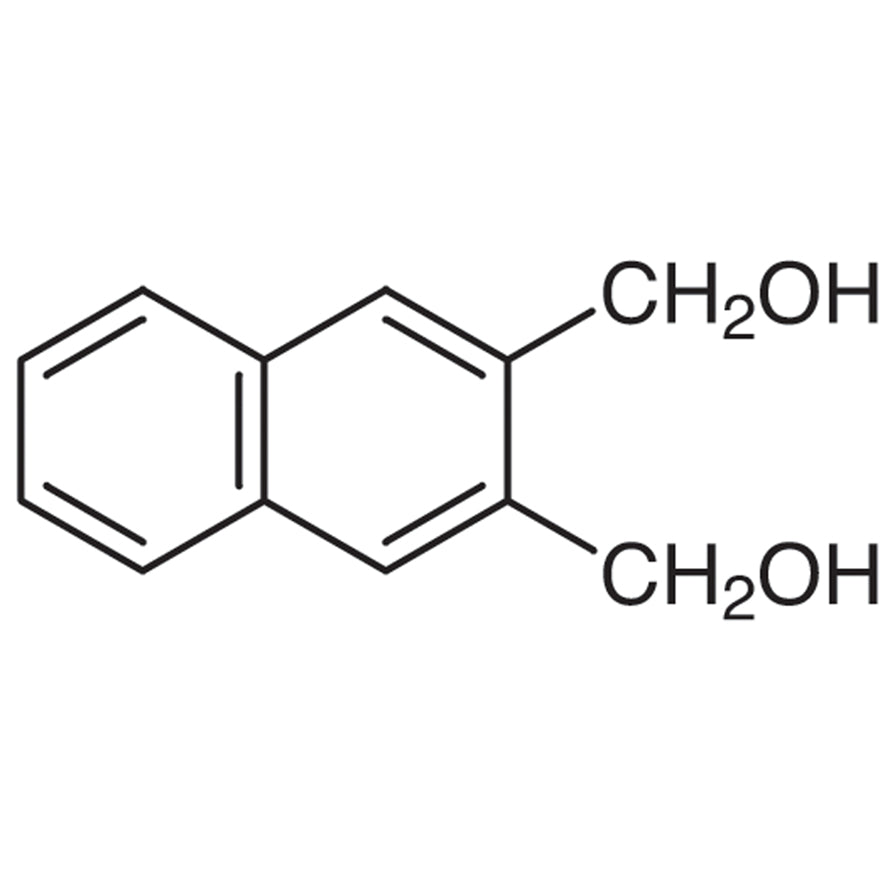
2,3-Bis(hydroxymethyl)naphthalene is a chemical compound widely used as a building block in various laboratory applications, particularly in the synthesis of complex organic molecules. This compound is derived from naphthalene, a polycyclic aromatic hydrocarbon, and features two hydroxymethyl groups attached at the 2 and 3 positions. These functional groups contribute to its reactivity and versatility in chemical reactions. Due to its structural stability and functional group availability, it is a valuable reagent in both academic and industrial research settings.
The compound's high reactivity and compatibility with a wide range of reagents make it a preferred choice in synthetic chemistry. Its polar nature and good solubility in organic solvents allow it to be easily incorporated into reaction mixtures. Additionally, its ability to undergo various chemical transformations, such as oxidation, reduction, and substitution reactions, enhances its utility in laboratory processes. These properties make it a reliable and effective material for a variety of chemical syntheses.
In Indonesian laboratories, 2,3-Bis(hydroxymethyl)naphthalene is commonly used in organic chemistry research, especially in the development of new materials and complex compounds. Its availability in the local market ensures that researchers can access this essential reagent for their experiments. Its role in advancing chemical synthesis and material science makes it a key component in many laboratory workflows.
Related TCI products
- TCI B3399 5859-93-8 2,6-Bis(hydroxymethyl)naphthalene
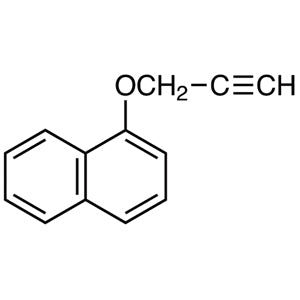
- TCI P2227 18542-45-5 1-(2-Propynyloxy)naphthalene
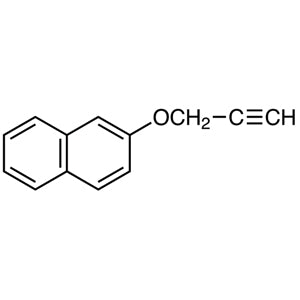
- TCI P2190 20009-28-3 2-(2-Propynyloxy)naphthalene
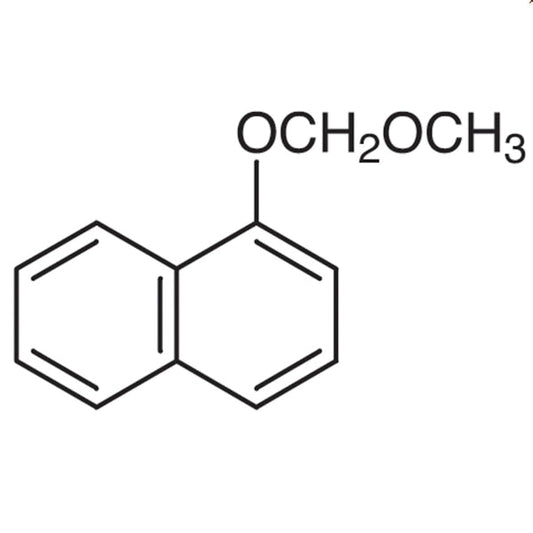
- TCI M1454 7382-37-8 1-(Methoxymethoxy)naphthalene
- TCI B4057 19184-65-7 2-(Bromomethyl)-2-(hydroxymethyl)-1,3-propanediol
- TCI B2682 2425-41-4 5,5-Bis(hydroxymethyl)-2-phenyl-1,3-dioxane
- Organic synthesis of heterocyclic compounds due to its reactive hydroxymethyl groups and aromatic core.
- Development of new polymers through functional group modification and cross-linking reactions.
- Preparation of complex organic molecules requiring multiple functional group manipulations.
- Research in material science for the creation of advanced functional materials and coatings.
- Investigation of chemical reactivity in various solvent systems for improved reaction efficiency.
| Brand | TCI |
|---|---|
| CAS number | 31554-15-1 |
| Molecular formula | — |
| Purity | — |
| Category | Chemistry > Building Blocks > Non-Heterocyclic Building Blocks |
| Pack sizes | Available in standard laboratory quantities |
| Physical form | Solid |
| Storage | Store in a cool, dry place away from direct sunlight |
This compound should be stored in a cool, dry environment, away from direct sunlight and sources of heat. It is recommended to use airtight containers to prevent moisture absorption and contamination. Due to its reactivity, it should be handled in a well-ventilated area, preferably under a fume hood, to minimize exposure. Avoid contact with strong acids or bases, as it may react vigorously. Always use appropriate personal protective equipment, including gloves and safety goggles, when handling this material. Proper storage and handling ensure the compound remains stable and safe for use in laboratory applications.
—
Produk Terkait
-
2,6-Bis(hydroxymethyl)naphthalene TCI B3399
Regular price Rp 3.419.850,00Regular priceRp 2.390.850,00Sale price Rp 3.419.850,00 -
1-(2-Propynyloxy)naphthalene TCI P2227
Regular price Rp 4.161.150,00Regular priceRp 2.909.550,00Sale price Rp 4.161.150,00 -
2-(2-Propynyloxy)naphthalene TCI P2190
Regular price Rp 2.094.750,00Regular priceRp 1.464.750,00Sale price Rp 2.094.750,00 -
1-(Methoxymethoxy)naphthalene TCI M1454
Regular price Rp 2.625.000,00Regular priceRp 1.835.400,00Sale price Rp 2.625.000,00 -
2-(Bromomethyl)-2-(hydroxymethyl)-1,3-propanediol TCI B4057
Regular price Rp 1.644.300,00Regular priceRp 1.149.750,00Sale price Rp 1.644.300,00 -
5,5-Bis(hydroxymethyl)-2-phenyl-1,3-dioxane TCI B2682
Regular price Rp 6.996.150,00Regular priceRp 4.907.700,00Sale price Rp 6.996.150,00 -
2,6-Bis(hydroxymethyl)-1,4-dimethoxybenzene TCI B2618
Regular price Rp 2.837.100,00Regular priceRp 1.983.450,00Sale price Rp 2.837.100,00 -
1,8-Bis(hydroxymethyl)anthracene TCI B1904
Regular price Rp 9.673.650,00Regular priceRp 6.764.100,00Sale price Rp 9.673.650,00