

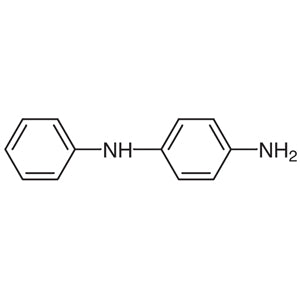
Azoic Diazo Component 22 is a vital chemical compound widely used in laboratory settings for the synthesis of complex organic molecules. As a building block in chemical reactions, it serves as a foundational element in the development of various organic compounds. This reagent is particularly important in diazotation reactions, which are essential for the production of heterocyclic and aromatic compounds. Its role in chemical synthesis makes it an indispensable tool for researchers and chemists working in both academic and industrial environments.
The chemical properties of Azoic Diazo Component 22 make it a preferred choice in controlled laboratory conditions. It exhibits stability under specific conditions but remains highly reactive when exposed to high temperatures or excessive humidity. These characteristics allow it to be used in precise chemical reactions that require careful monitoring and control. Its reactivity with a wide range of organic substrates enhances its versatility, making it suitable for multiple applications in chemical research.
In Indonesian laboratories, Azoic Diazo Component 22 is commonly used in chemical research and pharmaceutical industries. Its ability to facilitate the synthesis of complex compounds and its broad applicability in various chemical fields make it a popular choice among scientists and laboratory professionals. Its availability and reliability contribute to its widespread use in both academic and industrial research settings.
Related TCI products
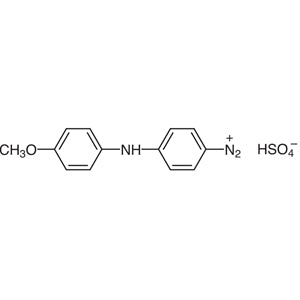
- TCI D2290 49732-38-9 4-Diazo-4'-methoxydiphenylamine Sulfate
- TCI D1674 887-76-3 1-Diazo-2-naphthol-4-sulfonic Acid
- TCI D0142 13532-96-2 4-Diazo-N-ethyl-N-(2-hydroxyethyl)aniline Chloride Zinc Chloride
- TCI D0140 6087-56-5 4-Diazo-N,N-dimethylaniline Chloride Zinc Chloride
- TCI A1986 120-00-3 Azoic Diazo Component 20 (Base)
- TCI B0484 150-25-4 N,N-Di(2-hydroxyethyl)glycine [Good's buffer component for biological research]
- Diazotation Reactions: This compound is ideal for diazotation processes due to its reactivity and role in forming aromatic and heterocyclic compounds.
- Organic Synthesis: It is frequently used in the synthesis of complex organic molecules, providing a reliable building block for various chemical structures.
- Pharmaceutical Research: Its application in drug development supports the creation of compounds with specific therapeutic properties.
- Analytical Chemistry: It is used in analytical procedures to test the reactivity and stability of organic compounds under different conditions.
- Industrial Chemical Production: It is employed in the manufacturing of chemical products that require precise chemical reactions and controlled environments.
| Brand | TCI |
|---|---|
| CAS number | 101-54-2 |
| Molecular formula | — |
| Purity | — |
| Category | Chemistry > Building Blocks > Non-Heterocyclic Building Blocks |
| Pack sizes | Available in various quantities as per standard laboratory supply |
| Physical form | Solid or liquid, depending on the specific formulation |
| Storage | Store in a cool, dry place away from direct sunlight and moisture |
Azoic Diazo Component 22 should be stored in a cool, dry environment to maintain its chemical stability. It is recommended to keep the compound in airtight containers to prevent exposure to moisture and high humidity. Due to its reactivity, it should be handled in a well-ventilated laboratory setting, with appropriate personal protective equipment such as gloves and safety goggles. Avoid contact with high temperatures and ensure that storage areas are free from potential contaminants. Regular monitoring of storage conditions is essential to ensure the compound remains effective for its intended applications. Proper handling and storage practices help maintain the integrity and performance of this important chemical reagent in laboratory settings.
—
Produk Terkait
-
4-Diazo-4'-methoxydiphenylamineSulfate TCI D2290
Regular price Rp 1.538.250,00Regular price -
1-Diazo-2-naphthol-4-sulfonicAcid TCI D1674
Regular price Rp 1.749.300,00Regular price -
4-Diazo-N-ethyl-N-(2-hydroxyethyl)anilineChlorideZincChloride TCI D0142
Regular price Rp 1.008.000,00Regular price -
4-Diazo-N,N-dimethylanilineChlorideZincChloride TCI D0140
Regular price From Rp 530.250,00Regular price -
AzoicDiazoComponent20(Base) TCI A1986
Regular price Rp 1.485.750,00Regular price -
N,N-Di(2-hydroxyethyl)glycine[Good'sbuffercomponentforbiologicalresearch] TCI B0484
Regular price From Rp 795.900,00Regular price -
Tricine[Good'sbuffercomponentforbiologicalresearch] TCI T0682
Regular price From Rp 769.650,00Regular price -
Piperazine-1,4-bis(2-hydroxypropanesulfonicAcid)Dihydrate[Good'sbuffercomponentforbiologicalresearch] TCI P1131
Regular price Rp 1.220.100,00Regular price


![150-25-4 N,N-Di(2-hydroxyethyl)glycine [Good's buffer component for biological research] - AMI Scientific](http://amiscientific.com/cdn/shop/files/TCI2510B0484_2a550e4a-1836-4e6c-8ec9-666c5257f00a.jpg?v=1767228447&width=533)
![5704-04-1 Tricine [Good's buffer component for biological research] - AMI Scientific](http://amiscientific.com/cdn/shop/files/TCI2510T0682.jpg?v=1767140388&width=533)
![68189-43-5 Piperazine-1,4-bis(2-hydroxypropanesulfonic Acid) Dihydrate [Good's buffer component for biological research] - AMI Scientific](http://amiscientific.com/cdn/shop/files/TCI2510P1131.jpg?v=1769057375&width=533)