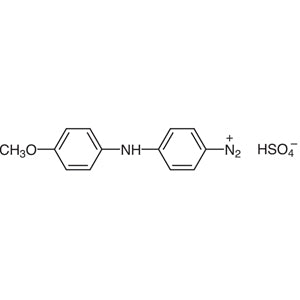
4-Diazo-4'-methoxydiphenylamine Sulfate is a chemical compound widely used in organic reactions and the synthesis of complex molecules. It serves as a key building block in chemical laboratories, particularly for the development of aromatic compounds with specific functional groups. This compound is valued for its stability and controlled reactivity, making it a reliable choice for various synthetic processes. Its ability to participate in diazo-based reactions provides flexibility in the design of new chemical structures, which is essential for both academic and industrial research.
One of the primary reasons this compound is preferred is its structural versatility and predictable chemical behavior. It can be selectively modified under controlled reaction conditions, allowing chemists to tailor its properties for specific applications. The presence of the diazo group enhances its reactivity in coupling reactions, making it an essential tool in the synthesis of dyes, pharmaceuticals, and other functional materials. Its chemical stability also ensures that it remains effective across a range of experimental conditions.
In Indonesian laboratories, 4-Diazo-4'-methoxydiphenylamine Sulfate is commonly used in organic chemistry research, drug development, and the synthesis of specialized compounds. It is particularly favored in academic and industrial settings where precise control over chemical reactions is required. Many research institutions and universities in Indonesia rely on this compound for experiments involving aromatic structures and controlled reactivity, supporting advancements in chemical sciences and pharmaceutical applications.
Related TCI products
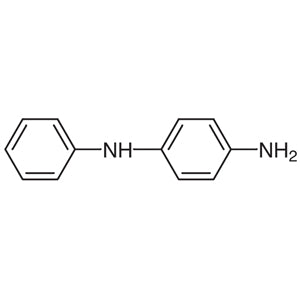
- TCI P0203 101-54-2 Azoic Diazo Component 22
- TCI D1674 887-76-3 1-Diazo-2-naphthol-4-sulfonic Acid
- TCI D0142 13532-96-2 4-Diazo-N-ethyl-N-(2-hydroxyethyl)aniline Chloride Zinc Chloride
- TCI D0140 6087-56-5 4-Diazo-N,N-dimethylaniline Chloride Zinc Chloride
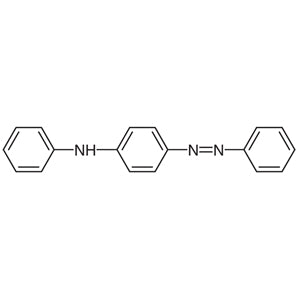
- TCI P0146 101-75-7 4-(Phenylazo)diphenylamine
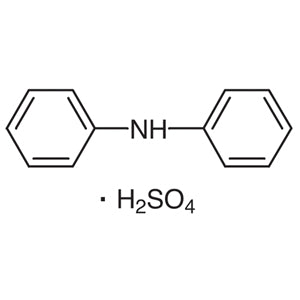
- TCI D0875 587-84-8 Diphenylamine Sulfate
- Organic synthesis experiments benefit from this compound's ability to participate in diazo-based reactions, enabling the creation of complex aromatic structures with controlled reactivity.
- Pharmaceutical research utilizes its role as a precursor in the development of functional compounds, supporting drug discovery and formulation processes.
- Dye and pigment synthesis applications leverage its chemical stability and reactivity, making it suitable for the production of colored compounds.
- Analytical chemistry experiments use it as a reference material for testing reaction conditions and monitoring chemical transformations.
- Industrial chemical production relies on its predictable behavior in controlled environments, ensuring consistent results in large-scale synthesis processes.
| Brand | TCI |
|---|---|
| CAS number | 49732-38-9 |
| Molecular formula | — |
| Purity | — |
| Category | Chemistry > Building Blocks > Non-Heterocyclic Building Blocks |
| Pack sizes | Available in standard laboratory quantities as per supplier specifications |
| Physical form | Solid powder (as per typical chemical compound form) |
| Storage | Store in a cool, dry place away from direct light and moisture |
This compound should be stored in a cool, dry environment, away from direct sunlight and moisture to maintain its chemical stability. It is recommended to use airtight containers to prevent exposure to air and humidity, which could affect its reactivity. Proper labeling of storage containers is essential for safe handling and identification. In laboratory settings, it should be handled with appropriate personal protective equipment, including gloves and safety goggles, to ensure safety during use. Storage conditions should be monitored to prevent degradation, and it should be kept in a secure location to minimize risks associated with chemical exposure.
—
Produk Terkait
-
AzoicDiazoComponent22 TCI P0203
Regular price From Rp 610.050,00Regular price -
1-Diazo-2-naphthol-4-sulfonicAcid TCI D1674
Regular price Rp 1.749.300,00Regular price -
4-Diazo-N-ethyl-N-(2-hydroxyethyl)anilineChlorideZincChloride TCI D0142
Regular price Rp 1.008.000,00Regular price -
4-Diazo-N,N-dimethylanilineChlorideZincChloride TCI D0140
Regular price From Rp 530.250,00Regular price -
4-(Phenylazo)diphenylamine TCI P0146
Regular price From Rp 1.140.300,00Regular price -
DiphenylamineSulfate TCI D0875
Regular price From Rp 1.590.750,00Regular price -
DiphenylamineHydrochloride TCI D0874
Regular price Rp 1.273.650,00Regular price -
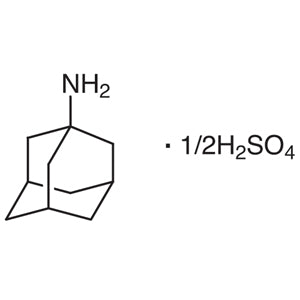
1-AdamantanamineSulfate TCI A1319
Regular price Rp 1.167.600,00Regular price