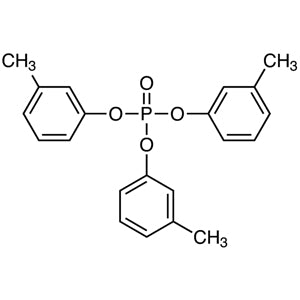
Triallyl Phosphate (TCI P0264), with CAS number 1623-19-4, is a chemical compound widely used in scientific and industrial applications, particularly in the field of battery materials. This material serves as a key additive in battery production, contributing to the enhancement of battery performance and reliability. Its chemical stability makes it a valuable component in various laboratory processes, including the formulation of active materials and as a solvent in chemical synthesis. Due to its non-volatile nature and good solubility, it is a preferred choice for many laboratory applications.
One of the main reasons Triallyl Phosphate is favored in laboratories is its chemical stability and low volatility, which ensure consistent results during experiments. Its ability to dissolve a wide range of substances makes it suitable for use as a solvent in multiple chemical reactions. Additionally, its non-mercury and environmentally friendly properties make it an ideal choice for sustainable research practices. These characteristics ensure that it remains a reliable and safe material for use in both academic and industrial settings.
In Indonesian laboratories, Triallyl Phosphate is commonly used in battery material research, especially in the development of lithium-ion and metal-ion batteries. It is also found in various pure chemical research and industrial applications that require a stable and versatile chemical compound. Its role in enhancing the performance and longevity of battery systems makes it a crucial component in the field of materials science.
Advantages (TCI brochure)
- Polymerizes on the electrode surface to form stable SEI and CEI films.
- Contributes to maintaining excellent charge/discharge capacity under high voltage.
- Improves the performance and durability of lithium-ion batteries.
- Forms dense and protective interphases on both the NMC532 cathode and graphite anode.
TCI brochures (PDF)
- Phosphate Ester-type Electrolyte Additives 2025-10-28 · p. 1
- Lithium Battery Research Reagents 2026-06-04 · p. 2
- Battery Research Reagents 2026-09-18 · p. 6
- Biomaterials Research Reagents 2025-02-19 · p. 16
- Monomers 2025-05-28 · p. 18
Related TCI products
- Battery Material Formulation: Triallyl Phosphate is used to improve the stability and performance of battery components, making it ideal for battery material formulation.
- Chemical Synthesis Solvent: Its good solubility and chemical stability make it a suitable solvent for various chemical synthesis processes in the laboratory.
- Electrolyte Additive: It functions as an additive in electrolyte systems, enhancing the efficiency and safety of battery systems.
- Research in Sustainable Chemistry: Due to its non-mercury and environmentally friendly properties, it is used in research focused on sustainable and eco-friendly chemical processes.
- Industrial Coating Applications: Its chemical stability and solubility make it suitable for use in industrial coating applications where durability and performance are critical.
From the TCI brochure
- Electrolyte additive for lithium-ion batteries
| Brand | TCI |
|---|---|
| CAS number | 1623-19-4 |
| Molecular formula | — |
| Purity | — |
| Category | Materials Science > Battery Materials > Battery Additives |
| Pack sizes | Available in various sizes as per standard laboratory requirements |
| Physical form | Liquid |
| Storage | Store in a cool, dry place away from direct sunlight and incompatible materials |
Triallyl Phosphate should be stored in a cool, dry environment, away from direct sunlight and sources of heat. It is recommended to use sealed containers made of materials that are chemically inert to prevent any reaction. As a non-volatile compound, it does not require special refrigeration but should be kept in a well-ventilated area to ensure safety. Laboratory personnel should wear appropriate personal protective equipment, such as gloves and safety goggles, when handling this material. Due to its chemical stability, it is generally safe to handle, but care should be taken to avoid contamination and ensure proper disposal in accordance with environmental regulations.
—
Product Categories
- Battery MaterialsBattery Additives [Battery Materials]Phosphate Esters [Battery Additives]
- Electronic MaterialsBattery MaterialsBattery Additives [Battery Materials]
- Polymer/Macromolecule ReagentsMonomersDivinyl Monomers and Diallyl Monomers
- Biomaterials/Biocompatible Materials Research ReagentsMonomers and Macromonomers [Biomaterials/Biocompatible Materials Research Reagents]Divinyl Monomers and Diallyl Monomers [Biomaterials/Biocompatible Materials Research Reagents]
Produk Terkait
-
TriallylPhosphite TCI P3270
Regular price From Rp 1.510.950,00Regular priceRp 1.056.300,00Sale price From Rp 1.510.950,00 -
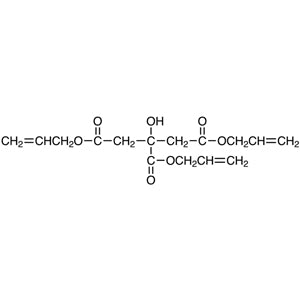
TriallylCitrate TCI C1038
Regular price Rp 1.908.900,00Regular priceRp 1.334.550,00Sale price Rp 1.908.900,00 -
TripropargylPhosphate TCI T3987
Regular price From Rp 2.782.500,00Regular priceRp 1.961.400,00Sale price From Rp 2.782.500,00 -
Tris(2-chloroethyl)Phosphate TCI T3447
Regular price From Rp 582.750,00Regular priceRp 423.150,00Sale price From Rp 582.750,00 -
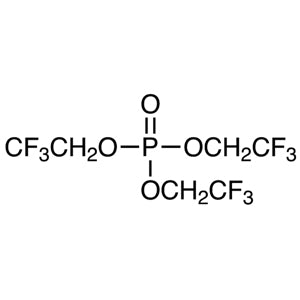
Tris(2,2,2-trifluoroethyl)Phosphate TCI T3203
Regular price From Rp 2.332.050,00Regular priceRp 1.646.400,00Sale price From Rp 2.332.050,00 -
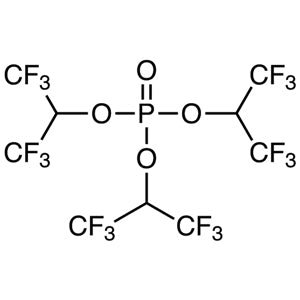
Tris(1,1,1,3,3,3-hexafluoro-2-propyl)Phosphate TCI T3041
Regular price From Rp 3.551.100,00Regular priceRp 2.499.000,00Sale price From Rp 3.551.100,00 -
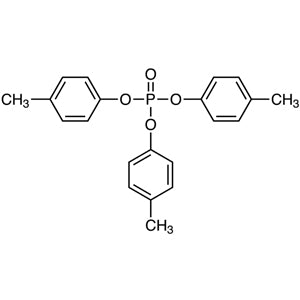
Tri-p-cresylPhosphate TCI T2209
Regular price From Rp 1.643.250,00Regular priceRp 1.164.450,00Sale price From Rp 1.643.250,00 -
Tri-m-cresylPhosphate TCI P1472
Regular price Rp 1.881.600,00Regular priceRp 1.331.400,00Sale price Rp 1.881.600,00