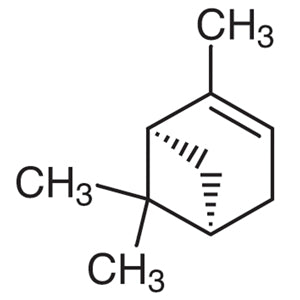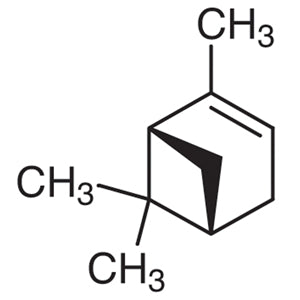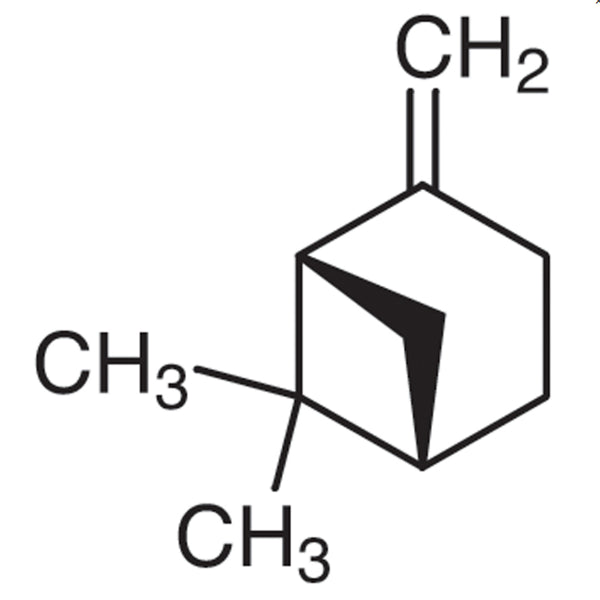
(-)-beta-Pinene is an organic compound belonging to the terpenoid family and serves as a key component in pine essential oils. This chiral building block plays a crucial role in asymmetric synthesis, offering researchers a reliable starting material for the creation of complex molecules with defined stereochemistry. In the laboratory, (-)-beta-Pinene is widely used for the synthesis of chiral compounds, enabling precise control over the spatial arrangement of atoms in the final product. Its utility extends across various areas of organic chemistry, particularly in the development of pharmaceuticals and fine chemicals where stereochemical purity is essential.
The compound is chemically stable and exhibits predictable structural behavior, making it a preferred choice for synthetic chemists. It dissolves well in organic solvents, which simplifies processing and isolation steps in laboratory workflows. The presence of a chiral center allows for the synthesis of enantiomerically pure compounds, a critical factor in drug development and advanced chemical research. Its ease of synthesis and availability further enhance its appeal for use in both academic and industrial settings.
In Indonesian laboratories, (-)-beta-Pinene is extensively utilized in chemical research, particularly in the fields of organic synthesis and asymmetric catalysis. Its role in creating structurally specific compounds makes it a valuable tool for researchers aiming to develop new materials or pharmaceuticals. The compound’s reliability and versatility contribute to its widespread adoption in both academic and applied chemical research in Indonesia.
TCI brochures (PDF)
- Terpenes 2025-09-22 · p. 6
- Chiral Building Blocks 2025-04-14 · p. 8
Related TCI products
- Asymmetric Synthesis: (-)-beta-Pinene is ideal for asymmetric synthesis due to its chiral structure, enabling the creation of enantiomerically pure compounds with controlled stereochemistry.
- Pharmaceutical Research: The compound is used in drug development to synthesize chiral intermediates that are critical for the production of active pharmaceutical ingredients.
- Organic Chemistry Education: It serves as a teaching tool in undergraduate and graduate courses, helping students understand stereochemistry and chiral synthesis techniques.
- Fine Chemical Production: Its predictable reactivity and solubility make it suitable for the synthesis of high-value organic compounds used in specialty chemicals.
- Natural Product Derivatives: It is employed in the modification of natural products to enhance their biological activity or pharmacological properties.
| Brand | TCI |
|---|---|
| CAS number | 18172-67-3 |
| Molecular formula | — |
| Purity | — |
| Category | Chemistry > Asymmetric Synthesis > Chiral Building Blocks |
| Pack sizes | Available in various quantities as per standard laboratory supply |
| Physical form | Liquid |
| Storage | Store in a cool, dry place away from light and moisture |
(-)-beta-Pinene should be stored in a cool, dry environment, away from direct sunlight and sources of heat. It is recommended to keep the compound in a tightly sealed container to prevent exposure to air and moisture, which may affect its stability. Due to its organic nature, it should be stored in a well-ventilated area to minimize the risk of inhalation. While it is not highly toxic, proper personal protective equipment, such as gloves and safety goggles, should be worn when handling it. The compound is generally stable under normal laboratory conditions but should be handled with care to avoid contamination or degradation. Its use in laboratory settings requires adherence to standard chemical safety protocols to ensure safe and effective experimentation.
—
Produk Terkait
-
(1R)-(+)-alpha-Pinene TCI P1099
Regular price From Rp 584.850,00Regular price -
(1S)-(-)-alpha-Pinene TCI P0440
Regular price From Rp 610.050,00Regular price -
alpha-PineneOxide TCI P1362
Regular price From Rp 769.650,00Regular price -
(-)-Verbenone TCI V0072
Regular price Rp 1.353.450,00Regular price -
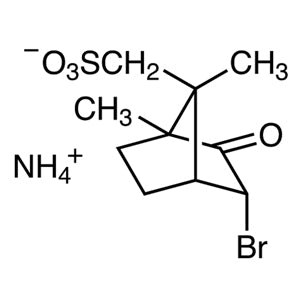
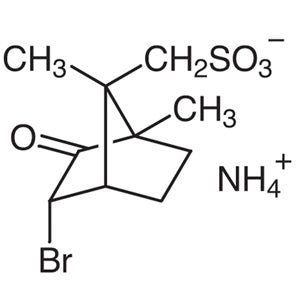
(-)-3-Bromocamphor-8-sulfonicAcidAmmoniumSalt TCI B4412
Regular price Rp 1.167.600,00Regular price -
(+)-3-Bromocamphor-8-sulfonicAcidAmmoniumSalt TCI B1125
Regular price From Rp 1.060.500,00Regular price -
(-)-Borneol TCI B1012
Regular price From Rp 875.700,00Regular price -
(+)-3-Bromocamphor TCI B0567
Regular price Rp 689.850,00Regular price