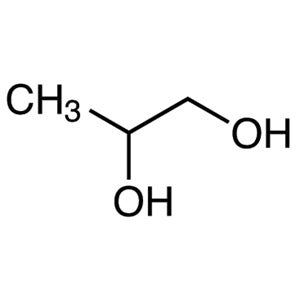
1,2-Propanediol is a versatile chemical compound widely used in various laboratory reactions. As a synthetic reagent, it serves as a solvent, pH adjuster, and auxiliary in chemical synthesis processes. Its role in protecting functional groups during complex reactions makes it essential in organic chemistry. This compound is commonly employed in research settings where precise control over reaction conditions is required. Due to its chemical stability and predictable behavior, it is a reliable choice for both academic and industrial applications.
The properties of 1,2-Propanediol make it a preferred choice in laboratory environments. It is a polar compound that is soluble in water, which facilitates its use in a wide range of reaction conditions. Its stability and resistance to degradation ensure consistent performance across different experimental setups. Additionally, its ability to act as a protective agent for functional groups enhances its utility in synthetic chemistry. These characteristics make it an indispensable tool for researchers working in diverse fields such as pharmaceuticals and materials science.
In Indonesian laboratories, 1,2-Propanediol is a key component in chemical research, pharmaceutical development, and industrial applications. It is frequently used in the synthesis of organic compounds and the preparation of mixed solvents for stable chemical reactions. Its availability and reliability have made it a staple in research institutions across Indonesia. The compound supports complex and precise chemical processes, making it a vital resource for scientific advancement in the region.
- Organic synthesis reactions where functional group protection is required due to its ability to stabilize reactive intermediates.
- Preparation of mixed solvents for chemical reactions requiring controlled stability and solubility properties.
- pH adjustment in laboratory processes to maintain optimal reaction conditions for chemical transformations.
- Derivatization techniques in analytical chemistry to enhance the detectability of compounds in chromatographic analysis.
- Research applications in pharmaceutical development for the synthesis of complex drug molecules with specific structural requirements.
| Brand | TCI |
|---|---|
| CAS number | 57-55-6 |
| Molecular formula | — |
| Purity | — |
| Category | Chemistry > Synthetic Reagents > Protection, Deprotection, Derivatization |
| Pack sizes | Available in various sizes as per supplier specifications |
| Physical form | Colorless liquid |
| Storage | Store in a cool, dry place away from direct sunlight |
1,2-Propanediol should be stored in a cool, dry place away from direct sunlight to maintain its chemical stability. It is recommended to use suitable containers that are resistant to chemical corrosion, such as glass or high-density polyethylene. In laboratory settings, it is important to handle the compound with appropriate personal protective equipment, including gloves and safety goggles, to prevent skin contact and inhalation. Proper ventilation should be ensured when working with this substance to minimize exposure. Due to its polar nature, it is advisable to keep it separate from incompatible materials to avoid any potential chemical interactions. Regular inspection of storage containers is necessary to ensure the integrity of the product remains unaffected over time.
—
Produk Terkait
-
1,3-Propanediol TCI P0486
Regular price From Rp 477.750,00Regular price -
2-Butyl-2-ethyl-1,3-propanediol TCI B0922
Regular price From Rp 477.750,00Regular price -
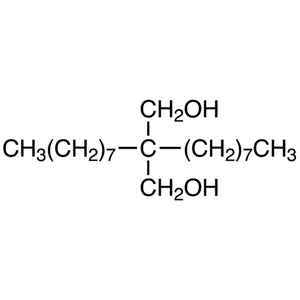
2,2-Di-n-octyl-1,3-propanediol TCI D2842
Regular price From Rp 3.525.900,00Regular price -
2,2-Diisoamyl-1,3-propanediol TCI D2800
Regular price Rp 8.851.500,00Regular price -
2,2-Diisobutyl-1,3-propanediol TCI D2777
Regular price From Rp 2.571.450,00Regular price -
EthyleneGlycol TCI E0105
Regular price From Rp 530.250,00Regular price -
2-Benzyloxy-1,3-propanediol TCI B2271
Regular price From Rp 4.743.900,00Regular price -
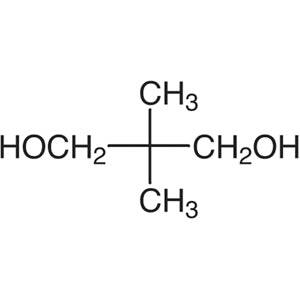
2,2-Dimethyl-1,3-propanediol TCI D0791
Regular price From Rp 477.750,00Regular price