Pyrrolidine is a versatile chemical compound classified under heterocyclic building blocks, commonly used in laboratory settings for the synthesis of complex molecules. It is a five-membered ring structure containing four carbon atoms and one nitrogen atom, making it a fundamental component in organic chemistry and pharmaceutical research. Its presence in various natural and synthetic compounds underscores its importance in the development of new drugs and chemical materials. In the laboratory, Pyrrolidine serves as a key intermediate in the creation of heterocyclic compounds, contributing to the advancement of chemical and biological studies.
Pyrrolidine is valued for its reactivity and polarity, which allow it to participate in a wide range of chemical reactions. It is soluble in organic solvents such as ethylamine and acetone, making it suitable for substitution and addition reactions. Its stability under normal conditions ensures that it remains a reliable reagent for long-term use in research. These properties make Pyrrolidine a preferred choice for chemists seeking to explore new synthetic pathways and develop novel compounds.
In Indonesian laboratories, Pyrrolidine is frequently used in chemical research, particularly in the synthesis of bioactive heterocyclic compounds. Its availability and reactivity make it a valuable tool for researchers in both academic and industrial settings. The compound is essential for experiments involving drug development, material science, and analytical chemistry. Its widespread application highlights its importance in the scientific community across Indonesia.
Related TCI products
- TCI T4405 1239488-58-4 Tetrahydrofuran-2-yl Pyrrolidine-1-carbodithioate
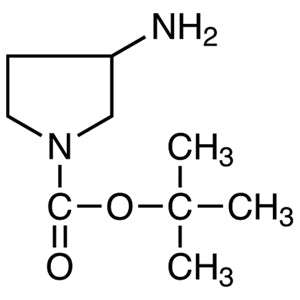
- TCI B3890 186550-13-0 3-Amino-1-(tert-butoxycarbonyl)pyrrolidine
- TCI B1560 115445-21-1 1-Benzyl-3-(ethylamino)pyrrolidine
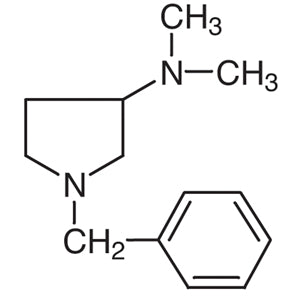
- TCI B1559 69478-77-9 1-Benzyl-3-(dimethylamino)pyrrolidine
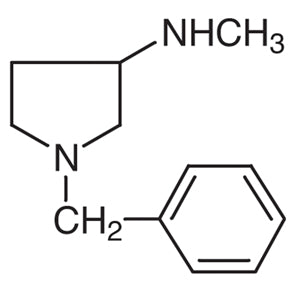
- TCI B1558 96568-35-3 1-Benzyl-3-(methylamino)pyrrolidine
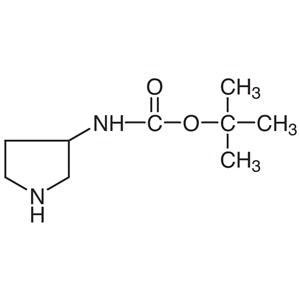
- TCI B1358 99724-19-3 3-(tert-Butoxycarbonylamino)pyrrolidine
- Organic synthesis: Pyrrolidine is widely used in the synthesis of complex organic molecules due to its reactivity and structural versatility.
- Pharmaceutical research: It serves as a building block in the development of new drugs and bioactive compounds.
- Heterocyclic compound preparation: Its five-membered ring structure makes it ideal for creating various heterocyclic derivatives.
- Analytical chemistry: It is used as a standard or reagent in analytical procedures to test chemical properties and reactions.
- Industrial chemical production: Its stability and solubility make it suitable for large-scale chemical manufacturing processes.
| Brand | TCI |
|---|---|
| CAS number | 123-75-1 |
| Molecular formula | — |
| Purity | — |
| Category | Chemistry > Building Blocks > Heterocyclic Building Blocks |
| Pack sizes | Available in various quantities as per standard laboratory supply |
| Physical form | Liquid |
| Storage | Store in a cool, dry place away from direct sunlight |
Pyrrolidine should be stored in a cool, dry place, away from direct sunlight and sources of heat. It is recommended to use airtight containers made of glass or polyethylene to prevent contamination and evaporation. Due to its reactivity, it should be handled in a well-ventilated area, preferably under a fume hood. Avoid contact with strong oxidizing agents or acids to prevent unwanted reactions. Always wear appropriate personal protective equipment, such as gloves and safety goggles, when handling this compound. Proper storage and handling ensure the safety of laboratory personnel and maintain the integrity of the compound for extended use.
—
Produk Terkait
-
Tetrahydrofuran-2-ylPyrrolidine-1-carbodithioate TCI T4405
Regular price From Rp 1.988.700,00Regular price -
3-Amino-1-(tert-butoxycarbonyl)pyrrolidine TCI B3890
Regular price From Rp 2.094.750,00Regular price -
1-Benzyl-3-(ethylamino)pyrrolidine TCI B1560
Regular price Rp 2.016.000,00Regular price -
1-Benzyl-3-(dimethylamino)pyrrolidine TCI B1559
Regular price Rp 1.776.600,00Regular price -
1-Benzyl-3-(methylamino)pyrrolidine TCI B1558
Regular price From Rp 1.590.750,00Regular price -
3-(tert-Butoxycarbonylamino)pyrrolidine TCI B1358
Regular price From Rp 1.696.800,00Regular price -
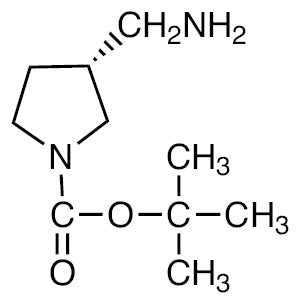
(R)-3-(Aminomethyl)-1-(tert-butoxycarbonyl)pyrrolidine TCI A3285
Regular price From Rp 2.227.050,00Regular price -
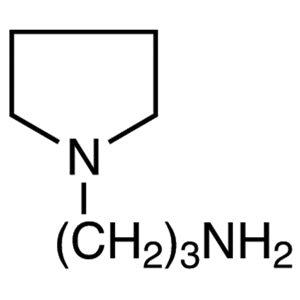
1-(3-Aminopropyl)pyrrolidine TCI A2270
Regular price From Rp 2.174.550,00Regular price