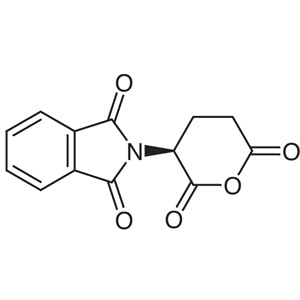
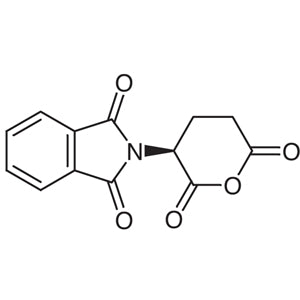
N-Phthaloyl-L-glutamic Anhydride is a chemical compound widely utilized in asymmetric synthesis to construct chiral molecular structures with optical activity. This compound plays a crucial role in laboratory settings where precise control over molecular architecture is essential, particularly in the development of bioactive compounds. Its unique chemical structure enables it to participate in various synthetic reactions, making it a valuable tool for researchers aiming to create complex and functional molecules. In the context of pharmaceutical and biochemical research, this compound is indispensable for the synthesis of chiral compounds that exhibit specific biological activities.
The compound's key properties include its ability to engage in asymmetric reactions, leading to the formation of optically active products with distinct stereochemical configurations. These characteristics make it a preferred choice for applications requiring high selectivity and specificity in molecular synthesis. Its anhydride functionality allows for versatile reactivity with different substrates, enabling the synthesis of a wide range of target molecules. This adaptability, combined with its stability under controlled conditions, ensures its reliability in laboratory environments where precision is paramount.
In Indonesian laboratories, N-Phthaloyl-L-glutamic Anhydride is commonly used in research focused on the synthesis of chiral compounds, especially in pharmaceutical and biochemical applications. Its role is critical in the development of new drugs and bioactive molecules, where the stereochemistry of the final product significantly influences its biological activity. Researchers in Indonesia rely on this compound to achieve the desired molecular configurations necessary for advanced chemical studies and drug discovery processes.
Related TCI products
- TCI P1789 3343-28-0 N-Phthaloyl-DL-glutamic Anhydride
- TCI T2055 Tetrakis[N-phthaloyl-(S)-tert-leucinato]dirhodium Bis(ethyl Acetate) Adduct
- TCI T2054 Tetrakis[N-phthaloyl-(R)-tert-leucinato]dirhodium Bis(ethyl Acetate) Adduct
- TCI T1551 131219-55-1 Tetrakis[N-phthaloyl-(S)-phenylalaninato]dirhodium Ethyl Acetate Adduct
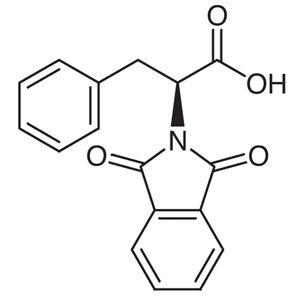
- TCI P1227 5123-55-7 N-Phthaloyl-L-phenylalanine
- TCI P0405 88-95-9 Phthaloyl Chloride
- Asymmetric Synthesis: This compound is ideal for asymmetric synthesis due to its ability to generate optically active products with high stereocontrol, making it essential for creating chiral molecules with specific biological activities.
- Chiral Compound Development: It supports the development of chiral compounds by providing a versatile building block that can be modified through various chemical reactions to achieve desired molecular structures.
- Pharmaceutical Research: It is widely used in pharmaceutical research to synthesize bioactive molecules, where precise stereochemistry is crucial for drug efficacy and selectivity.
- Biochemical Studies: Its role in biochemical studies involves the synthesis of compounds that interact with biological systems, contributing to the understanding of molecular interactions and functions.
- Organic Chemistry Research: It is a key reagent in organic chemistry research, enabling the synthesis of complex molecules with controlled stereochemistry and functional group modifications.
| Brand | TCI |
|---|---|
| CAS number | 25830-77-7 |
| Molecular formula | — |
| Purity | — |
| Category | Chemistry > Asymmetric Synthesis > Chiral Building Blocks |
| Pack sizes | As per supplier specifications |
| Physical form | Solid (as per standard product description) |
| Storage | Store in a cool, dry place away from moisture and direct sunlight |
This compound should be stored in a cool, dry environment to maintain its chemical integrity and prevent degradation. It is recommended to use airtight containers to protect it from moisture and humidity, which can affect its stability. Proper labeling of storage containers is essential to ensure safe handling and prevent accidental exposure. In laboratory settings, it should be handled with appropriate personal protective equipment, such as gloves and safety goggles, to minimize direct contact. Due to its chemical nature, it should be stored separately from incompatible substances to avoid potential reactions. Regular inspection of storage conditions is advised to ensure compliance with safety standards and maintain the quality of the compound for research use.
—
Produk Terkait
-
N-Phthaloyl-DL-glutamicAnhydride TCI P1789
Regular price From Rp 2.041.200,00Regular price -
Tetrakis[N-phthaloyl-(S)-tert-leucinato]dirhodiumBis(ethylAcetate)Adduct TCI T2055
Regular price Rp 6.042.750,00Regular price -
Tetrakis[N-phthaloyl-(R)-tert-leucinato]dirhodiumBis(ethylAcetate)Adduct TCI T2054
Regular price Rp 6.042.750,00Regular price -
Tetrakis[N-phthaloyl-(S)-phenylalaninato]dirhodiumEthylAcetateAdduct TCI T1551
Regular price Rp 6.465.900,00Regular price -
N-Phthaloyl-L-phenylalanine TCI P1227
Regular price Rp 1.881.600,00Regular price -
PhthaloylChloride TCI P0405
Regular price From Rp 769.650,00Regular price -
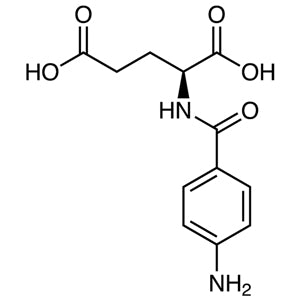
N-(4-Aminobenzoyl)-L-glutamicAcid TCI A0442
Regular price From Rp 1.087.800,00Regular price -
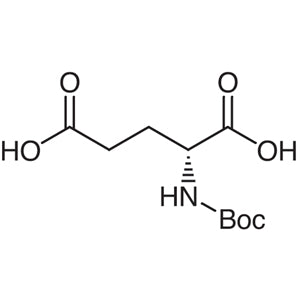
N-(tert-Butoxycarbonyl)-D-glutamicAcid TCI B2987
Regular price From Rp 1.298.850,00Regular price

![Tetrakis[N-phthaloyl-(S)-tert-leucinato]dirhodium Bis(ethyl Acetate) Adduct - AMI Scientific](http://amiscientific.com/cdn/shop/files/TCI2510T2055.jpg?v=1767142579&width=533)
![Tetrakis[N-phthaloyl-(R)-tert-leucinato]dirhodium Bis(ethyl Acetate) Adduct - AMI Scientific](http://amiscientific.com/cdn/shop/files/TCI2510T2054.jpg?v=1767142575&width=533)
![131219-55-1 Tetrakis[N-phthaloyl-(S)-phenylalaninato]dirhodium Ethyl Acetate Adduct - AMI Scientific](http://amiscientific.com/cdn/shop/files/TCI2510T1551.jpg?v=1767141820&width=533)