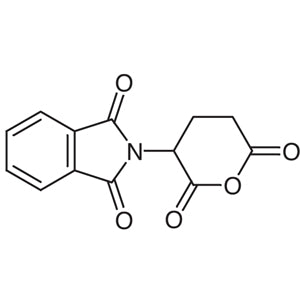
N-Phthaloyl-DL-glutamic Anhydride is a chemical compound widely used in laboratory settings for its versatility in organic synthesis. It serves as a key building block in the creation of complex organic molecules, particularly those involving amino acid derivatives. This compound is commonly employed in chemical laboratories as a reagent for the synthesis of various biologically relevant compounds. Its anhydride structure allows it to participate in esterification and coupling reactions, making it a valuable tool for chemists working on functional group transformations.
The compound’s high reactivity and stability in organic solvents make it a preferred choice for laboratory applications. It is soluble in common organic solvents such as ethyl acetate and acetone, which facilitates its use in a wide range of synthetic procedures. Its molecular structure is well-suited for controlled chemical reactions, ensuring predictable outcomes in laboratory experiments. These properties make it an essential reagent for researchers seeking precise and consistent results in their chemical processes.
In Indonesian laboratories, N-Phthaloyl-DL-glutamic Anhydride is extensively used in organic chemistry research, particularly in the development of bioactive compounds and pharmaceuticals. Its availability in various packaging sizes makes it suitable for both small-scale and intermediate research projects. Its role in biomedical and pharmacological synthesis has made it a standard component in many research laboratories across Indonesia.
- Biomedical Synthesis: This compound is ideal for creating complex organic molecules used in drug development and bioactive research.
- Organic Chemistry Research: Its reactivity and solubility make it a key reagent in synthetic pathways for amino acid derivatives.
- Pharmaceutical Development: It is used in the synthesis of compounds with potential therapeutic applications in medicine.
- Functional Group Modification: Its anhydride structure enables efficient coupling reactions in molecular construction.
- Analytical Chemistry: It serves as a standard reagent for testing reaction mechanisms and synthetic pathways in laboratory settings.
| Brand | TCI |
|---|---|
| CAS number | 3343-28-0 |
| Molecular formula | — |
| Purity | — |
| Category | Chemistry > Building Blocks > Non-Heterocyclic Building Blocks |
| Pack sizes | Available in various sizes to suit different research needs |
| Physical form | Solid (exact form may vary based on manufacturer) |
| Storage | Store in a cool, dry place away from moisture and direct sunlight |
This compound should be stored in a cool, dry environment to maintain its chemical integrity. It is recommended to keep it in a sealed container to prevent exposure to moisture and air, which could affect its reactivity. Due to its chemical nature, it should be handled with appropriate personal protective equipment, such as gloves and safety goggles, to ensure laboratory safety. It is important to store it away from incompatible substances to avoid any potential chemical interactions. Proper labeling and storage conditions help maintain the compound's effectiveness and safety in laboratory use.
—
Produk Terkait
-
TCI B5774 5,10-Bis(4,4,5,5-tetramethyl-1,3,2-dioxaborolan-2-yl)naphtho[1,2-c:5,6-c']bis([1,2,5]oxadiazole)
Regular price Rp 10.255.350,00Regular price -
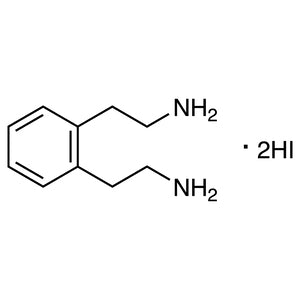
Dihydroiodide TCI B6569
Regular price From Rp 1.936.200,00Regular price -
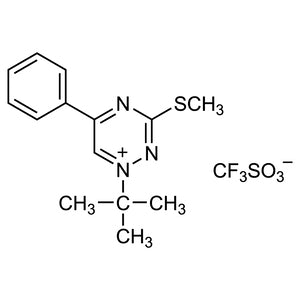
Trifluoromethanesulfonate TCI B7003
Regular price From Rp 1.936.200,00Regular price
![5,10-Bis(4,4,5,5-tetramethyl-1,3,2-dioxaborolan-2-yl)naphtho[1,2-c:5,6-c']bis([1,2,5]oxadiazole) - TCI B5774 - AMI Scientific](http://amiscientific.com/cdn/shop/files/TCI2510B5774.jpg?v=1769180228&width=533)