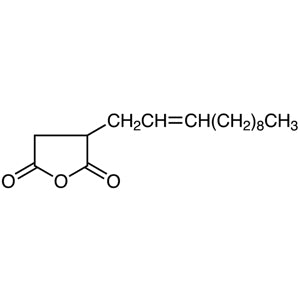
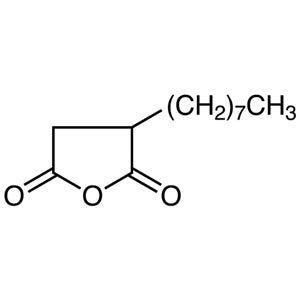
Butylsuccinic Anhydride (BSA), with CAS number 2035-76-9, is a chemical compound widely used as a building block in various chemical reactions. It serves as a key component in organic synthesis, enabling the formation of complex molecules through its reactive anhydride structure. This compound is commonly found in chemical laboratories, where it plays a crucial role in the development of new chemical entities and pharmaceutical compounds. Its versatility makes it a valuable tool for researchers aiming to explore diverse synthetic pathways.
BSA is favored for its high reactivity and ability to participate in multiple types of chemical reactions, such as esterification, amide formation, and nucleophilic substitution. Its anhydride functionality allows it to react efficiently with alcohols, amines, and bases, making it suitable for a wide range of applications. The compound’s rapid reaction rate under controlled conditions ensures that it can be used effectively in both academic and industrial research settings. These properties make it a preferred choice for chemists working on complex synthesis projects.
In Indonesian laboratories, BSA is a relevant and essential material for chemical and pharmaceutical research. It is frequently used in experiments related to organic synthesis, drug development, and the study of chemical reactivity. Its availability and reliability make it a staple in research institutions and universities across the country, supporting the advancement of scientific knowledge and innovation.
Related TCI products
- TCI B1613 7538-42-3 2-Buten-1-ylsuccinic Anhydride
- TCI H0616 10500-34-2 2-Hexen-1-ylsuccinic Anhydride (cis- and trans- mixture)
- TCI D0976 19780-11-1 2-Dodecen-1-ylsuccinic Anhydride (cis- and trans- mixture)
- TCI O0049 4200-92-4 n-Octylsuccinic Anhydride
- TCI B4061 82-73-5 3-Bromophthalic Anhydride
- TCI B3038 6708-37-8 Bicyclo[2.2.2]oct-5-ene-2,3-dicarboxylic Anhydride
- Organic synthesis of complex molecules for pharmaceutical and industrial applications due to its reactive anhydride structure.
- Development of new drugs through the formation of ester and amide linkages in medicinal chemistry research.
- Study of chemical reactivity and functional group transformations in academic and industrial research settings.
- Preparation of intermediates for the synthesis of various organic compounds in chemical laboratories.
- Investigation of reaction mechanisms and kinetic studies involving anhydride-based compounds in analytical chemistry.
| Brand | TCI |
|---|---|
| CAS number | 2035-76-9 |
| Molecular formula | — |
| Purity | — |
| Category | Chemistry > Building Blocks > Non-Heterocyclic Building Blocks |
| Pack sizes | Available in various sizes as per supplier specifications |
| Physical form | Solid |
| Storage | Store in a cool, dry place away from moisture and direct sunlight |
Butylsuccinic Anhydride should be stored in a cool, dry environment to maintain its chemical integrity. It is recommended to keep it in a sealed container to prevent exposure to moisture, which can lead to hydrolysis. The compound is sensitive to humidity and should be stored in a well-ventilated area to avoid any potential degradation. Laboratory personnel should handle it with care, using appropriate personal protective equipment such as gloves and safety goggles. It is important to ensure that the storage area is free from incompatible materials to prevent any unwanted chemical reactions. Proper labeling of containers is essential for safe handling and to minimize the risk of accidental exposure.
—
Produk Terkait
-
2-Buten-1-ylsuccinicAnhydride TCI B1613
Regular price From Rp 2.491.650,00Regular priceRp 1.757.700,00Sale price From Rp 2.491.650,00 -
2-Hexen-1-ylsuccinicAnhydride(cis-andtrans-mixture) TCI H0616
Regular price Rp 4.266.150,00Regular priceRp 2.998.800,00Sale price Rp 4.266.150,00 -
2-Dodecen-1-ylsuccinicAnhydride(cis-andtrans-mixture) TCI D0976
Regular price From Rp 662.550,00Regular priceRp 478.800,00Sale price From Rp 662.550,00 -
n-OctylsuccinicAnhydride TCI O0049
Regular price Rp 3.710.700,00Regular priceRp 2.610.300,00Sale price Rp 3.710.700,00 -
3-BromophthalicAnhydride TCI B4061
Regular price From Rp 1.246.350,00Regular priceRp 871.500,00Sale price From Rp 1.246.350,00 -
Bicyclo[2.2.2]oct-5-ene-2,3-dicarboxylicAnhydride TCI B3038
Regular price Rp 3.605.700,00Regular priceRp 2.521.050,00Sale price Rp 3.605.700,00 -
4-BromophthalicAnhydride TCI B1693
Regular price From Rp 2.386.650,00Regular priceRp 1.668.450,00Sale price From Rp 2.386.650,00