5-Phenylhydantoin is a chemical compound belonging to the heterocyclic category, with a hydantoin core structure substituted with a phenyl group at the fifth position. This compound plays a crucial role in laboratory settings, particularly in the synthesis of complex molecules within organic and pharmaceutical research. As a building block, it serves as a foundational element for the development of bioactive compounds, including pharmaceuticals and synthetic chemicals. Its structural versatility makes it a valuable resource for chemists aiming to design and test new molecular structures.
The stability of 5-Phenylhydantoin’s chemical structure, combined with its controlled reactivity, makes it a preferred choice in various chemical reactions. It exhibits high melting points and resistance to unwanted chemical reactions, ensuring reliable performance under laboratory conditions. Additionally, its solubility in organic solvents such as ethyl acetate and acetone enhances its usability in a wide range of synthetic processes. These properties contribute to its effectiveness in maintaining the integrity of chemical reactions and supporting precise experimental outcomes.
In Indonesian laboratories, 5-Phenylhydantoin is widely used in scientific research, especially in the development of bioactive compounds. Its ability to be easily identified through IR and NMR spectroscopy facilitates accurate analysis and quality control. This compound is essential for researchers working on drug discovery and synthetic chemistry, providing a stable and reliable starting material for complex molecular synthesis.
- Organic synthesis: 5-Phenylhydantoin is ideal for creating complex organic molecules due to its stable structure and predictable reactivity.
- Pharmaceutical research: It serves as a key building block in the development of bioactive compounds, supporting drug discovery efforts.
- Analytical chemistry: Its solubility in organic solvents and spectral characteristics make it suitable for identification and quality control.
- Heterocyclic compound synthesis: The hydantoin core allows for the construction of various heterocyclic derivatives in synthetic pathways.
- Biochemical studies: It is used in the preparation of compounds with potential biological activity, aiding in pharmacological investigations.
| Brand | TCI |
|---|---|
| CAS number | 89-24-7 |
| Molecular formula | — |
| Purity | — |
| Category | Chemistry > Building Blocks > Heterocyclic Building Blocks |
| Pack sizes | Available in standard laboratory quantities |
| Physical form | Solid |
| Storage | Store in a cool, dry place away from light and moisture |
5-Phenylhydantoin should be stored in a cool, dry environment, away from direct light and moisture to maintain its chemical stability. It is recommended to use airtight containers to prevent exposure to humidity and contaminants. Due to its solid form, it can be safely handled with standard laboratory equipment. Always ensure proper ventilation when working with this compound to avoid inhalation of any airborne particles. Keep it away from incompatible materials to prevent any potential chemical interactions. Regular monitoring of storage conditions is essential to ensure the compound remains suitable for use in research applications.
—
Produk Terkait
-
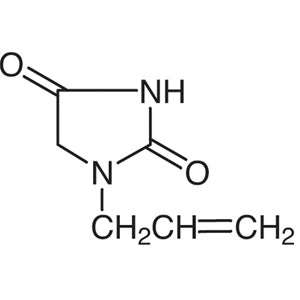
1-Allylhydantoin TCI A1144
Regular price Rp 1.961.400,00Regular price -
5-Ethylhydantoin TCI E0286
Regular price Rp 8.242.500,00Regular price -
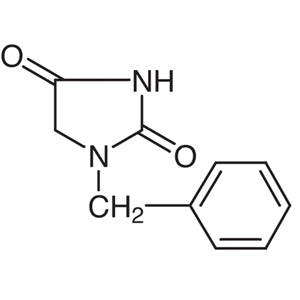
1-Benzylhydantoin TCI B2913
Regular price Rp 2.306.850,00Regular price -
1-Methylhydantoin TCI M1027
Regular price Rp 2.969.400,00Regular price -
1-(Hydroxymethyl)-5,5-dimethylhydantoin TCI M0668
Regular price From Rp 477.750,00Regular price -
1-Dodecylhydantoin TCI D2052
Regular price Rp 3.498.600,00Regular price -
5,5-Dimethylhydantoin TCI D0739
Regular price From Rp 505.050,00Regular price -
1-Benzyl-5-ethoxyhydantoin TCI B3085
Regular price Rp 689.850,00Regular price