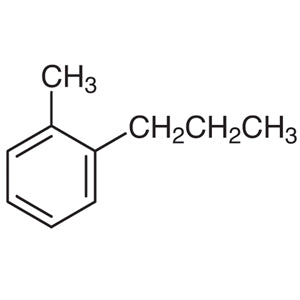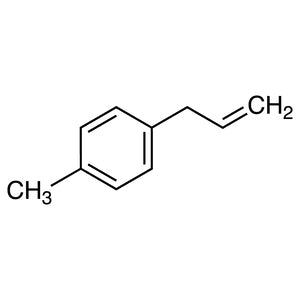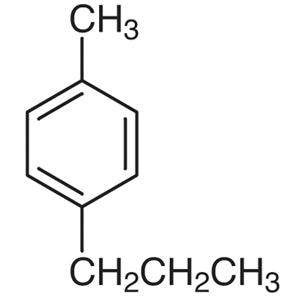
4-Propyltoluene is a chemical compound belonging to the category of non-heterocyclic building blocks, commonly used as a foundational material in the synthesis of complex compounds. Its molecular structure consists of a propyl group attached to a toluene ring, which imparts unique reactivity and versatility in chemical reactions. In laboratory settings, this compound serves as a key reagent for the development of aromatic compounds and their derivatives. Its ability to participate in various chemical transformations, such as substitution, oxidation, and reduction, makes it an essential component in synthetic chemistry.
The chemical stability of 4-Propyltoluene under normal conditions, combined with its reactivity in specific chemical environments, makes it a preferred choice for organic synthesis. The presence of a long alkyl chain enhances its potential for involvement in organic reactions requiring such substrates. This characteristic is particularly valuable in research involving the creation of new compounds with tailored properties. Its adaptability to different reaction conditions further supports its use in both academic and industrial research environments.
In Indonesian laboratories, 4-Propyltoluene is frequently utilized in pure and applied chemical research. It is especially relevant for higher education institutions and research organizations focused on the development of new compounds. Its role in synthetic chemistry and analytical studies makes it a valuable resource for advancing scientific knowledge and innovation in the field of chemistry.
- Organic synthesis applications benefit from 4-Propyltoluene due to its reactivity and structural versatility in creating complex aromatic compounds.
- It is ideal for substitution reactions as its alkyl group can be easily modified through various chemical transformations.
- In oxidation and reduction processes, 4-Propyltoluene serves as a stable starting material that can undergo controlled chemical changes.
- Its use in analytical chemistry supports the identification and characterization of aromatic compounds through various spectroscopic techniques.
- Indonesian research institutions rely on 4-Propyltoluene for developing new chemical compounds with specific functional properties.
| Brand | TCI |
|---|---|
| CAS number | 1074-55-1 |
| Molecular formula | — |
| Purity | — |
| Category | Chemistry > Building Blocks > Non-Heterocyclic Building Blocks |
| Pack sizes | Available in standard laboratory quantities |
| Physical form | Liquid |
| Storage | Store in a cool, dry place away from direct sunlight |
4-Propyltoluene should be stored in a cool, dry environment to maintain its chemical stability. It is recommended to keep the compound in tightly sealed containers made of materials compatible with organic solvents, such as glass or high-density polyethylene. Due to its reactivity, it should be handled in a well-ventilated laboratory setting, preferably under a fume hood. Avoid exposure to heat, light, and incompatible substances to prevent unintended chemical reactions. Proper personal protective equipment, including gloves and safety goggles, should always be worn when handling this compound to ensure laboratory safety.
—
Produk Terkait
-
3-Propyltoluene TCI P0748
Regular price Rp 3.155.250,00Regular price -
2-Propyltoluene TCI P0747
Regular price From Rp 3.367.350,00Regular price -
3-tert-Butyl-5-ethyltoluene TCI B1459
Regular price Rp 1.696.800,00Regular price -
3-tert-Butyltoluene TCI B0967
Regular price From Rp 4.797.450,00Regular price -
2-tert-Butyltoluene TCI B0966
Regular price Rp 4.743.900,00Regular price -
4-tert-Butyltoluene TCI B0744
Regular price Rp 769.650,00Regular price -
4-Allyltoluene TCI A3685
Regular price Rp 1.644.300,00Regular price -
4-Ethyltoluene TCI E0186
Regular price From Rp 3.578.400,00Regular price