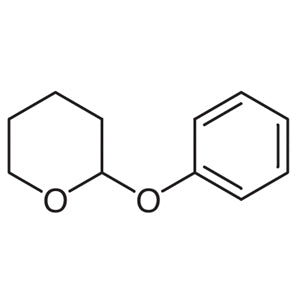
2-Phenoxytetrahydropyran is a chemical compound widely used as a building block in the synthesis of complex molecules. It plays a critical role in organic chemistry laboratories, where it serves as a versatile intermediate for various chemical reactions. Its unique molecular structure enables it to participate in substitution, addition, and oxidation reactions, making it a valuable tool for researchers. This compound is particularly important in the development of new compounds with applications in pharmaceuticals, materials science, and organic chemistry. Due to its reactivity, it is essential in research and development processes aimed at creating novel chemical entities.
The compound's chemical properties, including its reactivity and molecular structure, make it a preferred choice for synthetic chemists. The presence of both a phenyl group and a tetrahydropyran ring contributes to its unique reactivity and compatibility with a wide range of reagents. These characteristics allow it to be used in the synthesis of heterocyclic and aromatic compounds, which are fundamental in many scientific applications. Its ability to form stable intermediates under controlled conditions further enhances its utility in laboratory settings.
In Indonesian laboratories, 2-Phenoxytetrahydropyran is commonly used in organic chemistry research, especially in pharmaceutical and materials science fields. It is a key component in the development of new drugs and advanced materials. Many research institutions and universities in Indonesia rely on this compound to expand their understanding of chemical synthesis and its applications. Its widespread use underscores its importance in both academic and industrial research environments.
Related TCI products
- TCI T2965 14774-37-9 Tetrahydropyran-4-methanol
- TCI V0076 22408-41-9 2-Vinyloxytetrahydropyran
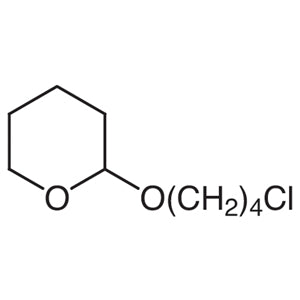
- TCI C1279 41302-05-0 2-(4-Chlorobutoxy)tetrahydropyran
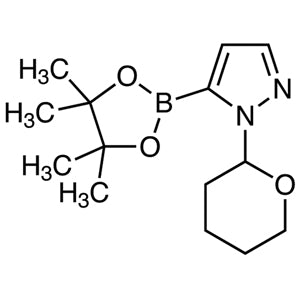
- TCI T3215 903550-26-5 1-(Tetrahydropyran-2-yl)-5-(4,4,5,5-tetramethyl-1,3,2-dioxaborolan-2-yl)pyrazole
- TCI T2493 5337-03-1 Tetrahydropyran-4-carboxylic Acid
- TCI T0952 100-72-1 Tetrahydropyran-2-methanol
- Organic synthesis in pharmaceutical research due to its reactivity and compatibility with various reagents.
- Development of new materials in polymer science for its ability to form stable intermediates.
- Synthesis of heterocyclic compounds in medicinal chemistry for its unique molecular structure.
- Use in academic research for teaching and experimental purposes in organic chemistry.
- Application in industrial chemical processes for the production of complex organic molecules.
| Brand | TCI |
|---|---|
| CAS number | 4203-50-3 |
| Molecular formula | — |
| Purity | — |
| Category | Chemistry > Building Blocks > Non-Heterocyclic Building Blocks |
| Pack sizes | Available in standard laboratory quantities |
| Physical form | Liquid |
| Storage | Store in a cool, dry place away from light and incompatible substances |
This compound should be stored in a cool, dry place, away from direct sunlight and sources of heat. It is recommended to keep it in a tightly sealed container to prevent exposure to air and moisture. Due to its reactivity, it should be stored separately from strong oxidizing agents and incompatible chemicals. Proper ventilation is essential when handling this material to minimize inhalation risks. Always use appropriate personal protective equipment, such as gloves and safety goggles, when working with this compound. Regular monitoring of storage conditions ensures the stability and safety of the material in the laboratory environment.
—
Produk Terkait
-
Tetrahydropyran-4-methanol TCI T2965
Regular price From Rp 1.856.400,00Regular price -
2-Vinyloxytetrahydropyran TCI V0076
Regular price Rp 7.394.100,00Regular price -
2-(4-Chlorobutoxy)tetrahydropyran TCI C1279
Regular price From Rp 903.000,00Regular price -
1-(Tetrahydropyran-2-yl)-5-(4,4,5,5-tetramethyl-1,3,2-dioxaborolan-2-yl)pyrazole TCI T3215
Regular price From Rp 928.200,00Regular price -
Tetrahydropyran-4-carboxylicAcid TCI T2493
Regular price From Rp 1.961.400,00Regular price -
Tetrahydropyran-2-methanol TCI T0952
Regular price From Rp 1.829.100,00Regular price -
Tetrahydropyran TCI T0110
Regular price From Rp 664.650,00Regular price -
4-Methyl-2-(2-methyl-1-propenyl)tetrahydropyran(cis-andtrans-mixture) TCI M2363
Regular price Rp 1.644.300,00Regular price