1,3-Phenylenediamine-4-sulfonic Acid is a chemical compound widely used in laboratory settings for various synthetic reactions aimed at creating complex molecules. As a fundamental building block in organic chemistry, it plays a crucial role in the development of dyes, pigments, and other organic compounds. Its versatility makes it a valuable resource for researchers and chemists seeking to explore new chemical structures and functional groups. This compound is essential in both academic and industrial research due to its ability to participate in multiple chemical reactions.
The compound’s high reactivity and unique molecular structure make it a preferred choice for chemical synthesis. It contains both amine and sulfonate groups, which enable it to undergo substitution and condensation reactions. These functional groups contribute to its effectiveness in creating stable and reactive compounds. The presence of multiple reactive sites allows for a wide range of chemical transformations, making it suitable for applications that require precise control over reaction pathways. Its chemical properties ensure it remains a key component in many synthetic processes.
In Indonesian laboratories, 1,3-Phenylenediamine-4-sulfonic Acid is commonly used in organic chemistry research, particularly in the fields of industrial chemistry and analytical chemistry. Its applications extend to the development of textile dyes and other specialized compounds. Due to its broad utility, it is highly sought after by researchers and scientists in various institutions and universities across Indonesia. Its role in advancing chemical research makes it an essential material for laboratory work.
Related TCI products
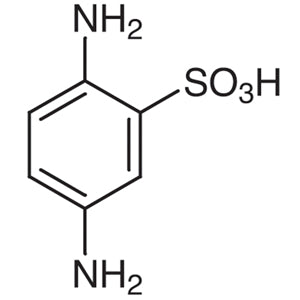
- TCI P1691 88-45-9 1,4-Phenylenediamine-2-sulfonic Acid
- TCI A0279 6258-06-6 1-Amino-4-bromoanthraquinone-2-sulfonic Acid Sodium Salt
- TCI A0287 88-53-9 5-Amino-2-chlorotoluene-4-sulfonic Acid
- TCI A0328 88-44-8 p-Toluidine-2-sulfonic Acid
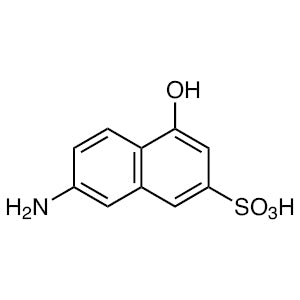
- TCI A0370 87-02-5 6-Amino-1-naphthol-3-sulfonic Acid
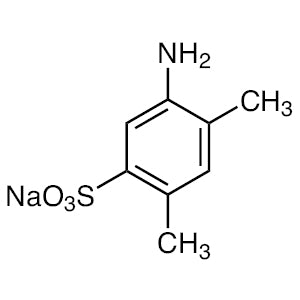
- TCI X0030 64501-84-4 2,4-Dimethylaniline-5-sulfonic Acid Sodium Salt
- Used in the synthesis of textile dyes due to its ability to form stable and reactive compounds that enhance colorfastness and brightness.
- Applied in the development of organic pigments because of its functional groups that allow for controlled chemical modifications.
- Employed in industrial chemistry research for creating complex organic molecules through substitution and condensation reactions.
- Utilized in analytical chemistry for its reactivity and structural versatility, enabling the study of various chemical interactions.
- Incorporated into polymer synthesis processes due to its capacity to form cross-linked structures with other functional groups.
| Brand | TCI |
|---|---|
| CAS number | 88-63-1 |
| Molecular formula | — |
| Purity | — |
| Category | Chemistry > Building Blocks > Non-Heterocyclic Building Blocks |
| Pack sizes | Available in various quantities as per standard laboratory supply |
| Physical form | Solid powder |
| Storage | Store in a cool, dry place away from direct sunlight and moisture |
This compound should be stored in a cool, dry environment to maintain its chemical integrity. It is recommended to keep it in a sealed container to prevent exposure to moisture and air. Due to its reactive nature, it should be handled in a well-ventilated area to minimize inhalation risks. Avoid contact with skin and eyes, and use appropriate personal protective equipment when handling. The storage conditions should ensure that the compound remains stable and safe for use in laboratory settings. Always ensure that the container is properly labeled and stored away from incompatible materials.
—
Produk Terkait
-
1,4-Phenylenediamine-2-sulfonicAcid TCI P1691
Regular price From Rp 769.650,00Regular price -
1-Amino-4-bromoanthraquinone-2-sulfonicAcidSodiumSalt TCI A0279
Regular price From Rp 769.650,00Regular price -
5-Amino-2-chlorotoluene-4-sulfonicAcid TCI A0287
Regular price From Rp 637.350,00Regular price -
p-Toluidine-2-sulfonicAcid TCI A0328
Regular price From Rp 477.750,00Regular price -
6-Amino-1-naphthol-3-sulfonicAcid TCI A0370
Regular price From Rp 505.050,00Regular price -
2,4-Dimethylaniline-5-sulfonicAcidSodiumSalt TCI X0030
Regular price Rp 4.268.250,00Regular price -
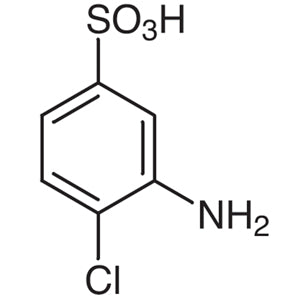
2-Chloroaniline-5-sulfonicAcid TCI A2196
Regular price Rp 1.961.400,00Regular price -
m-Toluidine-4-sulfonicAcid TCI A0329
Regular price Rp 1.431.150,00Regular price