
![6683-19-8 Pentaerythritol Tetrakis[3-(3,5-di-tert-butyl-4-hydroxyphenyl)propionate] - AMI Scientific](http://amiscientific.com/cdn/shop/files/TCI2510P0932.jpg?v=1769143269&width=1946)
![6683-19-8 Pentaerythritol Tetrakis[3-(3,5-di-tert-butyl-4-hydroxyphenyl)propionate] - AMI Scientific](http://amiscientific.com/cdn/shop/files/TCI2510P0932.jpg?v=1769143269&width=1445)
Pentaerythritol Tetrakis[3-(3,5-di-tert-butyl-4-hydroxyphenyl)propionate] is a chemical compound widely used as an antioxidant in polymer industries. It serves as a key additive in the formulation of polymer materials, helping to protect against oxidative degradation. This compound is commonly found in the development of plastic, rubber, and composite materials, where it plays a vital role in enhancing the stability and longevity of the final product. Its application in the laboratory is essential for studying material behavior under oxidative stress and for developing more durable synthetic materials.
The compound is preferred due to its high stability and resistance to degradation, making it effective in various laboratory environments. Its complex molecular structure allows it to efficiently block harmful free radicals, which are responsible for oxidative damage. Additionally, its good solubility in organic solvents facilitates easy incorporation into polymer formulations. These properties make it a reliable choice for both research and industrial applications, particularly in the field of polymer science.
In Indonesian laboratories, this material is frequently used in material research and composite development. Scientists and researchers rely on its ability to extend the lifespan of polymer-based products and maintain their quality under varying environmental conditions. Its consistent performance and reliability make it a preferred additive in both academic and industrial settings.
- Polymer Stability Testing - This compound is ideal for assessing the oxidative stability of polymer materials, helping to determine their long-term durability and performance.
- Composite Material Development - It is widely used in the formulation of composite materials to enhance their resistance to thermal and oxidative degradation.
- Antioxidant Efficacy Studies - Researchers use it to evaluate the effectiveness of antioxidants in protecting materials from oxidative damage under different conditions.
- Plastic and Rubber Formulation - It is commonly incorporated into plastic and rubber formulations to improve their thermal stability and resistance to aging.
- Environmental Stress Testing - Its use in environmental stress testing helps to simulate real-world conditions and evaluate material performance over time.
| Brand | TCI |
|---|---|
| CAS number | 6683-19-8 |
| Molecular formula | — |
| Purity | — |
| Category | Materials Science > Polymer/Macromolecule Reagents > Polymer Additives |
| Pack sizes | Available in various quantities as per standard laboratory requirements |
| Physical form | Solid powder |
| Storage | Store in a cool, dry place away from direct sunlight and moisture |
This compound should be stored in a cool, dry environment, away from direct sunlight and moisture to maintain its stability and effectiveness. It is recommended to use airtight containers made of glass or high-density polyethylene to prevent contamination and exposure to air. Due to its chemical nature, it should be handled with appropriate personal protective equipment, including gloves and safety goggles, to ensure laboratory safety. It is not flammable but should be kept away from strong oxidizing agents. Regular monitoring of storage conditions is advised to ensure the material remains in optimal condition for use in research applications.
—
Produk Terkait
-
Methyl3-(3,5-Di-tert-butyl-4-hydroxyphenyl)propionate TCI M1810
Regular price From Rp 557.550,00Regular price -
Stearyl3-(3,5-Di-tert-butyl-4-hydroxyphenyl)propionate TCI D1644
Regular price From Rp 717.150,00Regular price -
TriethyleneGlycolBis[3-(3-tert-butyl-4-hydroxy-5-methylphenyl)propionate] TCI T3277
Regular price From Rp 1.008.000,00Regular price -
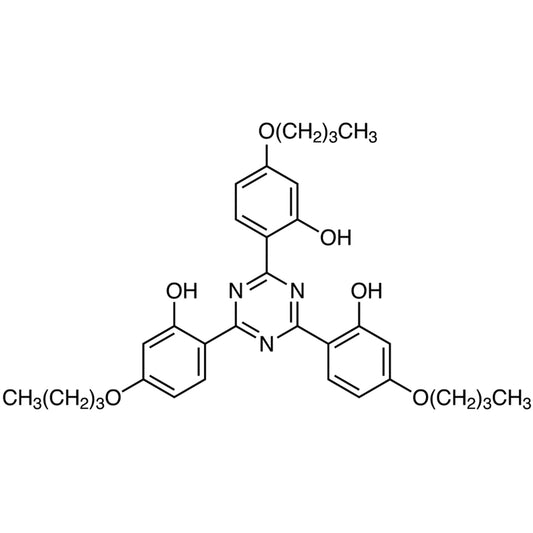
2,4,6-Tris(4-butoxy-2-hydroxyphenyl)-1,3,5-triazine TCI T3870
Regular price From Rp 1.988.700,00Regular price -
[Oxalylbis(azanediyl)]bis(ethane-2,1-diyl)Bis[3-(3,5-di-tert-butyl-4-hydroxyphenyl)propanoate] TCI O0526
Regular price From Rp 1.378.650,00Regular price -
N,N'-(Hexane-1,6-diyl)bis[3-(3,5-di-tert-butyl-4-hydroxyphenyl)propanamide] TCI H1704
Regular price From Rp 584.850,00Regular price -
2-(5-tert-Butyl-2-hydroxyphenyl)benzotriazole TCI H0719
Regular price From Rp 1.378.650,00Regular price -
[4-[(2-Ethylhexyl)oxy]-2-hydroxyphenyl](phenyl)methanone TCI E1619
Regular price From Rp 1.908.900,00Regular price


![36443-68-2 Triethylene Glycol Bis[3-(3-tert-butyl-4-hydroxy-5-methylphenyl)propionate] - AMI Scientific](http://amiscientific.com/cdn/shop/files/TCI2510T3277.jpg?v=1769143710&width=533)

![70331-94-1 [Oxalylbis(azanediyl)]bis(ethane-2,1-diyl) Bis[3-(3,5-di-tert-butyl-4-hydroxyphenyl)propanoate] - AMI Scientific](http://amiscientific.com/cdn/shop/files/TCI2510O0526.jpg?v=1769143206&width=533)
![23128-74-7 N,N'-(Hexane-1,6-diyl)bis[3-(3,5-di-tert-butyl-4-hydroxyphenyl)propanamide] - AMI Scientific](http://amiscientific.com/cdn/shop/files/TCI2510H1704.jpg?v=1769180913&width=533)

![[4-[(2-Ethylhexyl)oxy]-2-hydroxyphenyl](phenyl)methanone (CAS 2549-90-8) - TCI E1619 - AMI Scientific](http://amiscientific.com/cdn/shop/files/TCI2510E1619.jpg?v=1767113127&width=533)