![23128-74-7 N,N'-(Hexane-1,6-diyl)bis[3-(3,5-di-tert-butyl-4-hydroxyphenyl)propanamide] - AMI Scientific](http://amiscientific.com/cdn/shop/files/TCI2510H1704.jpg?v=1769180913&width=1946)
![23128-74-7 N,N'-(Hexane-1,6-diyl)bis[3-(3,5-di-tert-butyl-4-hydroxyphenyl)propanamide] - AMI Scientific](http://amiscientific.com/cdn/shop/files/TCI2510H1704.jpg?v=1769180913&width=1445)
N,N'-(Hexane-1,6-diyl)bis[3-(3,5-di-tert-butyl-4-hydroxyphenyl)propanamide] is a specialized chemical compound used in materials science and polymer chemistry. This compound functions as a stabilizer or antioxidant for polymers, particularly in the production of composite materials or polymers resistant to oxidation. In the laboratory, it is commonly used to enhance the durability of materials against environmental changes such as heat, UV radiation, and oxidative degradation. Its molecular structure allows it to bond with polymer chains, forming a protective layer that reduces material breakdown.
The compound's key properties include its ability to absorb free radicals generated during oxidation processes, thereby preventing further material degradation. This makes it an ideal choice for applications requiring long-term stability and resistance to environmental stressors. Its molecular design enables it to effectively interact with polymer matrices, offering superior protection without compromising the material’s overall performance. These characteristics make it a preferred additive in polymer formulations and composite development.
In Indonesian laboratories, this compound is frequently used in polymer research, composite development, and material stability testing. It is widely utilized by research institutions and local industries to meet quality and safety standards in product development. Its role in enhancing material longevity and performance is critical in both academic and industrial settings, supporting innovation in advanced material applications.
TCI brochures (PDF)
- Polymer Additives 2026-04-16 · p. 8
Related TCI products
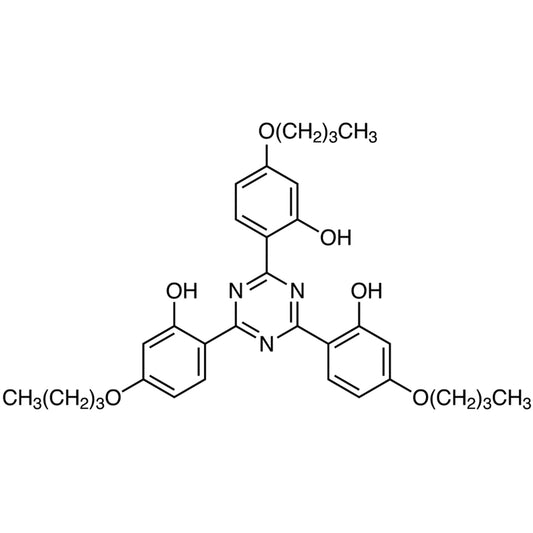
- TCI T3870 3135-19-1 2,4,6-Tris(4-butoxy-2-hydroxyphenyl)-1,3,5-triazine
- TCI P0932 6683-19-8 Pentaerythritol Tetrakis[3-(3,5-di-tert-butyl-4-hydroxyphenyl)propionate]
- TCI O0526 70331-94-1 [Oxalylbis(azanediyl)]bis(ethane-2,1-diyl) Bis[3-(3,5-di-tert-butyl-4-hydroxyphenyl)propanoate]
- TCI M1810 6386-38-5 Methyl 3-(3,5-Di-tert-butyl-4-hydroxyphenyl)propionate
- TCI H0719 3147-76-0 2-(5-tert-Butyl-2-hydroxyphenyl)benzotriazole
- TCI E1619 2549-90-8 [4-[(2-Ethylhexyl)oxy]-2-hydroxyphenyl](phenyl)methanone
- Polymer Stabilization: This compound is used to enhance the thermal and oxidative stability of polymer materials, ensuring long-term durability in various industrial applications.
- Composite Material Development: It plays a key role in improving the resistance of composite materials to environmental degradation, making it essential in advanced material research.
- UV Protection in Polymers: The compound effectively absorbs UV radiation, making it suitable for applications where polymer materials are exposed to sunlight or other light sources.
- Oxidative Degradation Testing: It is used in laboratory settings to study the effects of oxidation on different polymer types, aiding in the development of more resilient materials.
- Material Longevity Studies: Its ability to prevent degradation makes it a valuable tool in research focused on extending the lifespan of polymer-based products.
| Brand | TCI |
|---|---|
| CAS number | 23128-74-7 |
| Molecular formula | — |
| Purity | — |
| Category | Materials Science > Polymer/Macromolecule Reagents > Polymer Additives |
| Pack sizes | Available in various quantities as per standard laboratory requirements |
| Physical form | Solid powder |
| Storage | Store in a cool, dry place away from direct sunlight and moisture |
This compound should be stored in a cool, dry environment, away from direct sunlight and moisture to maintain its chemical integrity. It is recommended to use airtight containers to prevent exposure to air and humidity, which could affect its stability. In laboratory settings, it should be handled with care using appropriate personal protective equipment, such as gloves and safety goggles, to ensure safety during handling. Proper ventilation is also advised when working with the compound to minimize inhalation risks. Due to its chemical nature, it should be stored separately from incompatible substances to avoid any potential reactions. Following these guidelines ensures safe and effective use in both research and industrial applications.
—
Produk Terkait
-
2,4,6-Tris(4-butoxy-2-hydroxyphenyl)-1,3,5-triazine TCI T3870
Regular price From Rp 1.988.700,00Regular price -
PentaerythritolTetrakis[3-(3,5-di-tert-butyl-4-hydroxyphenyl)propionate] TCI P0932
Regular price Rp 955.500,00Regular price -
[Oxalylbis(azanediyl)]bis(ethane-2,1-diyl)Bis[3-(3,5-di-tert-butyl-4-hydroxyphenyl)propanoate] TCI O0526
Regular price From Rp 1.378.650,00Regular price -
Methyl3-(3,5-Di-tert-butyl-4-hydroxyphenyl)propionate TCI M1810
Regular price From Rp 557.550,00Regular price -
2-(5-tert-Butyl-2-hydroxyphenyl)benzotriazole TCI H0719
Regular price From Rp 1.378.650,00Regular price -
[4-[(2-Ethylhexyl)oxy]-2-hydroxyphenyl](phenyl)methanone TCI E1619
Regular price From Rp 1.908.900,00Regular price -
3-(3,5-Di-tert-butyl-4-hydroxyphenyl)-N'-[3-(3,5-di-tert-butyl-4-hydroxyphenyl)propanoyl]propanehydrazide TCI D5516
Regular price From Rp 1.378.650,00Regular price -
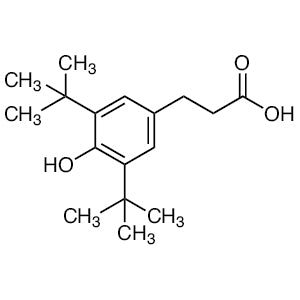
3-(3,5-Di-tert-butyl-4-hydroxyphenyl)propionicAcid TCI D3452
Regular price From Rp 795.900,00Regular price

![6683-19-8 Pentaerythritol Tetrakis[3-(3,5-di-tert-butyl-4-hydroxyphenyl)propionate] - AMI Scientific](http://amiscientific.com/cdn/shop/files/TCI2510P0932.jpg?v=1769143269&width=533)
![70331-94-1 [Oxalylbis(azanediyl)]bis(ethane-2,1-diyl) Bis[3-(3,5-di-tert-butyl-4-hydroxyphenyl)propanoate] - AMI Scientific](http://amiscientific.com/cdn/shop/files/TCI2510O0526.jpg?v=1769143206&width=533)


![[4-[(2-Ethylhexyl)oxy]-2-hydroxyphenyl](phenyl)methanone (CAS 2549-90-8) - TCI E1619 - AMI Scientific](http://amiscientific.com/cdn/shop/files/TCI2510E1619.jpg?v=1767113127&width=533)
![3-(3,5-Di-tert-butyl-4-hydroxyphenyl)-N'-[3-(3,5-di-tert-butyl-4-hydroxyphenyl)propanoyl]propanehydrazide (CAS 32687-78-8) - TCI D5516 - AMI Scientific](http://amiscientific.com/cdn/shop/files/TCI2510D5516.jpg?v=1768818453&width=533)