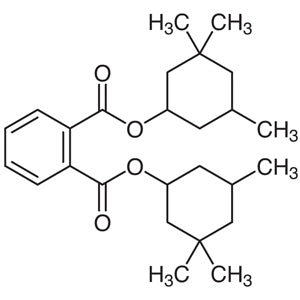
Bis(cis-3,3,5-trimethylcyclohexyl) phthalate is a chemical compound widely used in laboratory settings for its versatility in organic synthesis. As a building block, it serves as a foundational component in the development of complex molecular structures. This compound is particularly valuable in chemical reactions where precise control over molecular architecture is required. It is commonly employed in the synthesis of various organic compounds, making it an essential tool for researchers working in chemical and pharmaceutical fields. Its role extends beyond mere structural support, as it can function as a reagent or solvent in multiple synthetic processes.
The compound’s chemical stability and reactivity make it a preferred choice in laboratory applications. Its ability to participate in esterification and substitution reactions allows for the creation of a wide range of functional molecules. Additionally, its molecular structure provides the necessary framework for achieving desired physical and chemical properties in the final products. The compound’s stability under various reaction conditions ensures reliable results, making it a trusted material in both academic and industrial research environments.
In Indonesian laboratories, this compound is frequently used by scientists and researchers in universities and research institutions. It plays a crucial role in organic chemistry, pharmaceutical development, and material science. Its availability in the local market supports ongoing research efforts, enabling scientists to conduct experiments with the necessary materials. The compound’s relevance in these fields underscores its importance in advancing scientific knowledge and innovation.
Related TCI products
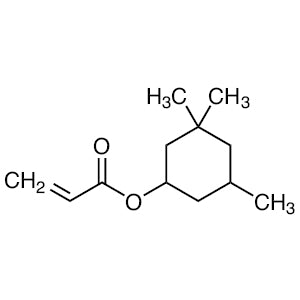
- TCI T3984 86178-38-3 3,3,5-Trimethylcyclohexyl Acrylate (cis- and trans- mixture) (stabilized with MEHQ)
- TCI T2278 118-56-9 3,3,5-Trimethylcyclohexyl Salicylate (cis- and trans- mixture)
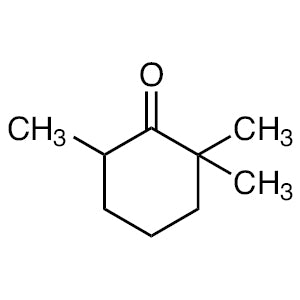
- TCI T3944 2408-37-9 2,2,6-Trimethylcyclohexanone
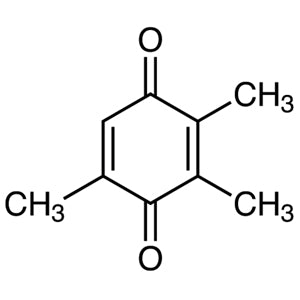
- TCI T3768 935-92-2 2,3,5-Trimethylcyclohexa-2,5-diene-1,4-dione
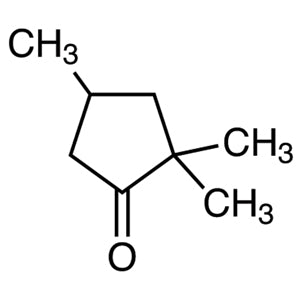
- TCI T1719 28056-54-4 2,2,4-Trimethylcyclopentanone
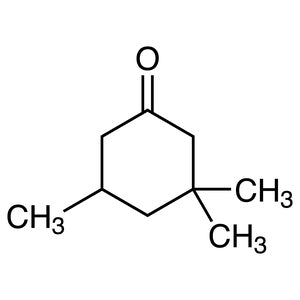
- TCI T0602 873-94-9 3,3,5-Trimethylcyclohexanone
- Organic synthesis applications benefit from this compound’s role in building complex molecular structures, offering versatility in reaction pathways.
- Pharmaceutical research utilizes it for the development of compounds with specific functional groups and structural requirements.
- Material science applications leverage its chemical stability and reactivity for the creation of advanced polymers and coatings.
- Esterification reactions often use this compound as a reagent due to its ability to participate in and facilitate such processes.
- Substitution reactions in synthetic chemistry benefit from its structural properties, enabling the formation of diverse chemical derivatives.
| Brand | TCI |
|---|---|
| CAS number | 245652-81-7 |
| Molecular formula | — |
| Purity | — |
| Category | Chemistry > Building Blocks > Non-Heterocyclic Building Blocks |
| Pack sizes | Available in various quantities as per standard laboratory supply |
| Physical form | Solid or liquid, depending on the specific product variant |
| Storage | Store in a cool, dry place away from direct sunlight and moisture |
This compound should be stored in a cool, dry environment to maintain its chemical stability. It is recommended to use airtight containers to prevent exposure to moisture and air, which could affect its integrity. Laboratory personnel should handle the compound with care, using appropriate personal protective equipment such as gloves and safety goggles. Due to its chemical nature, it should be kept away from incompatible substances to avoid potential reactions. Proper labeling of storage containers is essential for safe handling and easy identification. Regular inspection of storage conditions ensures the compound remains in optimal condition for use in research applications.
—
Produk Terkait
-
3,3,5-TrimethylcyclohexylAcrylate(cis-andtrans-mixture)(stabilizedwithMEHQ) TCI T3984
Regular price From Rp 1.510.950,00Regular price -
3,3,5-TrimethylcyclohexylSalicylate(cis-andtrans-mixture) TCI T2278
Regular price From Rp 664.650,00Regular price -
2,2,6-Trimethylcyclohexanone TCI T3944
Regular price From Rp 2.174.550,00Regular price -
2,3,5-Trimethylcyclohexa-2,5-diene-1,4-dione TCI T3768
Regular price Rp 3.949.050,00Regular price -
2,2,4-Trimethylcyclopentanone TCI T1719
Regular price Rp 7.261.800,00Regular price -
3,3,5-Trimethylcyclohexanone TCI T0602
Regular price From Rp 505.050,00Regular price -
3,4-Dimethylcyclopent-2-en-1-one TCI D6225
Regular price Rp 9.011.100,00Regular price -
2,2-Dimethylcyclopentanone TCI D5988
Regular price From Rp 1.988.700,00Regular price