

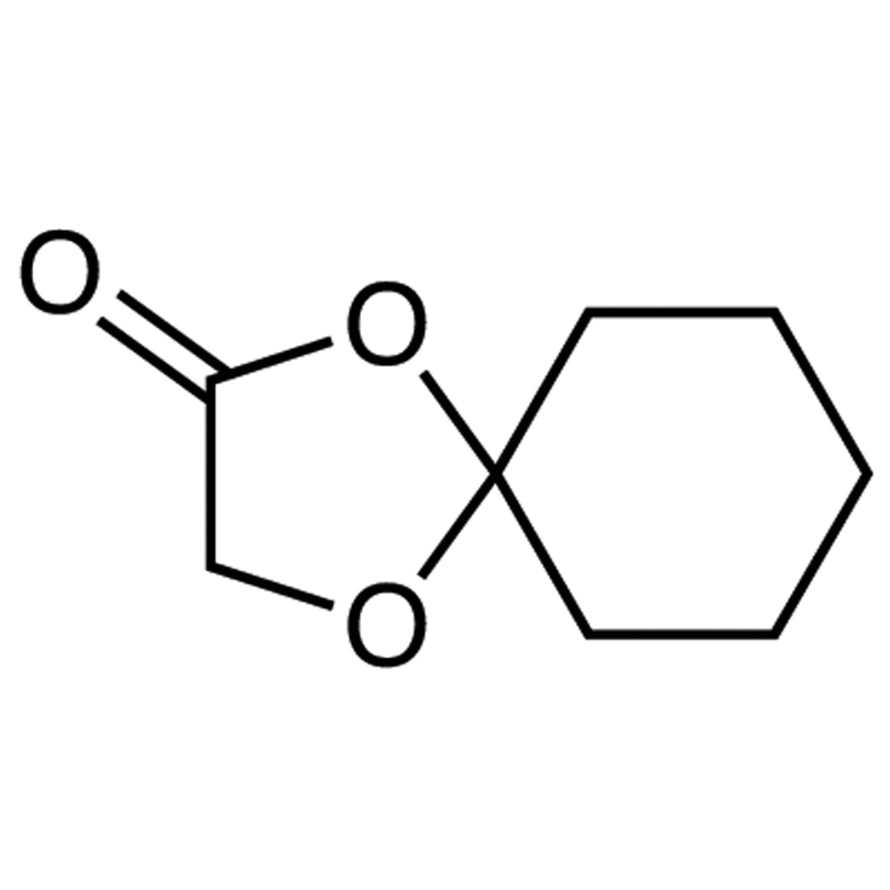
2,2-Pentamethylene-1,3-dioxolan-4-one from TCI (product code P1019, CAS 4423-79-4) is a spiro compound formed from glycolic acid and cyclohexanone. It can therefore be treated as a protected form of glycolic acid. Its dioxolanone ring masks both the hydroxyl and the carboxylic acid groups of glycolic acid at the same time. This makes it a practical building block for bringing an α-hydroxy acetate unit into a target molecule during organic synthesis. Chemists use it as a dependable starting point when a synthetic route needs a two-carbon oxygenated fragment.
Chemists choose this compound because the dioxolanone framework allows the alpha position next to the carbonyl to be converted into an enolate. The enolate can then react with electrophiles such as alkyl halides or aldehydes. Once the reaction is complete, the ketal ring can be opened to release the α-hydroxy acid derivative. The pentamethylene group from cyclohexanone stabilises the ketal. It also makes the compound easier to handle than free glycolic acid, which is polar and difficult to use in organometallic reactions. For these reasons it is a cleaner and more controllable alternative for building α-hydroxy acid structures.
For laboratories in Indonesia, this material is useful to organic synthesis and medicinal chemistry research groups. These groups build α-hydroxy acids, substituted lactates, or polyhydroxy fragments for natural product targets. University research laboratories, postgraduate thesis projects, and pharmaceutical development teams can use it for method development and route scouting. The 5g pack suits initial experiments and small-scale optimisation, so researchers can test reaction conditions before committing to larger synthetic campaigns.
Related TCI products
- TCI E1417 6290-17-1 Ethyl 2-(2,4-Dimethyl-1,3-dioxolan-2-yl)acetate (mixture of diastereoisomers)
- TCI E0929 6413-10-1 Ethyl 2-(2-Methyl-1,3-dioxolan-2-yl)acetate
- TCI P1351 17432-38-1 Pentamethylbenzaldehyde
- TCI P0044 1613-51-0 Pentamethylene Sulfide
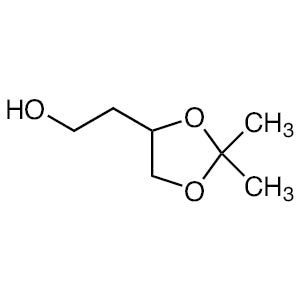
- TCI D5914 5754-34-7 2-(2,2-Dimethyl-1,3-dioxolan-4-yl)ethan-1-ol
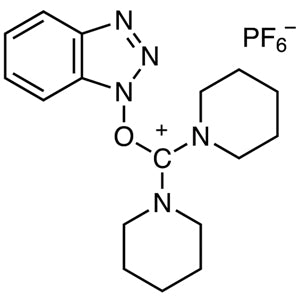
- TCI B3816 206752-41-2 O-(Benzotriazol-1-yl)-N,N,N',N'-bis(pentamethylene)uronium Hexafluorophosphate
- Glycolic acid protection strategy: the dioxolanone ring masks both the hydroxyl and the carboxylic acid groups together, so neither group interferes with reactions at other sites.
- Enolate alkylation reactions: the alpha position next to the carbonyl can be turned into an enolate and alkylated with alkyl halides, giving substituted α-hydroxy acid frameworks.
- Aldol-type additions to aldehydes: the enolate made from this building block reacts with aldehydes, which gives access to polyhydroxy fragments that are valuable in natural product synthesis.
- Synthesis of substituted lactates and α-hydroxy acids: after the carbon-carbon bond is formed, opening the ketal ring releases the α-hydroxy acid derivative for further steps.
- Medicinal chemistry building block work: the stable, easy-to-handle ketal form lets researchers bring α-hydroxy acetate units into drug-like molecules more easily than with polar free glycolic acid.
| Brand | TCI (product code P1019) |
|---|---|
| CAS number | 4423-79-4 |
| Molecular formula | — |
| Purity | — |
| Category | Chemistry > Building Blocks > Non-Heterocyclic Building Blocks |
| Pack sizes | 5g |
| Physical form | see the product label and the certificate of analysis supplied by the manufacturer |
| Storage | follow the storage conditions on the manufacturer's label and safety data sheet |
Store this compound in its original, tightly closed manufacturer container. Keep it in a cool, dry, well-ventilated place away from heat, moisture, and incompatible materials such as strong acids, strong bases, and oxidising agents. Moisture and acidic conditions may open the ketal ring, so close the container promptly after each use. Handle the material in a fume hood. Wear suitable personal protective equipment, including safety glasses, chemical-resistant gloves, and a laboratory coat. Avoid inhaling vapour or dust and avoid contact with skin and eyes. Before use, read the safety data sheet for specific hazard information and recommended storage temperature. Dispose of waste according to local chemical waste regulations.
—
Produk Terkait
-
Ethyl2-(2,4-Dimethyl-1,3-dioxolan-2-yl)acetate(mixtureofdiastereoisomers) TCI E1417
Regular price From Rp 610.050,00Regular price -
Ethyl2-(2-Methyl-1,3-dioxolan-2-yl)acetate TCI E0929
Regular price From Rp 769.650,00Regular price -
Pentamethylbenzaldehyde TCI P1351
Regular price Rp 1.008.000,00Regular price -
PentamethyleneSulfide TCI P0044
Regular price Rp 1.724.100,00Regular price -
2-(2,2-Dimethyl-1,3-dioxolan-4-yl)ethan-1-ol TCI D5914
Regular price From Rp 1.803.900,00Regular price -
O-(Benzotriazol-1-yl)-N,N,N',N'-bis(pentamethylene)uroniumHexafluorophosphate TCI B3816
Regular price From Rp 823.200,00Regular price -
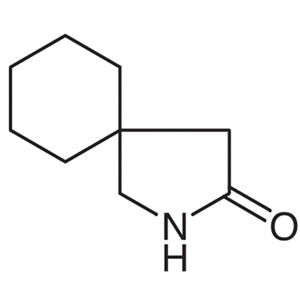
4,4-Pentamethylene-2-pyrrolidone TCI P1695
Regular price Rp 875.700,00Regular price -
PentamethyleneBis[4-(10,15,20-triphenylporphyrin-5-yl)benzoate]dizinc(II)[Reagentforapplicationoftheexcitonchiralitymethod] TCI P1364
Regular price From Rp 2.650.200,00Regular price


![210769-64-5 Pentamethylene Bis[4-(10,15,20-triphenylporphyrin-5-yl)benzoate]dizinc(II) [Reagent for application of the exciton chirality method] - AMI Scientific](http://amiscientific.com/cdn/shop/files/TCI2510P1364.jpg?v=1769143302&width=533)