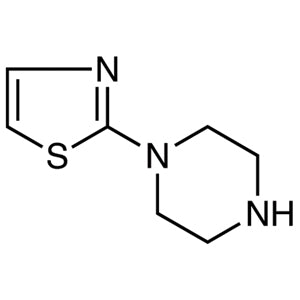
1-(2-Pyrimidyl)piperazine is a chemical compound widely used as a building block in the synthesis of heterocyclic compounds. Its complex molecular structure allows it to act as a versatile linker between different molecules during chemical reactions. In laboratory settings, this compound serves as a key reagent for the development of bioactive substances, including pharmaceuticals and industrial chemicals. Its role in organic chemistry is critical for the design of molecules with specific functional groups and molecular frameworks.
The chemical stability of 1-(2-Pyrimidyl)piperazine under controlled conditions makes it a preferred choice for various synthetic applications. Its unique structure, featuring two aromatic rings and a piperazine ring, provides flexibility in substitution reactions and other chemical transformations. This adaptability allows chemists to tailor its properties for specific research needs. The compound’s ability to participate in multiple reaction pathways enhances its utility in both academic and industrial research environments.
In Indonesian laboratories, 1-(2-Pyrimidyl)piperazine is commonly used in pharmacological, organic chemistry, and biochemical studies. Its broad applications in drug development and chemical synthesis make it an essential component in the pursuit of new compounds with targeted biological activities. Researchers rely on its consistent performance and predictable behavior to advance their experimental work in diverse scientific fields.
Related TCI products
- Used in the synthesis of heterocyclic compounds due to its structural versatility and reactivity in organic reactions.
- Applied in pharmaceutical research for the development of bioactive molecules with specific therapeutic effects.
- Utilized in biochemical studies to create compounds that interact with biological targets such as enzymes and receptors.
- Employed in medicinal chemistry to design new drugs with improved pharmacological profiles and selectivity.
- Integrated into industrial chemical processes for the production of specialized materials and functional chemicals.
| Brand | TCI |
|---|---|
| CAS number | 20980-22-7 |
| Molecular formula | — |
| Purity | — |
| Category | Chemistry > Building Blocks > Heterocyclic Building Blocks |
| Pack sizes | Available in various quantities as per standard laboratory supply options |
| Physical form | Solid powder |
| Storage | Store in a cool, dry place away from direct sunlight and moisture |
This compound should be stored in a cool, dry environment, away from direct sunlight and moisture to maintain its chemical stability. It is recommended to use airtight containers to prevent exposure to air and humidity, which could affect its integrity. Laboratory personnel should handle the compound with care, using appropriate personal protective equipment such as gloves and safety goggles. Since it is a chemical building block, it should be kept in a secure location, away from incompatible substances. Regular monitoring of storage conditions ensures the compound remains suitable for use in research applications. Proper labeling and documentation are essential for safe handling and traceability in the laboratory.
—
Produk Terkait
-
1-(2-Pyrimidyl)piperazineDihydrochloride TCI P1119
Regular price Rp 2.359.350,00Regular price -
N-(2-Aminoethyl)piperazine TCI A0304
Regular price From Rp 505.050,00Regular price -
1-(o-Tolyl)piperazine TCI T3404
Regular price From Rp 1.670.550,00Regular price -
1-(2-Thiazolyl)piperazine TCI T3273
Regular price Rp 1.326.150,00Regular price -
1-(p-Tolyl)piperazine TCI T2956
Regular price From Rp 1.298.850,00Regular price -
1-(Tetrahydro-2-furoyl)piperazine TCI T2617
Regular price From Rp 769.650,00Regular price -
1-(m-Tolyl)piperazine TCI T2260
Regular price From Rp 1.431.150,00Regular price -
1,4-Bis(2-hydroxyethyl)piperazine TCI B4903
Regular price From Rp 848.400,00Regular price