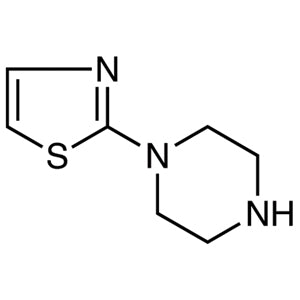
1-(2-Pyrimidyl)piperazine Dihydrochloride is a chemical compound widely used in organic synthesis reactions, particularly in the formation of heterocyclic compounds. It serves as a versatile building block in the development of complex molecules, making it essential for researchers in both organic chemistry and pharmacology. Its structural flexibility allows it to participate in a variety of chemical transformations, enabling the synthesis of bioactive compounds and pharmaceutical intermediates. In laboratory settings, this compound plays a crucial role in the design and production of new chemical entities with potential therapeutic applications.
This compound is favored for its chemical stability under controlled conditions and its reactivity with a wide range of relevant reagents. Its ability to form bonds with various functional groups, either through nitrogen or oxygen, makes it an ideal candidate for substitution reactions and the formation of new molecular bonds. Additionally, its good solubility in organic solvents simplifies processing and application in diverse experimental setups, enhancing its utility in both academic and industrial research environments.
In Indonesian laboratories, this compound is commonly used by chemists and pharmacologists for the synthesis of bioactive molecules and drug development. Its availability and reliability make it a preferred choice for researchers aiming to explore new chemical structures and biological activities. The compound's consistent performance in laboratory conditions ensures reproducibility and accuracy in experimental outcomes.
- Organic synthesis for the creation of heterocyclic compounds due to its structural versatility and reactivity.
- Pharmaceutical research as a building block for the development of bioactive molecules and drug candidates.
- Medicinal chemistry applications in the design of compounds with specific biological activities and therapeutic potential.
- Academic research in chemical synthesis to explore new reaction pathways and molecular structures.
- Industrial chemical production for the manufacture of specialty chemicals and intermediates.
| Brand | TCI |
|---|---|
| CAS number | 94021-22-4 |
| Molecular formula | — |
| Purity | — |
| Category | Chemistry > Building Blocks > Heterocyclic Building Blocks |
| Pack sizes | Available in various quantities as per standard laboratory supply formats |
| Physical form | Solid powder |
| Storage | Store in a cool, dry place away from direct light and moisture |
This compound should be stored in a cool, dry environment, away from direct sunlight and sources of moisture. It is recommended to use airtight containers to prevent exposure to humidity and air, which may affect its stability. Proper labeling of storage containers is essential for safety and traceability. In laboratory settings, it should be handled with appropriate personal protective equipment, such as gloves and safety goggles, to ensure safe handling. Due to its chemical nature, it should be kept away from incompatible substances and stored in a designated chemical storage area. Regular monitoring of storage conditions ensures the compound remains in optimal condition for use in experiments.
—
Produk Terkait
-
1-(2-Pyrimidyl)piperazine TCI P1110
Regular price From Rp 717.150,00Regular price -
PiperazineDihydrochlorideMonohydrate TCI P0450
Regular price From Rp 664.650,00Regular price -
N-(2-Aminoethyl)piperazine TCI A0304
Regular price From Rp 505.050,00Regular price -
1-(o-Tolyl)piperazine TCI T3404
Regular price From Rp 1.670.550,00Regular price -
1-(2-Thiazolyl)piperazine TCI T3273
Regular price Rp 1.326.150,00Regular price -
1-(p-Tolyl)piperazine TCI T2956
Regular price From Rp 1.298.850,00Regular price -
1-(Tetrahydro-2-furoyl)piperazine TCI T2617
Regular price From Rp 769.650,00Regular price -
1-(m-Tolyl)piperazine TCI T2260
Regular price From Rp 1.431.150,00Regular price