Tris(1H,1H,5H-octafluoropentyl) Phosphate is a specialized chemical compound used in materials science research, particularly in the field of battery development. This compound plays a vital role in laboratory settings where researchers are working on improving the performance and stability of battery systems. Its unique molecular structure, containing fluorine atoms, contributes to its chemical properties that are essential for advanced material studies. Due to its stability and controlled reactivity, it is widely utilized in the formulation of battery additives.
One of the key reasons this compound is preferred in laboratory applications is its ability to enhance the efficiency and longevity of lithium-ion batteries. Its high thermal stability and resistance to degradation make it suitable for use in extreme environments. Additionally, its non-metallic composition ensures it is environmentally friendly, aligning with modern research priorities. These properties make it a reliable choice for scientists seeking to develop more sustainable and efficient energy storage solutions.
In Indonesian laboratories, Tris(1H,1H,5H-octafluoropentyl) Phosphate is commonly used in energy and electric material research. Researchers across various universities and research institutions rely on this compound to advance battery technology. Its application in battery additive formulations supports the development of next-generation energy storage systems, contributing to the country's growing focus on sustainable energy solutions.
- Battery Additive Formulation: This compound is ideal for enhancing the stability and efficiency of lithium-ion battery electrolytes due to its controlled reactivity and thermal resistance.
- Energy Storage Research: It is widely used in studies focused on improving the performance and longevity of battery systems, particularly in high-temperature environments.
- Material Stability Testing: Its high chemical stability makes it suitable for testing the durability of battery components under extreme conditions.
- Environmental Impact Studies: The compound's non-metallic composition supports research into environmentally friendly alternatives for battery materials.
- Electrochemical Performance Optimization: It is used to refine the electrochemical properties of battery materials, contributing to more efficient energy storage solutions.
| Brand | TCI |
|---|---|
| CAS number | 355-86-2 |
| Molecular formula | — |
| Purity | — |
| Category | Materials Science > Battery Materials > Battery Additives |
| Pack sizes | — |
| Physical form | — |
| Storage | Store in a cool, dry place away from direct sunlight and moisture. |
This compound should be stored in a cool, dry environment, away from direct sunlight and moisture to maintain its chemical integrity. It is recommended to use sealed containers made of materials compatible with its chemical properties to prevent contamination. In laboratory settings, it should be handled with appropriate personal protective equipment to ensure safety. Due to its stability, it does not require special storage conditions beyond standard chemical storage practices. Always ensure proper ventilation when handling this material to minimize exposure risks. Regular monitoring of storage conditions is advised to maintain its effectiveness and safety in research applications.
—
Produk Terkait
-
TCI B5774 5,10-Bis(4,4,5,5-tetramethyl-1,3,2-dioxaborolan-2-yl)naphtho[1,2-c:5,6-c']bis([1,2,5]oxadiazole)
Regular price Rp 10.255.350,00Regular price -
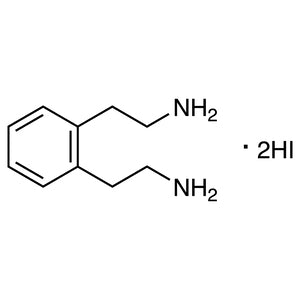
Dihydroiodide TCI B6569
Regular price From Rp 1.936.200,00Regular price -
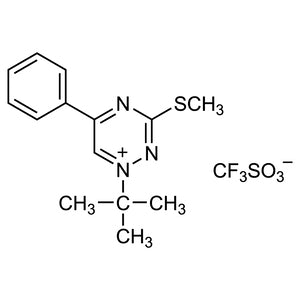
Trifluoromethanesulfonate TCI B7003
Regular price From Rp 1.936.200,00Regular price
![5,10-Bis(4,4,5,5-tetramethyl-1,3,2-dioxaborolan-2-yl)naphtho[1,2-c:5,6-c']bis([1,2,5]oxadiazole) - TCI B5774 - AMI Scientific](http://amiscientific.com/cdn/shop/files/TCI2510B5774.jpg?v=1769180228&width=533)