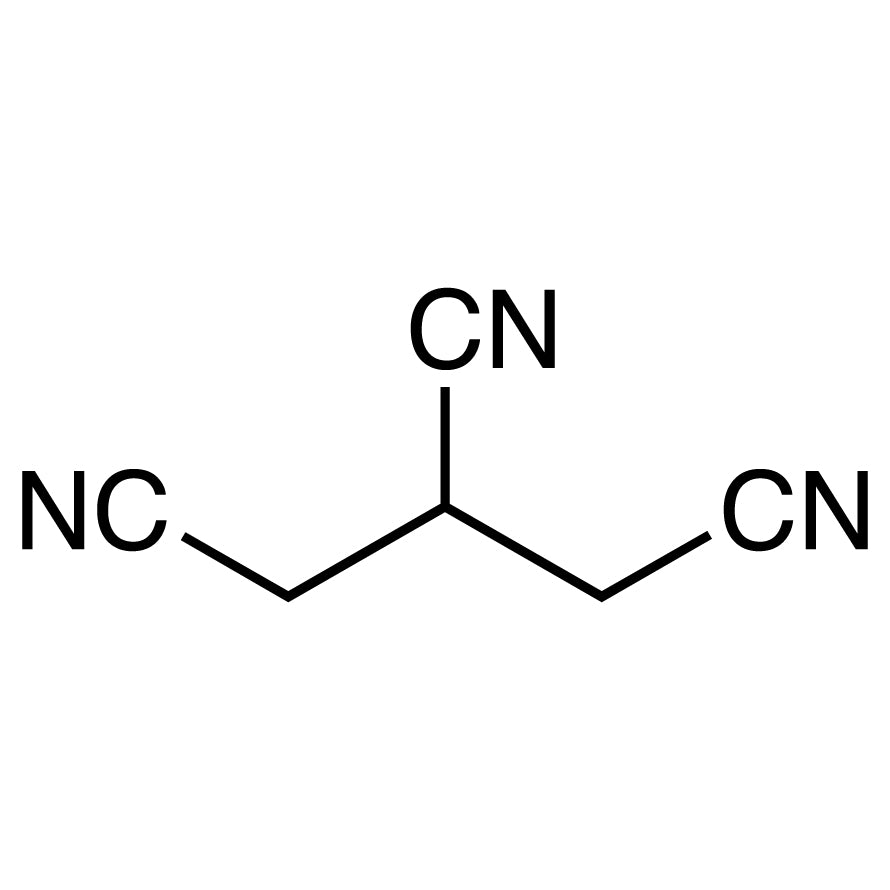
1,2,3-Propanetricarbonitrile is a chemical compound widely used as a building block in laboratory reactions. It serves as a versatile reagent in organic synthesis due to its ability to participate in various chemical transformations. This compound is essential for the preparation of nitriles, amines, and heterocyclic compounds, making it a fundamental material in synthetic chemistry. Its stability and controlled reactivity allow chemists to manipulate molecular structures with precision, supporting both research and industrial applications.
The compound’s unique chemical properties make it a preferred choice for laboratory use. It exhibits high boiling points and good solubility in organic solvents such as ethyl acetate and chloroform, which are critical for reaction conditions requiring elevated temperatures or specific solvent environments. Its reactivity in nucleophilic, substitution, and coupling reactions further enhances its utility in complex synthetic pathways. These characteristics ensure its reliability in both academic and industrial settings.
In Indonesian laboratories, 1,2,3-Propanetricarbonitrile is commonly used in pure and applied chemical research. It plays a vital role in the development of pharmaceutical compounds, industrial chemicals, and advanced materials. Its availability and performance make it a key reagent in both academic and commercial chemical processes, supporting innovation and discovery in the field of chemistry.
Related TCI products
- TCI A3039 103646-82-8 5-Amino-1-(p-tolyl)pyrazole-4-carbonitrile
- TCI C4103 24973-49-7 [1,1'-Biphenyl]-2-carbonitrile
- TCI B6956 690260-67-4 2'-Bromo-[1,1'-biphenyl]-3-carbonitrile
- TCI B5965 160521-46-0 3'-Bromo[1,1'-biphenyl]-4-carbonitrile
- TCI B5964 1040141-34-1 3'-Bromo[1,1'-biphenyl]-3-carbonitrile
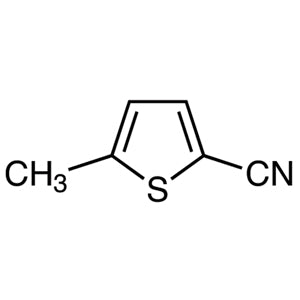
- TCI M2959 72835-25-7 5-Methylthiophene-2-carbonitrile
- Organic synthesis applications benefit from its reactivity in nucleophilic and substitution reactions, enabling the creation of complex molecular structures.
- Pharmaceutical research utilizes it as a precursor for synthesizing various drug compounds due to its structural versatility and chemical stability.
- Industrial chemical production relies on its solubility and boiling point properties for efficient reaction conditions and solvent compatibility.
- Material science experiments use it to develop new polymers and composite materials through controlled chemical reactions.
- Analytical chemistry procedures incorporate it as a standard reference compound for calibration and reaction testing in laboratory settings.
| Brand | TCI |
|---|---|
| CAS number | 62872-44-0 |
| Molecular formula | — |
| Purity | — |
| Category | Chemistry > Building Blocks > Non-Heterocyclic Building Blocks |
| Pack sizes | Available in various quantities as per supplier specifications |
| Physical form | Liquid |
| Storage | Store in a cool, dry place away from light and incompatible materials |
1,2,3-Propanetricarbonitrile should be stored in a cool, dry environment, away from direct sunlight and sources of heat. It is recommended to keep it in a tightly sealed container to prevent evaporation and contamination. Due to its chemical nature, it should be stored separately from strong oxidizers and reactive metals to avoid potential hazards. In laboratory settings, proper ventilation is essential to minimize exposure to vapors. Always use appropriate personal protective equipment, such as gloves and safety goggles, when handling this compound. Regular inspection of storage containers is advised to ensure integrity and safety.
—
Produk Terkait
-
5-Amino-1-(p-tolyl)pyrazole-4-carbonitrile TCI A3039
Regular price Rp 3.312.750,00Regular price -
[1,1'-Biphenyl]-2-carbonitrile TCI C4103
Regular price From Rp 2.094.750,00Regular price -
2'-Bromo-[1,1'-biphenyl]-3-carbonitrile TCI B6956
Regular price From Rp 2.757.300,00Regular price -
3'-Bromo[1,1'-biphenyl]-4-carbonitrile TCI B5965
Regular price From Rp 2.359.350,00Regular price -
3'-Bromo[1,1'-biphenyl]-3-carbonitrile TCI B5964
Regular price From Rp 2.094.750,00Regular price -
5-Methylthiophene-2-carbonitrile TCI M2959
Regular price Rp 1.749.300,00Regular price -
1,3,6-Hexanetricarbonitrile TCI H1504
Regular price From Rp 4.161.150,00Regular price -
1,3,5-Pentanetricarbonitrile TCI P1631
Regular price Rp 9.223.200,00Regular price

![[1,1'-Biphenyl]-2-carbonitrile (CAS 24973-49-7) - TCI C4103 - AMI Scientific](http://amiscientific.com/cdn/shop/files/TCI2510C4103.jpg?v=1769180472&width=533)
![2'-Bromo-[1,1'-biphenyl]-3-carbonitrile (CAS 690260-67-4) - TCI B6956 - AMI Scientific](http://amiscientific.com/cdn/shop/files/TCI2510B6956.jpg?v=1771058291&width=533)
![3'-Bromo[1,1'-biphenyl]-4-carbonitrile (CAS 160521-46-0) - TCI B5965 - AMI Scientific](http://amiscientific.com/cdn/shop/files/TCI2510B5965.jpg?v=1769180247&width=533)
![3'-Bromo[1,1'-biphenyl]-3-carbonitrile (CAS 1040141-34-1) - TCI B5964 - AMI Scientific](http://amiscientific.com/cdn/shop/files/TCI2510B5964.jpg?v=1769144661&width=533)