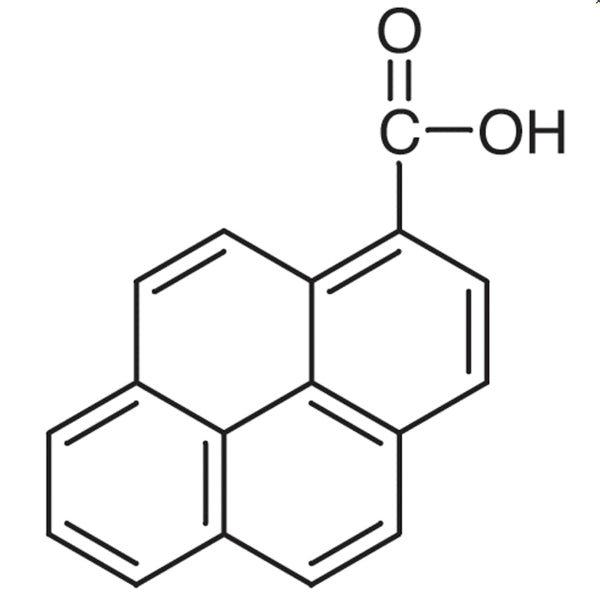
1-Pyrenecarboxylic Acid is a key organic compound widely used in chemical experiments and material research. It belongs to the aromatic compound family and has a complex molecular structure, making it an essential building block in the development of advanced materials. This compound is commonly used in laboratories for the synthesis of other chemical substances, particularly in the fields of material science and organic chemistry. Its role is critical in the creation of semiconductor materials and functional chemical components with specific properties.
The chemical stability of 1-Pyrenecarboxylic Acid allows it to react under controlled conditions with various reagents, making it a versatile reagent in synthetic processes. Its complex molecular structure also enables it to participate in substitution reactions and polymerization processes. These properties make it a preferred choice for researchers seeking reliable and controllable chemical behavior. The compound’s ability to maintain stability while exhibiting reactivity ensures its effectiveness in diverse experimental setups.
In Indonesian laboratories, 1-Pyrenecarboxylic Acid is frequently used in material science research, particularly in the development of semiconductor materials and composites. It is also a common component in organic chemistry studies that require aromatic compounds with complex structures. Its availability and reliability make it a valuable resource for both academic and industrial research in the region.
TCI brochures (PDF)
- Building Blocks for Organic Semiconductor 2026-03-24 · p. 12
Related TCI products
- TCI P1448 3029-19-4 1-Pyrenecarboxaldehyde
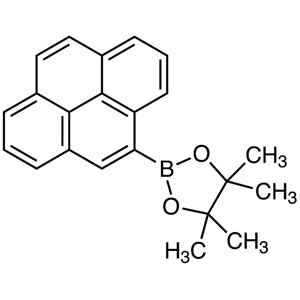
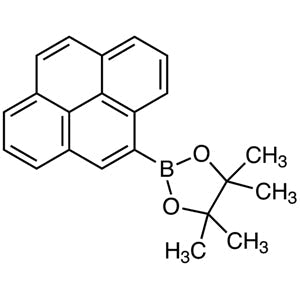
- TCI T3857 888950-09-2 4-(4,4,5,5-Tetramethyl-1,3,2-dioxaborolan-2-yl)pyrene
- TCI T2655 781-17-9 4,5,9,10-Tetrahydropyrene (purified by sublimation)
- TCI B5489 1270030-08-4 2-[7-(tert-Butyl)pyren-2-yl]-4,4,5,5-tetramethyl-1,3,2-dioxaborolane
- TCI P3004 6217-22-7 Pyrene-4,5-dione
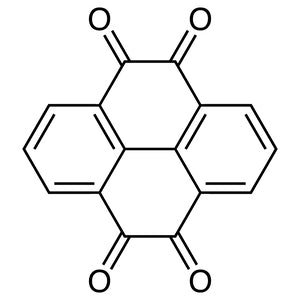
- TCI P2947 14727-71-0 Pyrene-4,5,9,10-tetraone
- Semiconductor material development: This compound is essential for synthesizing advanced semiconductor materials due to its aromatic structure and chemical stability.
- Organic chemistry research: It is widely used in organic synthesis experiments where complex aromatic structures are required for functional group modifications.
- Composite material formulation: Its chemical properties make it suitable for creating composite materials with enhanced physical and electrical properties.
- Functional chemical component synthesis: It serves as a key building block for developing chemical components with specific functional properties.
- Material science innovation: It is used in cutting-edge research to explore new material properties and applications in various technological fields.
| Brand | TCI |
|---|---|
| CAS number | 19694-02-1 |
| Molecular formula | — |
| Purity | — |
| Category | Materials Science > Material Building Blocks > Small Molecule Semiconductor Building Blocks |
| Pack sizes | Available in standard laboratory quantities |
| Physical form | Solid |
| Storage | Store in a cool, dry place away from light and moisture |
1-Pyrenecarboxylic Acid should be stored in a cool, dry environment to maintain its chemical stability. It is recommended to keep it in a tightly sealed container to prevent exposure to moisture and air. Due to its aromatic nature, it should be stored away from direct sunlight and heat sources to avoid degradation. Laboratory personnel should handle the compound with care, using appropriate personal protective equipment such as gloves and safety goggles. It is important to ensure that the compound is not exposed to incompatible substances during storage or handling. Proper labeling of storage containers is essential for safety and identification purposes.
—
Produk Terkait
-
1-Pyrenecarboxaldehyde TCI P1448
Regular price From Rp 557.550,00Regular price -
4-(4,4,5,5-Tetramethyl-1,3,2-dioxaborolan-2-yl)pyrene TCI T3857
Regular price Rp 4.399.500,00Regular price -
4,5,9,10-Tetrahydropyrene(purifiedbysublimation) TCI T2655
Regular price Rp 3.578.400,00Regular price -
2-[7-(tert-Butyl)pyren-2-yl]-4,4,5,5-tetramethyl-1,3,2-dioxaborolane TCI B5489
Regular price From Rp 6.148.800,00Regular price -
Pyrene-4,5-dione TCI P3004
Regular price Rp 4.771.200,00Regular price -
Pyrene-4,5,9,10-tetraone TCI P2947
Regular price Rp 4.743.900,00Regular price -
1-Pyrenemethanol TCI P1221
Regular price From Rp 1.538.250,00Regular price -
1-Methoxypyrene TCI M2919
Regular price From Rp 2.016.000,00Regular price


![1270030-08-4 2-[7-(tert-Butyl)pyren-2-yl]-4,4,5,5-tetramethyl-1,3,2-dioxaborolane - AMI Scientific](http://amiscientific.com/cdn/shop/files/TCI2510B5489.jpg?v=1768204413&width=533)
![1270030-08-4 2-[7-(tert-Butyl)pyren-2-yl]-4,4,5,5-tetramethyl-1,3,2-dioxaborolane - AMI Scientific](http://amiscientific.com/cdn/shop/files/TCI2510B5489_efdce8c5-da8a-4f37-80ad-c4cb0b8fcf31.jpg?v=1769180185&width=533)