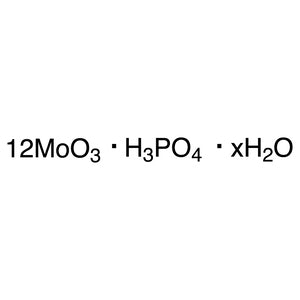
TCI P1910 Phosphomolybdic Acid Hydrate is a heteropoly acid built from molybdenum oxide units arranged around a central phosphorus atom, an arrangement known as the Keggin structure. This inorganic compound belongs to the transition element chemistry group and has long served as a versatile laboratory reagent. Its roles range from a visualizing stain in thin-layer chromatography and a component of colorimetric reagents to an acid and oxidation catalyst in organic synthesis. It is also well known in histological tissue staining techniques.
Chemists choose phosphomolybdic acid because it combines strong Brønsted acidity with the redox capability of its molybdenum(VI) centers. When it reacts with easily oxidized organic compounds, it is reduced to dark, high-contrast molybdenum blue species. This behavior makes it an effective universal visualizing reagent for TLC plates, revealing a wide range of compounds as clearly visible spots. It also dissolves well in water, ethanol, and other polar solvents, which makes it easy to prepare staining solutions and catalyst solutions in routine laboratory work.
In Indonesian laboratories, this reagent is very familiar to organic chemistry and natural product researchers who monitor reactions and extract fractionation every day. University research groups, pharmaceutical and herbal medicine laboratories, and institutes studying Indonesia's rich plant biodiversity rely on it to track column chromatography fractions and to check reaction progress quickly. It also supports teaching laboratories where students learn TLC techniques, and histology laboratories that use established staining protocols requiring phosphomolybdic acid.
TCI brochures (PDF)
- Oxidizing Agents 2025-06-11 · p. 8
- Transition Metal Catalysts 2026-04-10 · p. 6
Related TCI products
- TCI T1559 114615-82-6 Tetrapropylammonium Perruthenate
- TCI A3658 54723-94-3 Ammonium Phosphomolybdate Hydrate [for Cesium selective adsorbent]
- TCI S0815 14783-00-7 Silver(II) Pyridine-2-carboxylate
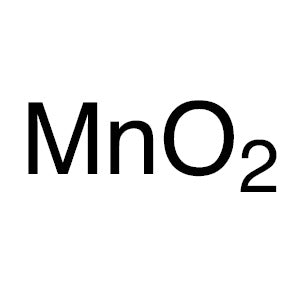
- TCI M3448 1313-13-9 Manganese(IV) Oxide
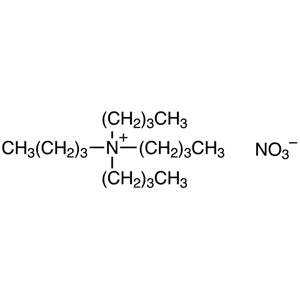
- TCI T3651 1941-27-1 Tetrabutylammonium Nitrate
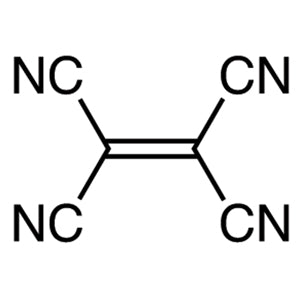
- TCI T3264 670-54-2 Tetracyanoethylene (purified by sublimation)
- TLC visualizing stain: the compound is reduced to dark molybdenum blue by oxidizable organic compounds, producing high-contrast spots that make it a dependable universal stain for TLC plates.
- Colorimetric reagents: its redox behavior and the intense color of the reduced molybdenum blue species make it a useful component in colorimetric reagent formulations for analytical work.
- Acid catalysis in organic synthesis: the strong Brønsted acidity of this Keggin-type heteropoly acid allows it to act as an effective acid catalyst for a variety of organic transformations.
- Oxidation catalysis: the molybdenum(VI) centers give it redox capability, so it can serve as an oxidation catalyst in synthetic research exploring heteropoly acid chemistry.
- Histological tissue staining: phosphomolybdic acid is a recognized reagent in histology staining techniques, and its good water solubility makes preparing staining solutions straightforward for histology laboratories.
| Brand | TCI (product code P1910) |
|---|---|
| CAS number | 51429-74-4 |
| Molecular formula | — |
| Purity | — |
| Category | Chemistry > Catalysis and Inorganic Chemistry > Transition Elements |
| Pack sizes | available in the pack sizes listed on the product page |
| Physical form | hydrate form; soluble in water, ethanol, and other polar solvents |
| Storage | keep tightly closed in a cool, dry place; follow the TCI label and SDS |
Store Phosphomolybdic Acid Hydrate in its original, tightly sealed container in a cool, dry, well-ventilated area, away from moisture, direct sunlight, and incompatible materials such as strong reducing agents and readily oxidizable substances. Close the container promptly after each use so the hydrate is not exposed to humid air. Prepared staining or catalyst solutions should be kept in clearly labeled glass bottles with secure caps. Wear safety goggles, gloves, and a laboratory coat when handling, avoid creating or inhaling dust, and prepare solutions in a fume hood where possible. Always consult the Safety Data Sheet for full hazard and disposal information.
—
Produk Terkait
-
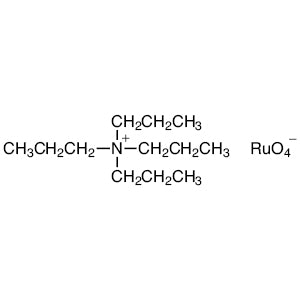
TetrapropylammoniumPerruthenate TCI T1559
Regular price From Rp 3.683.400,00Regular priceRp 2.591.400,00Sale price From Rp 3.683.400,00 -
AmmoniumPhosphomolybdateHydrate[forCesiumselectiveadsorbent] TCI A3658
Regular price Rp 3.790.500,00Regular priceRp 2.650.200,00Sale price Rp 3.790.500,00 -
Silver(II)Pyridine-2-carboxylate TCI S0815
Regular price From Rp 1.829.100,00Regular priceRp 1.278.900,00Sale price From Rp 1.829.100,00 -
Manganese(IV)Oxide TCI M3448
Regular price From Rp 530.250,00Regular priceRp 370.650,00Sale price From Rp 530.250,00 -
TetrabutylammoniumNitrate TCI T3651
Regular price From Rp 1.060.500,00Regular priceRp 757.050,00Sale price From Rp 1.060.500,00 -
Tetracyanoethylene(purifiedbysublimation) TCI T3264
Regular price From Rp 1.934.100,00Regular priceRp 1.368.150,00Sale price From Rp 1.934.100,00 -
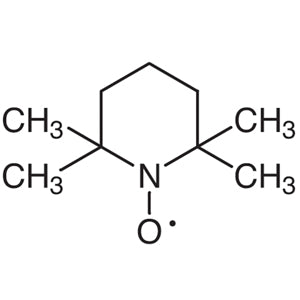
2,2,6,6-Tetramethylpiperidine1-OxylFreeRadical TCI T1560
Regular price From Rp 1.590.750,00Regular priceRp 1.111.950,00Sale price From Rp 1.590.750,00 -
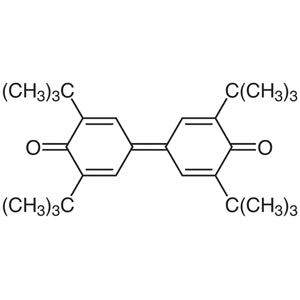
3,3',5,5'-Tetra-tert-butyl-4,4'-diphenoquinone TCI T1503
Regular price Rp 2.306.850,00Regular priceRp 1.628.550,00Sale price Rp 2.306.850,00

![54723-94-3 Ammonium Phosphomolybdate Hydrate [for Cesium selective adsorbent] - AMI Scientific](http://amiscientific.com/cdn/shop/files/TCI2510A3658.jpg?v=1769055165&width=533)