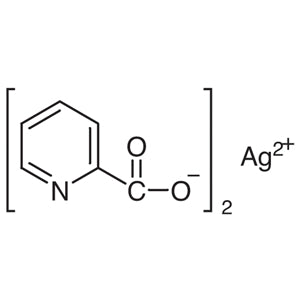
Silver(II) Pyridine-2-carboxylate is a chemical compound widely used in catalytic reactions and organic synthesis within laboratory settings. As a transition metal complex, it plays a crucial role in facilitating chemical reactions by acting as a catalyst. Its unique structure allows it to interact effectively with various ligands and substrates, making it a valuable tool in both inorganic and catalytic research. This compound is particularly useful in reactions involving transition metals, where it helps to lower activation energy and improve reaction efficiency. Its presence in the laboratory is essential for advancing chemical processes that require precise control and high reactivity.
The compound’s chemical properties make it a preferred choice for researchers working in catalysis and inorganic chemistry. It exhibits stability under controlled conditions, which ensures consistent performance during experiments. Its reactivity and specificity allow it to be tailored for applications that demand high precision. The complex molecular structure of Silver(II) Pyridine-2-carboxylate enables it to form strong interactions with different substrates, enhancing its effectiveness as a catalyst. These properties make it a reliable and efficient material for use in various chemical processes.
In Indonesian laboratories, Silver(II) Pyridine-2-carboxylate is commonly used in inorganic chemistry and catalysis research. It is frequently found in laboratories focused on the synthesis of complex compounds and catalytic reactions. Its role in accelerating chemical reactions and improving synthesis efficiency makes it a key component in many experimental setups. Researchers in Indonesia rely on this compound for its reliability and performance in diverse chemical applications.
TCI brochures (PDF)
- Oxidizing Agents 2025-06-11 · p. 8
- Transition Metal Catalysts 2026-04-10 · p. 16
Related TCI products
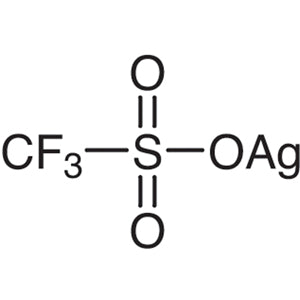
- TCI T1331 2923-28-6 Silver Trifluoromethanesulfonate
- TCI S0981 26042-63-7 Silver Hexafluorophosphate
- TCI S0977 811-68-7 Silver(I) Trifluoromethanethiolate
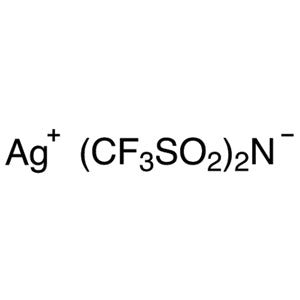
- TCI S0898 189114-61-2 Silver Bis(trifluoromethanesulfonyl)imide
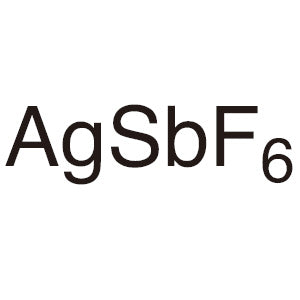
- TCI S0463 26042-64-8 Silver Hexafluoroantimonate(V)
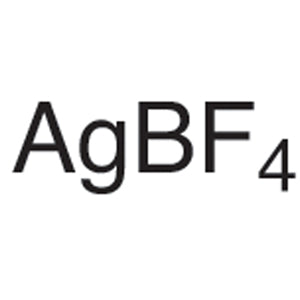
- TCI S0446 14104-20-2 Silver Tetrafluoroborate
- Inorganic chemistry research benefits from Silver(II) Pyridine-2-carboxylate due to its ability to act as a catalyst in metal-based reactions, enhancing reaction rates and selectivity.
- Catalytic synthesis applications utilize this compound to facilitate complex organic transformations, offering improved efficiency and reduced energy requirements.
- Transition metal complex studies rely on Silver(II) Pyridine-2-carboxylate for its structural versatility, allowing interaction with a wide range of ligands and substrates.
- Organic synthesis experiments use this compound to promote specific reaction pathways, contributing to the development of new chemical compounds.
- Analytical chemistry applications incorporate Silver(II) Pyridine-2-carboxylate for its reactivity and specificity, aiding in the detection and characterization of chemical species.
| Brand | TCI |
|---|---|
| CAS number | 14783-00-7 |
| Molecular formula | — |
| Purity | — |
| Category | Chemistry > Catalysis and Inorganic Chemistry > Transition Elements |
| Pack sizes | Available in various quantities as per supplier specifications |
| Physical form | Solid (exact form may vary based on supplier packaging) |
| Storage | Store in a dry, cool, and well-ventilated area away from moisture and direct sunlight |
Silver(II) Pyridine-2-carboxylate should be stored in a dry, cool, and well-ventilated area to prevent moisture exposure, which can degrade its chemical stability. It is recommended to use airtight containers made of inert materials such as glass or polyethylene to minimize contact with air and moisture. Handling should be done with appropriate personal protective equipment, including gloves and safety goggles, to ensure safety. The compound is sensitive to humidity, so it should be kept in a controlled environment to maintain its effectiveness. Regular monitoring of storage conditions is essential to ensure the compound remains in optimal condition for laboratory use.
—
Produk Terkait
-
SilverTrifluoromethanesulfonate TCI T1331
Regular price From Rp 610.050,00Regular price -
SilverHexafluorophosphate TCI S0981
Regular price From Rp 1.829.100,00Regular price -
Silver(I)Trifluoromethanethiolate TCI S0977
Regular price From Rp 3.287.550,00Regular price -
SilverBis(trifluoromethanesulfonyl)imide TCI S0898
Regular price From Rp 5.485.200,00Regular price -
SilverHexafluoroantimonate(V) TCI S0463
Regular price Rp 3.155.250,00Regular price -
SilverTetrafluoroborate TCI S0446
Regular price From Rp 2.650.200,00Regular price -
PotassiumSilver(I)Cyanide TCI P3370
Regular price Rp 848.400,00Regular price -
Silver(I)Iodate TCI I1291
Regular price From Rp 2.359.350,00Regular price