Silver Hexafluoroantimonate(V) is a chemical compound widely used in laboratory settings for catalytic reactions and C-H activation processes. As a key reagent in inorganic chemistry, it plays a crucial role in facilitating chemical transformations without altering the core structure of the target molecules. Its application spans across various research fields, particularly in organic chemistry, where it is employed to enhance reaction efficiency and selectivity. This compound is especially valuable in experiments requiring precise control over reaction pathways and minimal side reactions.
The compound's strong catalytic properties and stability under specific conditions make it a preferred choice for researchers. It exhibits a complex molecular structure that enables strong interactions with target molecules, promoting efficient activation of carbon-hydrogen bonds. Its stability during reactions minimizes degradation or unwanted side reactions, ensuring consistent and reliable results. These characteristics make it an essential tool in modern chemical research, particularly in catalysis and organic synthesis.
In Indonesian laboratories, Silver Hexafluoroantimonate(V) is commonly used in chemical research, especially in catalytic and organic reaction studies. It is a key component in experiments aimed at improving reaction efficiency and selectivity. Its reliability and performance have made it a popular choice among researchers in both academic and industrial settings, contributing to the advancement of chemical sciences in the region.
TCI brochures (PDF)
- Electron-deficient Cyclopentadienyl Ligand Precursor and its Rhodium Complex 2025-01-10 · p. 1
- C-H Bond Activation Reaction 2025-06-20 · p. 7
- Metallic Salts 2025-11-06 · p. 14
- Transition Metal Catalysts 2026-04-10 · p. 16
Related TCI products
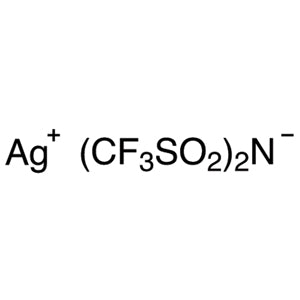
- TCI S0898 189114-61-2 Silver Bis(trifluoromethanesulfonyl)imide
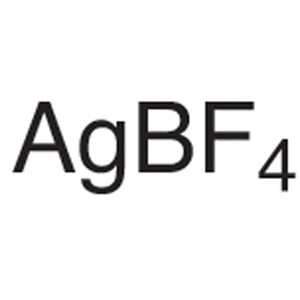
- TCI S0446 14104-20-2 Silver Tetrafluoroborate
- TCI C2373 873297-19-9 Chloro[1,3-bis(2,6-diisopropylphenyl)imidazol-2-ylidene]silver
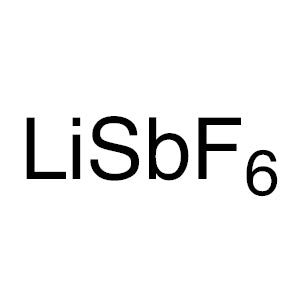
- TCI L0411 18424-17-4 Lithium Hexafluoroantimonate
- TCI S0981 26042-63-7 Silver Hexafluorophosphate
- TCI P3370 506-61-6 Potassium Silver(I) Cyanide
- C-H Activation Reactions: This compound is ideal for C-H activation due to its strong catalytic properties and ability to interact effectively with target molecules.
- Organic Synthesis Processes: It is widely used in organic synthesis to enhance reaction efficiency and control reaction pathways with minimal side reactions.
- Catalytic Research Studies: Its stability and catalytic activity make it a preferred choice for studies involving complex catalytic mechanisms and reaction conditions.
- Industrial Chemical Processes: It is applied in industrial settings where efficient and selective catalytic reactions are required for large-scale chemical production.
- Analytical Chemistry Applications: Its unique properties allow it to be used in analytical methods where precise and consistent results are essential.
From the TCI brochure
- Co-catalyst in oxidative annulation and olefination of anilides (cat. AgSbF6)
| Brand | TCI |
|---|---|
| CAS number | 26042-64-8 |
| Molecular formula | — |
| Purity | — |
| Category | Chemistry > Catalysis and Inorganic Chemistry > C-H Activation [Catalysis] |
| Pack sizes | — |
| Physical form | — |
| Storage | Store in a cool, dry place away from moisture and direct sunlight |
Silver Hexafluoroantimonate(V) should be stored in a cool, dry environment to maintain its stability and prevent degradation. It is recommended to keep the compound in a sealed container to avoid exposure to moisture and air, which could affect its performance. Suitable storage conditions include a controlled temperature range, typically between 15°C and 25°C, to ensure long-term stability. Laboratory personnel should handle the compound with care, using appropriate personal protective equipment such as gloves and safety goggles. It is important to ensure that the compound is stored away from incompatible materials to prevent any potential chemical reactions. Proper labeling and storage practices are essential to maintain the integrity and safety of the compound in the laboratory setting.
References cited in the TCI brochure
- Yu Shibata. Catalytic [2+2+1] Cross‐Cyclotrimerization of Silylacetylenes and Two Alkynyl Esters To Produce Substituted Silylfulvenes Angewandte Chemie International Edition, 2011. doi:10.1002/anie.201105517
- Yuki Hoshino. Oxidative Annulation of Anilides with Internal Alkynes Using an (Electron‐Deficient η5‐Cyclopentadienyl)Rhodium(III) Catalyst Under Ambient Conditions Advanced Synthesis & Catalysis, 2014. doi:10.1002/adsc.201300884
- Yuji Takahama. Oxidative Olefination of Anilides with Unactivated Alkenes Catalyzed by an (Electron‐Deficient η5‐Cyclopentadienyl)Rhodium(III) Complex Under Ambient Conditions Chemistry – A European Journal, 2015. doi:10.1002/chem.201501232
Product Categories
- Catalysis and Inorganic ChemistryC-H Activation [Catalysis]Silver Compounds [C-H Activation]
- Catalysis and Inorganic ChemistryTransition Elements [Catalysis and Inorganic Chemistry]Silver [Catalysis and Inorganic Chemistry]
- Catalysis and Inorganic ChemistryMetallic Salts [Catalysis and Inorganic Chemistry]Metallate Salts [Metallic Salts]
- Synthetic ReagentsC-X(Non-Halogen) Bond Formation [Synthetic Reagents]C-H Bond Activation Reaction [Synthetic Reagents]
Produk Terkait
-
SilverBis(trifluoromethanesulfonyl)imide TCI S0898
Regular price From Rp 5.485.200,00Regular priceRp 3.835.650,00Sale price From Rp 5.485.200,00 -
SilverTetrafluoroborate TCI S0446
Regular price From Rp 2.650.200,00Regular priceRp 1.853.250,00Sale price From Rp 2.650.200,00 -
Chloro[1,3-bis(2,6-diisopropylphenyl)imidazol-2-ylidene]silver TCI C2373
Regular price From Rp 1.590.750,00Regular priceRp 1.111.950,00Sale price From Rp 1.590.750,00 -
LithiumHexafluoroantimonate TCI L0411
Regular price From Rp 2.359.350,00Regular priceRp 1.649.550,00Sale price From Rp 2.359.350,00 -
SilverHexafluorophosphate TCI S0981
Regular price From Rp 1.829.100,00Regular priceRp 1.278.900,00Sale price From Rp 1.829.100,00 -
PotassiumSilver(I)Cyanide TCI P3370
Regular price Rp 848.400,00Regular priceRp 593.250,00Sale price Rp 848.400,00 -
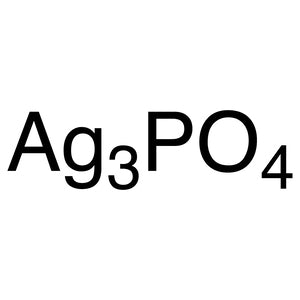
Silver(I)Phosphate TCI I1259
Regular price From Rp 1.670.550,00Regular priceRp 1.167.600,00Sale price From Rp 1.670.550,00 -
Silver(I)Bromide TCI I1258
Regular price From Rp 1.644.300,00Regular priceRp 1.149.750,00Sale price From Rp 1.644.300,00