Silver Bis(trifluoromethanesulfonyl)imide is a specialized chemical compound used in catalytic reactions and C-H activation processes within laboratory settings. This compound plays a crucial role in organic and inorganic chemistry by facilitating reactions that require the breaking and forming of carbon-hydrogen bonds. Its unique structure, consisting of a silver ion and a bis(trifluoromethanesulfonyl)imide anion, allows it to act as a highly effective catalyst in various synthetic pathways. Due to its chemical stability and reactivity, it is widely utilized in advanced research and development in both academic and industrial laboratories.
The compound's reactivity and specificity make it a preferred choice for researchers seeking precise and efficient catalytic performance. Its ability to activate C-H bonds under controlled conditions enables the synthesis of complex organic molecules with high selectivity. Additionally, its solubility in polar aprotic solvents such as DMSO and DMF enhances its versatility in different reaction systems. These properties ensure that it remains a reliable and consistent reagent in laboratory applications where accuracy and reproducibility are essential.
In Indonesian laboratories, Silver Bis(trifluoromethanesulfonyl)imide is particularly relevant for research in organic chemistry and catalysis. It is commonly used in academic and research institutions to support studies in synthetic chemistry, drug development, and materials science. Its high purity and consistent performance make it a valuable tool for scientists aiming to achieve precise and reproducible results in their experiments.
TCI brochures (PDF)
- C-H Bond Activation Reaction 2025-06-20 · p. 7
- Metallic Salts 2025-11-06 · p. 13
- Transition Metal Catalysts 2026-04-10 · p. 16
Related TCI products
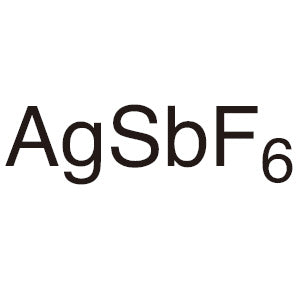
- TCI S0463 26042-64-8 Silver Hexafluoroantimonate(V)
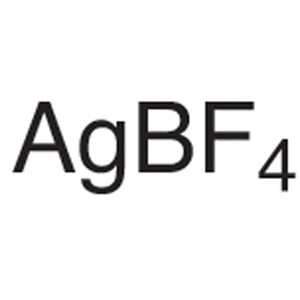
- TCI S0446 14104-20-2 Silver Tetrafluoroborate
- TCI C2373 873297-19-9 Chloro[1,3-bis(2,6-diisopropylphenyl)imidazol-2-ylidene]silver
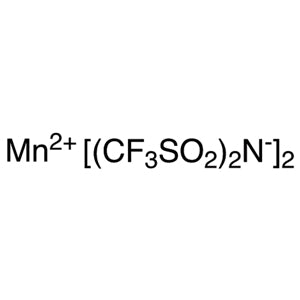
- TCI M2862 207861-55-0 Manganese(II) Bis(trifluoromethanesulfonyl)imide
- TCI C2827 162715-14-2 Copper(II) Bis(trifluoromethanesulfonyl)imide
- TCI Z0027 168106-25-0 Zinc(II) Bis(trifluoromethanesulfonyl)imide
- C-H Activation Reactions: This compound is ideal for C-H activation due to its ability to selectively activate carbon-hydrogen bonds, making it suitable for complex organic synthesis.
- Organic Synthesis: It is frequently used in organic synthesis to facilitate reactions requiring high catalytic efficiency and selectivity.
- Catalytic Research: Its reactivity and stability make it a preferred catalyst in various catalytic studies, especially in academic and industrial research settings.
- Drug Development: The compound is used in drug development to assist in the synthesis of complex pharmaceutical compounds with high specificity.
- Materials Science: It supports the creation of advanced materials by enabling precise chemical modifications and structural transformations.
| Brand | TCI |
|---|---|
| CAS number | 189114-61-2 |
| Molecular formula | — |
| Purity | — |
| Category | Chemistry > Catalysis and Inorganic Chemistry > C-H Activation [Catalysis] |
| Pack sizes | Available in various quantities as per standard laboratory supply |
| Physical form | Solid powder |
| Storage | Store in a cool, dry place away from moisture and direct sunlight |
Silver Bis(trifluoromethanesulfonyl)imide should be stored in a cool, dry environment to maintain its chemical stability. It is recommended to use airtight containers to prevent exposure to moisture and contaminants. Due to its reactivity, it should be handled with care, using appropriate personal protective equipment such as gloves and safety goggles. It is important to ensure proper ventilation when working with this compound to avoid inhalation of any airborne particles. Avoid contact with incompatible materials to ensure safe laboratory practices. Regular monitoring of storage conditions will help maintain the integrity and effectiveness of the compound in laboratory applications.
—
Product Categories
- Catalysis and Inorganic ChemistryC-H Activation [Catalysis]Silver Compounds [C-H Activation]
- Catalysis and Inorganic ChemistryTransition Elements [Catalysis and Inorganic Chemistry]Silver [Catalysis and Inorganic Chemistry]
- Catalysis and Inorganic ChemistryMetallic Salts [Catalysis and Inorganic Chemistry]Bis(sulfonyl)imide Salts [Metallic Salts]
- Synthetic ReagentsC-X(Non-Halogen) Bond Formation [Synthetic Reagents]C-H Bond Activation Reaction [Synthetic Reagents]
Produk Terkait
-
SilverHexafluoroantimonate(V) TCI S0463
Regular price Rp 3.155.250,00Regular priceRp 2.206.050,00Sale price Rp 3.155.250,00 -
SilverTetrafluoroborate TCI S0446
Regular price From Rp 2.650.200,00Regular priceRp 1.853.250,00Sale price From Rp 2.650.200,00 -
Chloro[1,3-bis(2,6-diisopropylphenyl)imidazol-2-ylidene]silver TCI C2373
Regular price From Rp 1.590.750,00Regular priceRp 1.111.950,00Sale price From Rp 1.590.750,00 -
Manganese(II)Bis(trifluoromethanesulfonyl)imide TCI M2862
Regular price From Rp 2.332.050,00Regular priceRp 1.646.400,00Sale price From Rp 2.332.050,00 -
Copper(II)Bis(trifluoromethanesulfonyl)imide TCI C2827
Regular price Rp 2.252.250,00Regular priceRp 1.590.750,00Sale price Rp 2.252.250,00 -
Zinc(II)Bis(trifluoromethanesulfonyl)imide TCI Z0027
Regular price From Rp 1.618.050,00Regular priceRp 1.146.600,00Sale price From Rp 1.618.050,00 -
Barium(II)Bis(trifluoromethanesulfonyl)imide TCI B5171
Regular price From Rp 1.961.400,00Regular priceRp 1.387.050,00Sale price From Rp 1.961.400,00 -
PotassiumBis(trifluoromethanesulfonyl)imide TCI B2543
Regular price From Rp 717.150,00Regular priceRp 516.600,00Sale price From Rp 717.150,00