Manganese(II) Bis(trifluoromethanesulfonyl)imide is a chemical compound widely used in laboratory settings, particularly in catalysis and inorganic chemistry. This compound plays a crucial role in facilitating various chemical reactions, especially those involving oxidation and reduction processes. Its unique molecular structure enables it to interact effectively with a range of substrates, making it a valuable tool for researchers in the field of non-precious metal catalysis. Due to its stability and reactivity, it is often employed in the synthesis of both organic and inorganic compounds, contributing to the advancement of chemical research.
The compound's high reactivity and ability to function as an efficient catalyst without significant degradation make it a preferred choice in many laboratory applications. Its chemical stability ensures consistent performance across multiple experimental conditions, which is essential for reliable and reproducible results. Additionally, the compound's compatibility with various reaction environments allows it to be used in a wide range of chemical processes, from industrial-scale synthesis to academic research. These properties make it a versatile and dependable material for laboratory use.
In Indonesian laboratories, Manganese(II) Bis(trifluoromethanesulfonyl)imide is commonly utilized in scientific research across disciplines such as chemistry, materials technology, and environmental science. Local researchers frequently employ this compound to develop new synthesis methods and improve catalytic processes. Its availability and effectiveness have made it a standard component in many research projects, supporting innovation and discovery in the scientific community.
TCI brochures (PDF)
- Metallic Salts 2025-11-06 · p. 13
- Transition Metal Catalysts 2026-04-10 · p. 7
Related TCI products
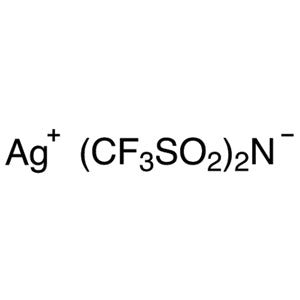
- TCI S0898 189114-61-2 Silver Bis(trifluoromethanesulfonyl)imide
- TCI C2827 162715-14-2 Copper(II) Bis(trifluoromethanesulfonyl)imide
- TCI Z0027 168106-25-0 Zinc(II) Bis(trifluoromethanesulfonyl)imide
- TCI B5171 168106-22-7 Barium(II) Bis(trifluoromethanesulfonyl)imide
- TCI B2543 90076-67-8 Potassium Bis(trifluoromethanesulfonyl)imide
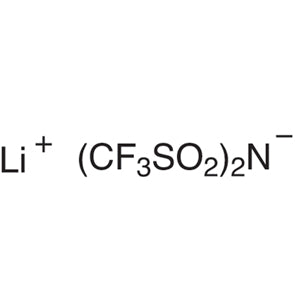
- TCI B2542 90076-65-6 Lithium Bis(trifluoromethanesulfonyl)imide
- Oxidation and reduction reactions benefit from its catalytic properties, enabling efficient electron transfer processes.
- Organic synthesis applications rely on its ability to facilitate complex reaction pathways without degrading.
- Inorganic compound synthesis utilizes its unique structure to promote selective chemical interactions.
- Environmental research employs it to study catalytic degradation of pollutants under controlled conditions.
- Materials science experiments use it to develop new catalysts for industrial and academic applications.
| Brand | TCI |
|---|---|
| CAS number | 207861-55-0 |
| Molecular formula | — |
| Purity | — |
| Category | Chemistry > Catalysis and Inorganic Chemistry > Non-Precious Metal Catalysis |
| Pack sizes | Available in various quantities to suit different research needs |
| Physical form | Solid powder |
| Storage | Store in a cool, dry place away from moisture and direct sunlight |
Manganese(II) Bis(trifluoromethanesulfonyl)imide should be stored in a cool, dry environment to maintain its chemical stability. It is recommended to keep the compound in a sealed container to prevent exposure to moisture and air, which could affect its performance. Suitable storage containers include glass or high-density polyethylene (HDPE) vessels that are resistant to chemical corrosion. Laboratory personnel should handle the compound with care, using appropriate personal protective equipment such as gloves and safety goggles. Due to its chemical nature, it should be stored away from incompatible substances to ensure safety. Regular monitoring of storage conditions is advised to maintain the integrity of the compound for reliable laboratory use.
—
Product Categories
- Catalysis and Inorganic ChemistryNon-Precious Metal Catalysis [Catalysis]
- Catalysis and Inorganic ChemistryTransition Elements [Catalysis and Inorganic Chemistry]Manganese [Catalysis and Inorganic Chemistry]
- Catalysis and Inorganic ChemistryMetallic Salts [Catalysis and Inorganic Chemistry]Bis(sulfonyl)imide Salts [Metallic Salts]
Produk Terkait
-
SilverBis(trifluoromethanesulfonyl)imide TCI S0898
Regular price From Rp 5.485.200,00Regular priceRp 3.835.650,00Sale price From Rp 5.485.200,00 -
Copper(II)Bis(trifluoromethanesulfonyl)imide TCI C2827
Regular price Rp 2.252.250,00Regular priceRp 1.590.750,00Sale price Rp 2.252.250,00 -
Zinc(II)Bis(trifluoromethanesulfonyl)imide TCI Z0027
Regular price From Rp 1.618.050,00Regular priceRp 1.146.600,00Sale price From Rp 1.618.050,00 -
Barium(II)Bis(trifluoromethanesulfonyl)imide TCI B5171
Regular price From Rp 1.961.400,00Regular priceRp 1.387.050,00Sale price From Rp 1.961.400,00 -
PotassiumBis(trifluoromethanesulfonyl)imide TCI B2543
Regular price From Rp 717.150,00Regular priceRp 516.600,00Sale price From Rp 717.150,00 -
LithiumBis(trifluoromethanesulfonyl)imide TCI B2542
Regular price From Rp 1.483.650,00Regular priceRp 1.053.150,00Sale price From Rp 1.483.650,00 -
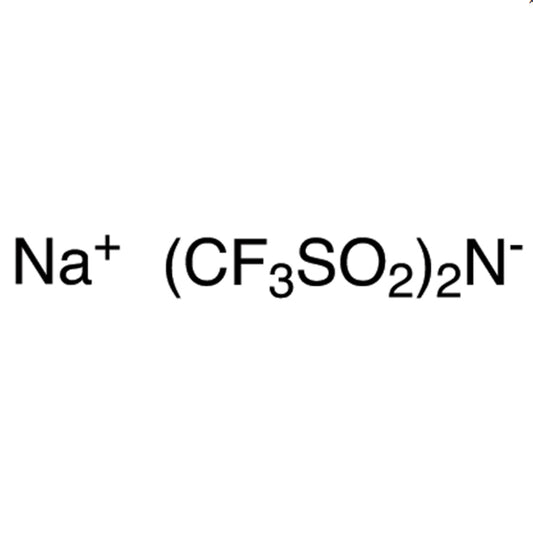
SodiumBis(trifluoromethanesulfonyl)imide TCI S0989
Regular price From Rp 1.405.950,00Regular priceRp 998.550,00Sale price From Rp 1.405.950,00 -
Potassium(Fluorosulfonyl)(trifluoromethanesulfonyl)imide TCI P2410
Regular price From Rp 2.041.200,00Regular priceRp 1.442.700,00Sale price From Rp 2.041.200,00