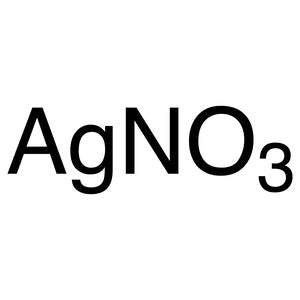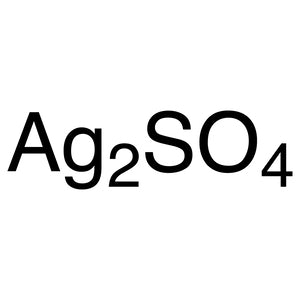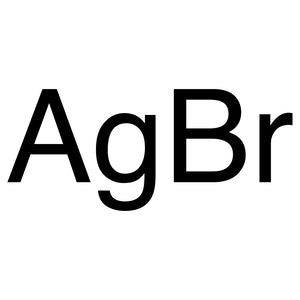
Silver(I) Bromide (AgBr) is a chemical compound widely used in laboratory settings, particularly in the fields of catalysis and inorganic chemistry. As a transition metal compound, it plays a significant role in studying the behavior of metals under various chemical conditions. Its unique properties make it an essential material for researchers and educators engaged in chemical analysis and synthesis. AgBr is commonly used in experiments involving the formation of metal complexes and photoreactions, where its chemical reactivity and sensitivity to light are critical factors.
The properties of Silver(I) Bromide that make it a preferred choice include its high melting and boiling points, which allow it to remain stable under high-temperature conditions. Additionally, its ability to react with various anionic compounds, especially halides, makes it versatile in different chemical reactions. The compound's chemical and physical stability ensures consistent performance in laboratory applications, making it a reliable material for both teaching and research purposes. Its sensitivity to light also makes it valuable in photokemical studies and imaging technologies.
In Indonesian laboratories, Silver(I) Bromide is frequently used in educational and research settings, particularly in institutions focused on inorganic chemistry and catalysis. It is a key component in experiments related to metal complex formation, photochemical reactions, and analytical chemistry. Due to its unique properties, it remains a popular choice for both academic and industrial applications in the chemical sciences.
TCI brochures (PDF)
- Metallic Salts 2025-11-06 · p. 5
Related TCI products
- Inorganic Chemistry Research – Silver(I) Bromide is used to study the behavior of transition metals in various chemical environments, providing insights into metal reactivity and complex formation.
- Photokemical Experiments – Its sensitivity to light makes it ideal for experiments involving light-induced reactions and imaging technologies.
- Analytical Chemistry – Silver(I) Bromide is employed in analytical procedures due to its chemical stability and reactivity with anionic compounds.
- Metal Complex Formation Studies – The compound is used to investigate how transition metals interact with other ions to form stable complexes.
- Educational Demonstrations – In Indonesian laboratories, it is commonly used in teaching to illustrate chemical reactions and properties of transition metals.
| Brand | TCI |
|---|---|
| CAS number | 7785-23-1 |
| Molecular formula | — |
| Purity | — |
| Category | Chemistry > Catalysis and Inorganic Chemistry > Transition Elements |
| Pack sizes | Available in various quantities as per standard laboratory supply |
| Physical form | Solid |
| Storage | Store in a cool, dry place away from light and moisture |
Silver(I) Bromide should be stored in a cool, dry place, away from light and moisture to maintain its chemical stability. It is recommended to use airtight containers to prevent exposure to air and humidity. Due to its sensitivity to light, it should be kept in dark containers or wrapped in light-proof materials. In laboratory settings, proper ventilation is essential to avoid inhalation of any airborne particles. Handling should be done with appropriate personal protective equipment, such as gloves and safety goggles, to ensure safety during use and storage. Always follow standard laboratory safety protocols when working with this compound to minimize risks.
—
Produk Terkait
-
SilverHexafluorophosphate TCI S0981
Regular price From Rp 1.829.100,00Regular priceRp 1.278.900,00Sale price From Rp 1.829.100,00 -
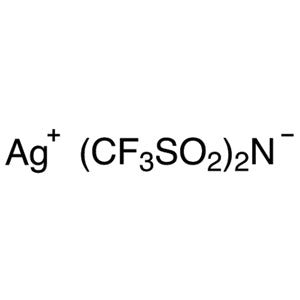
SilverBis(trifluoromethanesulfonyl)imide TCI S0898
Regular price From Rp 5.485.200,00Regular priceRp 3.835.650,00Sale price From Rp 5.485.200,00 -
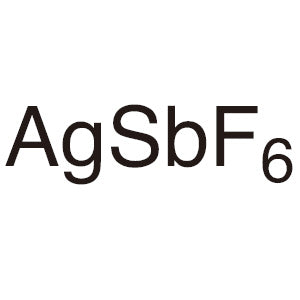
SilverHexafluoroantimonate(V) TCI S0463
Regular price Rp 3.155.250,00Regular priceRp 2.206.050,00Sale price Rp 3.155.250,00 -
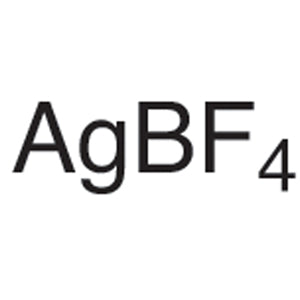
SilverTetrafluoroborate TCI S0446
Regular price From Rp 2.650.200,00Regular priceRp 1.853.250,00Sale price From Rp 2.650.200,00 -
PotassiumSilver(I)Cyanide TCI P3370
Regular price Rp 848.400,00Regular priceRp 593.250,00Sale price Rp 848.400,00 -
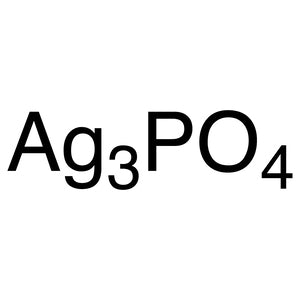
Silver(I)Phosphate TCI I1259
Regular price From Rp 1.670.550,00Regular priceRp 1.167.600,00Sale price From Rp 1.670.550,00 -
Silver(I)Nitrate TCI I1245
Regular price From Rp 795.900,00Regular priceRp 556.500,00Sale price From Rp 795.900,00 -
Silver(I)Sulfate TCI I1244
Regular price From Rp 795.900,00Regular priceRp 556.500,00Sale price From Rp 795.900,00