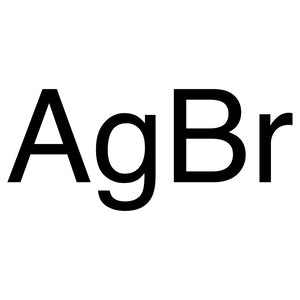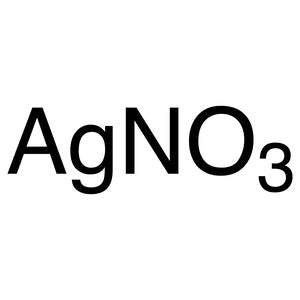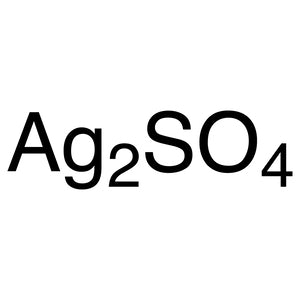
Silver(I) Sulfate (Ag₂SO₄) is a chemical compound widely used in laboratory settings, particularly in the fields of catalysis and inorganic chemistry. It plays a crucial role in chemical reactions involving transition metals, such as silver, which exhibit unique catalytic properties. This compound is often employed as a catalyst in redox reactions, where it facilitates the conversion of reactants into products without being consumed in the process. Its ability to enhance reaction rates makes it an essential tool for researchers and educators in chemical laboratories.
One of the key properties that make Silver(I) Sulfate a preferred choice is its chemical stability under controlled conditions. It can act as a catalyst in both oxidation and reduction processes, offering versatility in experimental setups. Additionally, its solubility varies with pH, allowing it to be used in a wide range of experimental conditions. This adaptability makes it suitable for various analytical and synthetic applications. The compound is also valued for its ability to participate in qualitative and quantitative analysis, aiding in the identification of specific ions in solution.
In Indonesian laboratories, Silver(I) Sulfate is commonly used in chemical research and educational settings. It supports both undergraduate and postgraduate studies by providing a reliable material for conducting experiments related to catalysis and inorganic chemistry. Its presence in laboratory curricula and research projects highlights its importance as a fundamental reagent in the chemical sciences.
- Catalytic Redox Reactions: Silver(I) Sulfate is ideal for redox reactions due to its ability to act as a catalyst, facilitating electron transfer without being consumed.
- Qualitative Analysis: It is used to detect specific ions in solution, such as sulfates and silver ions, through precipitation and color change reactions.
- Inorganic Synthesis: Its role in inorganic chemistry makes it suitable for synthesizing various silver-based compounds and metal complexes.
- Analytical Chemistry: It is employed in quantitative analysis to determine the concentration of ions in solution through titration and gravimetric methods.
- Educational Demonstrations: Silver(I) Sulfate is commonly used in teaching labs to illustrate catalytic processes and chemical reactivity in a controlled environment.
| Brand | TCI |
|---|---|
| CAS number | 10294-26-5 |
| Molecular formula | — |
| Purity | — |
| Category | Chemistry > Catalysis and Inorganic Chemistry > Transition Elements |
| Pack sizes | Available in various quantities as per standard laboratory supply |
| Physical form | Solid powder |
| Storage | Store in a cool, dry place away from moisture and direct sunlight |
Silver(I) Sulfate should be stored in a cool, dry environment to maintain its chemical stability. It is recommended to keep it in a sealed container to prevent exposure to moisture, which can affect its solubility and reactivity. The compound is generally non-hazardous but should be handled with care to avoid direct contact with skin or inhalation of dust. In laboratory settings, it is advisable to use appropriate personal protective equipment, such as gloves and safety goggles. Proper labeling of storage containers is essential for safe handling and to prevent accidental contamination. Regular inspection of storage conditions ensures the integrity of the compound remains intact for experimental use.
—
Produk Terkait
-
SilverHexafluorophosphate TCI S0981
Regular price From Rp 1.829.100,00Regular price -
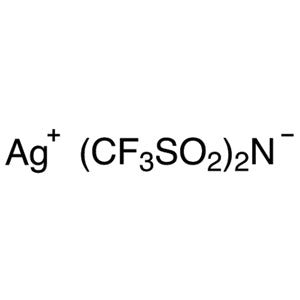
SilverBis(trifluoromethanesulfonyl)imide TCI S0898
Regular price From Rp 5.485.200,00Regular price -
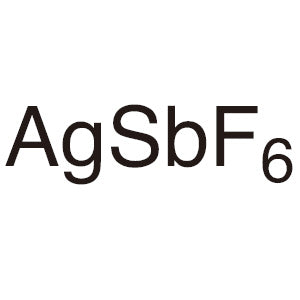
SilverHexafluoroantimonate(V) TCI S0463
Regular price Rp 3.155.250,00Regular price -
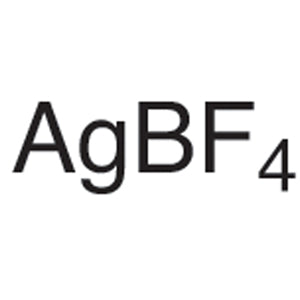
SilverTetrafluoroborate TCI S0446
Regular price From Rp 2.650.200,00Regular price -
PotassiumSilver(I)Cyanide TCI P3370
Regular price Rp 848.400,00Regular price -
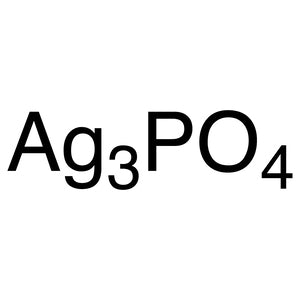
Silver(I)Phosphate TCI I1259
Regular price From Rp 1.670.550,00Regular price -
Silver(I)Bromide TCI I1258
Regular price From Rp 1.644.300,00Regular price -
Silver(I)Nitrate TCI I1245
Regular price From Rp 795.900,00Regular price