(4S,4'S)-2,2'-(Pentane-3,3'-diyl)bis(4-benzyl-4,5-dihydrooxazole), supplied by TCI under product code P1947, is a chiral ligand from the bis(oxazoline) family, often called BOX ligands. Its structure joins two chiral oxazoline rings through a carbon bridge that carries two ethyl groups, and each ring has a benzyl substituent at the 4-position. In the laboratory, this ligand is used to form complexes with metal ions such as copper, magnesium, zinc, or iron. The resulting complexes act as chiral Lewis acid catalysts that steer reactions toward one enantiomer.
Researchers choose this ligand because its C2 symmetry reduces the number of competing transition states, which makes the stereochemical outcome of a reaction easier to predict. The benzyl groups create considerable steric hindrance around the metal centre, which helps control how substrates approach it. The diethyl bridge limits conformational flexibility and affects the ligand's bite angle. Because the (4S,4'S) configuration is clearly defined, researchers can choose which product enantiomer they want. Its structure is also easy to compare with other BOX variants that carry isopropyl, tert-butyl, or phenyl substituents, so it is well suited to ligand optimisation studies.
In Indonesia, ligands like this are widely used by organic and synthetic chemistry research groups at universities and research institutions, especially those working on asymmetric catalysis and the synthesis of enantiomerically enriched compounds. Graduate students and researchers use them to develop new catalytic methods, screen chiral ligands for target reactions, and prepare chiral intermediates for pharmaceutical and natural product research. A defined commercial source such as TCI also helps keep results consistent across experiments.
TCI brochures (PDF)
- Chiral Ligands 2024-12-13 · p. 3
- Ligands 2025-12-01 · p. 3
Related TCI products
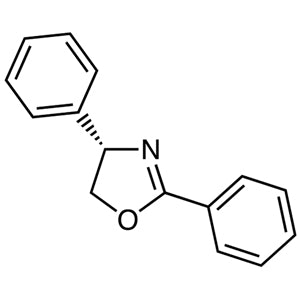
- TCI D5368 475571-19-8 (S)-2,4-Diphenyl-4,5-dihydrooxazole
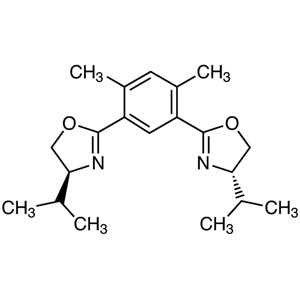
- TCI B4196 929896-22-0 (S,S)-4,6-Bis(4-isopropyl-2-oxazolin-2-yl)-m-xylene
- TCI B2220 174500-20-0 (S,S)-2,6-Bis(4-phenyl-2-oxazolin-2-yl)pyridine
- TCI B2219 128249-70-7 (R,R)-2,6-Bis(4-phenyl-2-oxazolin-2-yl)pyridine
- TCI B2218 118949-61-4 (S,S)-2,6-Bis(4-isopropyl-2-oxazolin-2-yl)pyridine
- TCI B2217 131864-67-0 (R,R)-2,6-Bis(4-isopropyl-2-oxazolin-2-yl)pyridine
- Copper-catalysed asymmetric reactions: the ligand forms chiral copper complexes that act as Lewis acid catalysts, and its C2 symmetry helps steer these reactions toward one enantiomer.
- Magnesium- and zinc-mediated enantioselective transformations: the bis(oxazoline) framework binds these metal ions well, and the benzyl groups give the steric environment needed for good stereocontrol.
- Iron-based chiral Lewis acid catalysis: the ligand can be complexed with iron for researchers exploring cheaper and more abundant metal centres while keeping a well-defined chiral environment.
- Ligand optimisation and screening studies: it can be compared directly with BOX variants bearing isopropyl, tert-butyl, or phenyl groups, which helps researchers see how steric and structural changes affect selectivity.
- Mechanistic and stereochemical studies: the defined (4S,4'S) configuration and fewer competing transition states make it useful for explaining and predicting stereochemical outcomes in asymmetric catalysis research.
| Brand | TCI (product code P1947) |
|---|---|
| CAS number | 160191-64-0 |
| Molecular formula | — |
| Purity | — |
| Category | Chemistry > Asymmetric Synthesis > Chiral Catalysts, Chiral Ligands, Chiral Reagents |
| Pack sizes | check the current product listing for available pack sizes |
| Physical form | not stated; see the manufacturer's documentation |
| Storage | follow the conditions on the TCI label and Safety Data Sheet |
Store this ligand in its original, tightly closed container in a cool, dry, well-ventilated place, away from direct sunlight, heat sources, and incompatible substances. Follow the specific storage conditions on the TCI product label and Safety Data Sheet. Because chiral ligands are often used in moisture- or air-sensitive catalytic systems, many laboratories handle them under an inert atmosphere and reseal containers promptly after use. Wear standard personal protective equipment, including gloves, safety glasses, and a lab coat, and work in a fume hood where possible. Avoid inhalation, ingestion, and skin or eye contact. Label all secondary containers clearly and dispose of waste according to local regulations and institutional procedures.
—
Produk Terkait
-
(S)-2,4-Diphenyl-4,5-dihydrooxazole TCI D5368
Regular price From Rp 1.272.600,00Regular priceRp 905.100,00Sale price From Rp 1.272.600,00 -
(S,S)-4,6-Bis(4-isopropyl-2-oxazolin-2-yl)-m-xylene TCI B4196
Regular price Rp 4.133.850,00Regular priceRp 2.906.400,00Sale price Rp 4.133.850,00 -
(S,S)-2,6-Bis(4-phenyl-2-oxazolin-2-yl)pyridine TCI B2220
Regular price From Rp 3.683.400,00Regular priceRp 2.591.400,00Sale price From Rp 3.683.400,00 -
(R,R)-2,6-Bis(4-phenyl-2-oxazolin-2-yl)pyridine TCI B2219
Regular price From Rp 1.881.600,00Regular priceRp 1.331.400,00Sale price From Rp 1.881.600,00 -
(S,S)-2,6-Bis(4-isopropyl-2-oxazolin-2-yl)pyridine TCI B2218
Regular price From Rp 2.252.250,00Regular priceRp 1.590.750,00Sale price From Rp 2.252.250,00 -
(R,R)-2,6-Bis(4-isopropyl-2-oxazolin-2-yl)pyridine TCI B2217
Regular price From Rp 2.147.250,00Regular priceRp 1.517.250,00Sale price From Rp 2.147.250,00 -
(-)-2,2'-Methylenebis[(3aS,8aR)-3a,8a-dihydro-8H-indeno[1,2-d]oxazole] TCI M1402
Regular price From Rp 1.008.000,00Regular priceRp 720.300,00Sale price From Rp 1.008.000,00 -
(+)-2,2'-Methylenebis[(3aR,8aS)-3a,8a-dihydro-8H-indeno[1,2-d]oxazole] TCI M1401
Regular price From Rp 1.060.500,00Regular priceRp 757.050,00Sale price From Rp 1.060.500,00