2-Phenylethyl (E)-Cinnamate from TCI is an ester formed from cinnamic acid in the *trans* (E) configuration and 2-phenylethanol. It belongs to the phenylpropanoids, a family of plant secondary metabolites that come from the shikimic acid and phenylalanine pathways. In the laboratory, this ester is used as a reference standard, a biochemical research reagent and a comparison material in aroma studies. Cinnamate and phenylethyl derivatives are common in essential oils and natural resins, which makes this compound a useful benchmark for researchers working with plant-derived materials.
Researchers choose this compound because its structure joins two aromatic units that appear often in natural product chemistry. The cinnamoyl portion has a conjugated double bond that absorbs ultraviolet light, so the compound is easy to detect by HPLC-UV. The phenylethyl portion gives it a soft aromatic character. As an ester, it is fairly stable under neutral conditions but can be hydrolysed in acidic or basic media. This makes it useful for studies of hydrolysis kinetics and for testing esterase enzyme activity under controlled conditions.
In Indonesia, this material is relevant to pharmacognosy, natural product chemistry, food technology and essential oil research laboratories. Typical examples include studies of resins, balsams and tropical plant extracts that contain cinnamate derivatives. Laboratories that profile aromatic compounds in local botanical materials can use it as a known reference to compare against unknown peaks. Academic and industrial research groups can also use it to support method development and teaching in phytochemistry.
TCI brochures (PDF)
- Polyphenols 2024-12-05 · p. 2
- Reference standard in chromatography: the UV-absorbing conjugated cinnamoyl group allows reliable detection by HPLC-UV, so it works well as a reference compound for identifying and comparing cinnamate esters.
- Biochemical research reagent: as a phenylpropanoid from the shikimic acid and phenylalanine pathways, it supports studies of plant secondary metabolism and the chemistry of related aromatic esters.
- Aroma and fragrance comparison studies: cinnamate and phenylethyl derivatives occur widely in essential oils and natural resins, so this ester is a suitable comparison material for aroma profiling work.
- Hydrolysis kinetics studies: the ester is fairly stable at neutral conditions but hydrolyses in acidic or basic media, so researchers can follow reaction rates under defined pH conditions.
- Esterase enzyme activity assays: its ester bond can act as a substrate for esterase enzymes, which helps researchers assess enzyme activity and specificity in biochemical and food technology research.
| Brand | TCI (product code P2007) |
|---|---|
| CAS number | 63238-64-2 |
| Molecular formula | — |
| Purity | — |
| Category | Life Science > Biochemicals and Reagents > Phenylpropanoids, Aromatic Polyketides |
| Pack sizes | please see the current product listing for available pack sizes |
| Physical form | — |
| Storage | follow the storage conditions on the TCI label and Safety Data Sheet |
- Chemical class: ester of (E)-cinnamic acid and 2-phenylethanol
Keep 2-Phenylethyl (E)-Cinnamate in its original, tightly closed container in a cool, dry and well-ventilated place, away from direct sunlight and heat sources. Always follow the specific storage conditions printed on the TCI label and Safety Data Sheet. Because the ester can hydrolyse in acidic or basic conditions, store it away from strong acids, strong bases and oxidising agents, and keep moisture out. Use clean, dry glass or chemically compatible tools when taking samples. Handle the compound with standard laboratory protective equipment, including gloves, safety glasses and a lab coat, and work in a well-ventilated area or fume hood. Read the Safety Data Sheet before use, and dispose of waste according to local regulations.
—
Produk Terkait
-
IsopropylCinnamate TCI C1779
Regular price Rp 477.750,00Regular price -
CinnamylCinnamate TCI C0960
Regular price Rp 2.359.350,00Regular price -
VinylCinnamate(stabilizedwithMEHQ) TCI C0899
Regular price From Rp 1.803.900,00Regular price -
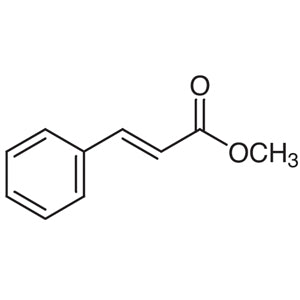
MethylCinnamate TCI C0360
Regular price Rp 530.250,00Regular price -
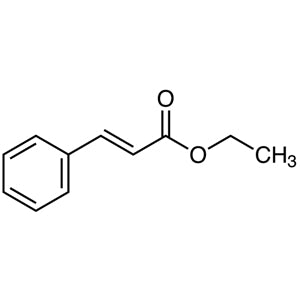
Ethyl(E)-Cinnamate TCI C0359
Regular price From Rp 3.155.250,00Regular price -
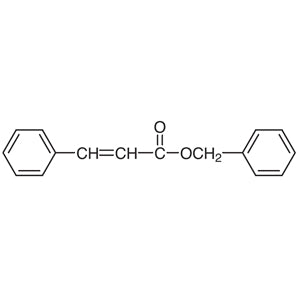
BenzylCinnamate TCI C0358
Regular price From Rp 769.650,00Regular price -
Triphenylethylene TCI T1834
Regular price Rp 1.724.100,00Regular price -
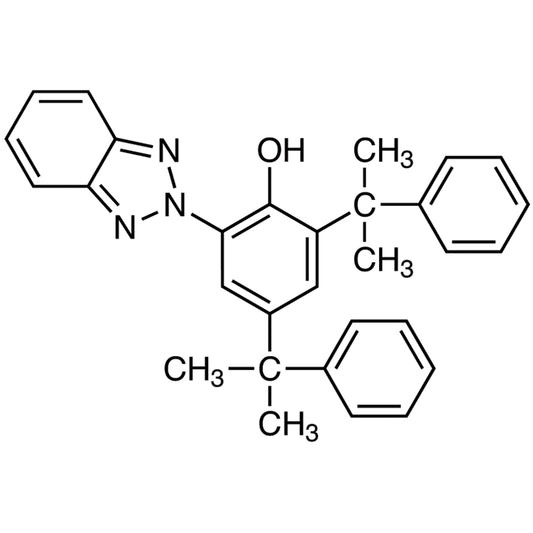
2-(2H-Benzotriazol-2-yl)-4,6-bis(1-methyl-1-phenylethyl)phenol TCI B3717
Regular price From Rp 823.200,00Regular price