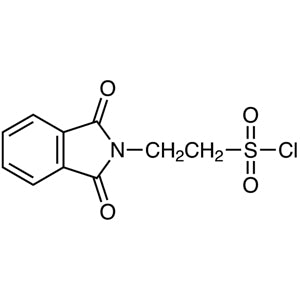
2-Phthalimidoethanesulfonyl Chloride (TCI P2049) is a chemical compound widely used in organic synthesis as a building block in laboratory settings. This compound plays a crucial role in various chemical reactions, particularly those involving substitution, coupling, and molecular modification. Its unique structure, incorporating both a sulfonate chloride group and a phthalimido group, makes it highly reactive and versatile for synthetic applications. Due to its reactivity and functional group versatility, it is a valuable tool for chemists working on complex molecule synthesis.
The compound's high reactivity and functional group diversity make it a preferred choice for chemists seeking to create a wide range of organic compounds. Its ability to participate in multiple reaction pathways allows for the synthesis of pharmaceuticals, industrial chemicals, and other specialized compounds. The presence of the sulfonate chloride group provides a reactive site for further modifications, while the phthalimido group adds structural stability and specificity. These properties make it an essential reagent in both academic and industrial research.
In Indonesian laboratories, 2-Phthalimidoethanesulfonyl Chloride is commonly used in organic chemistry research, drug development, and the production of specialty chemicals. Its reactivity and functional versatility make it a key component in the synthesis of pharmaceutical compounds and other high-value chemical products. Due to its sensitivity to moisture and heat, it requires careful handling and storage to maintain its effectiveness in laboratory applications.
Related TCI products
- TCI I0802 98995-40-5 4-Isopropoxybenzenesulfonyl Chloride
- TCI I0811 63059-29-0 2-Iodobenzenesulfonyl Chloride
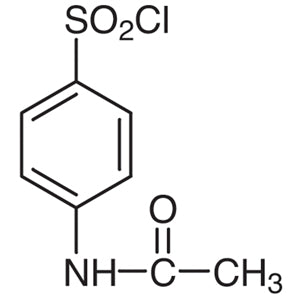
- TCI A0074 121-60-8 4-Acetamidobenzenesulfonyl Chloride
- TCI T2035 51527-73-2 2,4,6-Trichlorobenzenesulfonyl Chloride
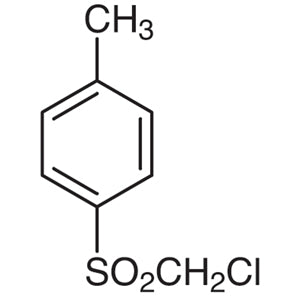
- TCI T1505 7569-26-8 p-Toluenesulfonylmethyl Chloride
- TCI B3965 23095-05-8 5-Bromo-2-methoxybenzenesulfonyl Chloride
- Organic synthesis is a primary application where this compound is used to create complex molecules through substitution and coupling reactions.
- Drug development benefits from its reactivity, allowing the synthesis of pharmaceutical compounds with specific functional groups.
- Industrial chemical production relies on its versatility for creating specialty chemicals with tailored properties.
- Molecular modification projects use its functional groups to alter existing compounds for improved performance or stability.
- Research in chemical reactivity and functional group behavior often employs this compound to study reaction mechanisms and pathways.
| Brand | TCI |
|---|---|
| CAS number | 4403-36-5 |
| Molecular formula | — |
| Purity | — |
| Category | Chemistry > Building Blocks > Non-Heterocyclic Building Blocks |
| Pack sizes | — |
| Physical form | — |
| Storage | Requires storage in a dry, cool environment away from moisture and heat. |
This compound should be stored in a dry, cool environment to prevent degradation due to moisture and heat sensitivity. It is recommended to use airtight containers made of inert materials such as glass or polyethylene to minimize exposure to air and humidity. Due to its high reactivity, it should be handled with care, using appropriate personal protective equipment. It is important to avoid contact with water and heat sources to maintain its chemical integrity. In laboratory settings, it should be stored in a designated chemical storage area with controlled environmental conditions to ensure safety and effectiveness.
—
Produk Terkait
-
4-IsopropoxybenzenesulfonylChloride TCI I0802
Regular price From Rp 2.597.700,00Regular price -
2-IodobenzenesulfonylChloride TCI I0811
Regular price From Rp 4.506.600,00Regular price -
4-AcetamidobenzenesulfonylChloride TCI A0074
Regular price Rp 2.227.050,00Regular price -
2,4,6-TrichlorobenzenesulfonylChloride TCI T2035
Regular price From Rp 2.016.000,00Regular price -
p-ToluenesulfonylmethylChloride TCI T1505
Regular price Rp 2.411.850,00Regular price -
5-Bromo-2-methoxybenzenesulfonylChloride TCI B3965
Regular price From Rp 1.193.850,00Regular price -
4-(Bromomethyl)benzenesulfonylChloride TCI B3936
Regular price From Rp 1.353.450,00Regular price -
2-BromobenzenesulfonylChloride TCI B2702
Regular price From Rp 1.565.550,00Regular price