4-Phthalimidobutyric Acid is a chemical compound widely used in laboratory settings for the synthesis of complex molecules. It serves as a key building block in organic chemistry, particularly in the creation of heterocyclic structures and other organic compounds. This compound plays a crucial role in chemical reactions by acting as an electron donor, facilitating the formation of bonds between carbon chains and phthalimid structures. Its presence in chemical reactions ensures the accuracy and control required for high-quality synthesis processes.
The compound's stable chemical structure and controlled reactivity make it a preferred choice for researchers. It exhibits properties that allow for substitution, coupling, and other essential reactions necessary for the synthesis of complex compounds. Its availability in a solid form with high purity simplifies handling and usage in laboratory environments. These characteristics ensure that it remains a reliable and efficient reagent for various chemical applications.
In Indonesian laboratories, 4-Phthalimidobutyric Acid is extensively used in organic chemistry research, particularly in academic and research institutions. It is commonly applied in projects that require the synthesis of compounds with specific structural features. Its versatility and reliability make it an essential component in the chemical research toolkit of Indonesian scientists and students.
- Organic synthesis projects benefit from this compound due to its role in forming stable carbon-phthalimid linkages.
- It is ideal for creating heterocyclic compounds because of its electron-donating properties and structural compatibility.
- Research in pharmaceutical chemistry often utilizes this reagent for the development of complex molecular structures.
- It supports the synthesis of functionalized organic molecules, enabling precise chemical modifications.
- Academic laboratories use it as a standard building block for teaching and experimental research purposes.
| Brand | TCI |
|---|---|
| CAS number | 3130-75-4 |
| Molecular formula | — |
| Purity | — |
| Category | Chemistry > Building Blocks > Non-Heterocyclic Building Blocks |
| Pack sizes | Available in various quantities as per standard laboratory supply |
| Physical form | Solid |
| Storage | Store in a cool, dry place away from direct sunlight and moisture |
This compound should be stored in a cool, dry environment to maintain its chemical stability. It is recommended to keep it in a tightly sealed container to prevent moisture absorption and contamination. Due to its solid form, it is best stored in airtight glass or plastic containers that are resistant to chemical reactions. Laboratory personnel should handle it with care, using appropriate personal protective equipment such as gloves and safety goggles. It is important to ensure that storage areas are well-ventilated and free from incompatible materials. Proper storage conditions help preserve the compound's integrity and ensure safe handling during experiments.
—
Produk Terkait
-
N-(4-Bromophenyl)phthalimide TCI B2707
Regular price From Rp 2.730.000,00Regular price -
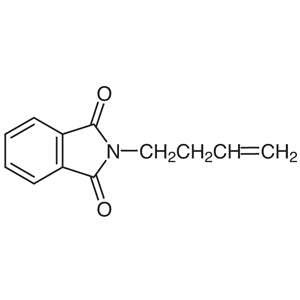
N-(3-Buten-1-yl)phthalimide TCI B1881
Regular price Rp 7.897.050,00Regular price -
PhthalimidePotassiumSalt TCI P0403
Regular price From Rp 557.550,00Regular price -
Phthalimide TCI P0402
Regular price From Rp 530.250,00Regular price -
N-(2-Hydroxyethyl)phthalimide TCI H0245
Regular price From Rp 689.850,00Regular price -
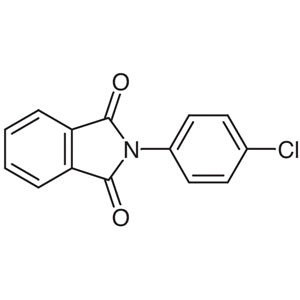
N-(4-Chlorophenyl)phthalimide TCI C1958
Regular price From Rp 1.378.650,00Regular price -
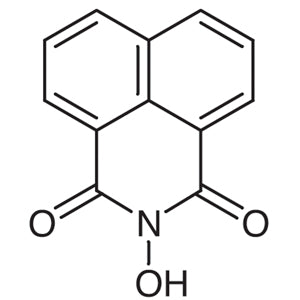
N-Hydroxy-1,8-naphthalimide TCI H1040
Regular price From Rp 928.200,00Regular price -
(S)-(+)-2-Hydroxy-4-phthalimidobutyricAcid TCI H0933
Regular price Rp 2.279.550,00Regular price