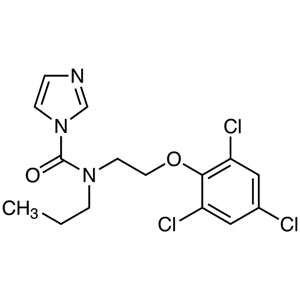
Prochloraz is a chemical compound widely utilized in life sciences research, particularly in cell biology and cancer studies. As a DNA synthesis inhibitor, it plays a crucial role in controlling the growth of uncontrolled cells, such as cancerous cells. This compound is essential for researchers aiming to understand cellular mechanisms and develop targeted therapies. Its application spans various experimental setups, including genetic modification studies and drug effect evaluations. Prochloraz is a fundamental tool in biomedical and pharmacological research, contributing to the advancement of therapeutic strategies.
The chemical properties of Prochloraz make it a preferred choice for laboratory use. It exhibits stability under certain conditions, which simplifies its handling and storage. Its solubility in organic solvents allows for easy dissolution in experimental solutions, enhancing its versatility. Additionally, its non-toxic nature at specific dosages ensures a safe working environment, aligning with the safety standards of modern laboratories. These characteristics make it a reliable and effective reagent for a wide range of scientific investigations.
In Indonesian laboratories, Prochloraz is extensively used in biomedical and pharmacological research. It is commonly found in research institutions and universities, where it supports studies on cancer biology, drug development, and genetic research. Its availability and reliability have made it a standard component in many experimental protocols, contributing to the quality and consistency of scientific outcomes in the region.
- Cancer Research: Prochloraz is used to inhibit DNA synthesis in cancer cells, aiding in the study of tumor growth and potential therapeutic targets.
- Genetic Modification Studies: It supports experiments involving gene expression and cellular responses to genetic alterations.
- Drug Effect Evaluation: Prochloraz helps assess how compounds affect cellular processes, contributing to drug development and toxicity testing.
- Biomedical Research: It is integral to studies on cellular mechanisms and the development of targeted therapies for various diseases.
- Pharmacological Investigations: Prochloraz is used to evaluate the biological activity of compounds in drug discovery and formulation processes.
| Brand | TCI |
|---|---|
| CAS number | 67747-09-5 |
| Molecular formula | — |
| Purity | — |
| Category | Life Science > Cell Biology > Cancer Research |
| Pack sizes | Available in various quantities suitable for laboratory use |
| Physical form | Solid |
| Storage | Store in a cool, dry place away from direct sunlight |
Prochloraz should be stored in a cool, dry environment, away from direct sunlight and sources of heat. It is recommended to use airtight containers to prevent contamination and maintain its chemical stability. Due to its solubility in organic solvents, it should be handled in a well-ventilated area to avoid inhalation of vapors. Laboratory personnel should wear appropriate personal protective equipment, such as gloves and safety goggles, when handling this compound. Proper disposal procedures must be followed to ensure environmental safety. These precautions help maintain the integrity of the compound and ensure safe laboratory practices.
—
Produk Terkait
-
Tebuconazole TCI T2988
Regular price From Rp 795.900,00Regular price -
Triadimefon TCI T2817
Regular price From Rp 1.644.300,00Regular price -
Propyzamide TCI P2374
Regular price From Rp 1.115.100,00Regular price -
Hexaconazole TCI H1268
Regular price From Rp 1.936.200,00Regular price -
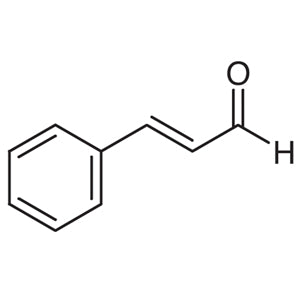
trans-Cinnamaldehyde TCI C0352
Regular price From Rp 477.750,00Regular price -
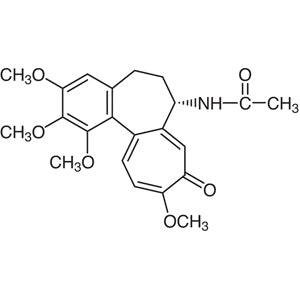
Colchicine(contains5%EthylAcetateatmaximum) TCI C0380
Regular price From Rp 1.246.350,00Regular price -
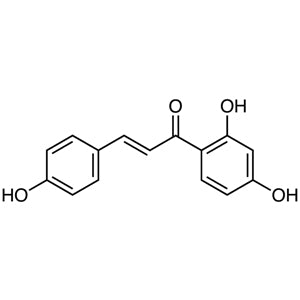
Isoliquiritigenin TCI I0822
Regular price From Rp 1.035.300,00Regular price -
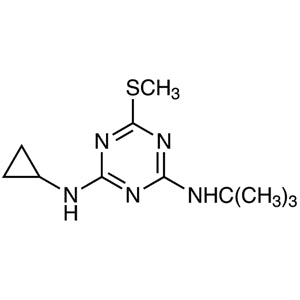
2-(tert-Butylamino)-4-(cyclopropylamino)-6-(methylthio)-1,3,5-triazine TCI I0842
Regular price From Rp 1.644.300,00Regular price