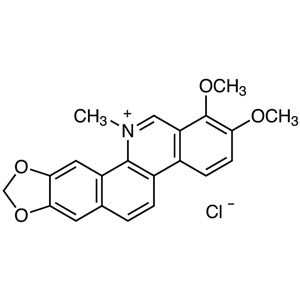
Palmatine Chloride is a chemical compound classified under the alkaloid category, widely utilized in life science research. As a key reagent, it plays a crucial role in biochemical experiments, particularly in the analysis of bioactive compounds. Its complex chemical structure makes it an essential component for studying molecular interactions and biological activities. In laboratory settings, Palmatine Chloride is frequently employed to investigate pharmacological effects, biological responses, and molecular mechanisms. Due to its stability and solubility in specific organic solvents, it is a reliable choice for various analytical procedures.
This compound is preferred for its chemical stability and solubility properties, which facilitate efficient separation and analysis in laboratory processes. Its ability to interact with diverse reagents and biological systems enhances its applicability in a wide range of experiments. The compound's consistent performance under controlled conditions ensures reproducibility in research outcomes. These characteristics make it a valuable tool for scientists working in biochemistry and pharmacology.
In Indonesian laboratories, Palmatine Chloride is commonly used in research focused on pharmacological and neurological effects. It is a key reagent in the study of bioactive compounds and molecular interactions. Its stability and solubility properties make it suitable for long-term storage and use in various experimental setups. Researchers in Indonesia rely on this compound for its reliability and effectiveness in scientific investigations.
TCI brochures (PDF)
- Alkaloids 2025-10-10 · p. 4
- Pharmacological research utilizes Palmatine Chloride to study drug interactions and biological effects due to its chemical stability and solubility.
- Biochemical analysis benefits from its ability to interact with various reagents, making it ideal for molecular interaction studies.
- Neurological studies often incorporate this compound to investigate its potential effects on different organisms and biological systems.
- Synthetic chemistry applications rely on its structural complexity for the synthesis of complex compounds and bioactive molecules.
- Toxicological testing uses Palmatine Chloride to assess its impact on biological systems and its behavior under different experimental conditions.
| Brand | TCI |
|---|---|
| CAS number | 10605-02-4 |
| Molecular formula | — |
| Purity | — |
| Category | Life Science > Biochemicals and Reagents > Alkaloids |
| Pack sizes | — |
| Physical form | — |
| Storage | Store in a cool, dry place away from light |
Palmatine Chloride should be stored in a cool, dry place away from direct light to maintain its chemical stability. It is recommended to use airtight containers to prevent moisture absorption and contamination. Due to its solubility in organic solvents, it should be kept in a secure location to avoid accidental exposure. Laboratory personnel should handle the compound with appropriate safety measures, such as gloves and safety goggles, to ensure safe usage. Proper labeling of storage containers is essential for identification and safe handling. Regular monitoring of storage conditions ensures the compound remains effective for research purposes.
—
Product Categories
- Biochemicals and ReagentsAlkaloidsIsoquinoline Alkaloids
- Biochemicals and ReagentsCrude Medicine Ingredients for Research and Experimental Use
- Cell BiologyCancer ResearchAntitumor Agents for Research
- Pharmaceutical Development and Drug Discovery ResearchCrude Medicine Ingredients for Research and Experimental Use
Produk Terkait
-
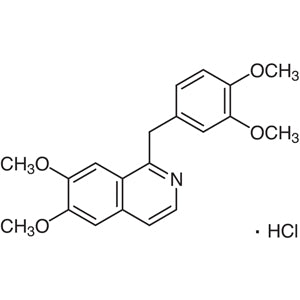
PapaverineHydrochloride TCI P0016
Regular price Rp 1.087.800,00Regular priceRp 775.950,00Sale price Rp 1.087.800,00 -
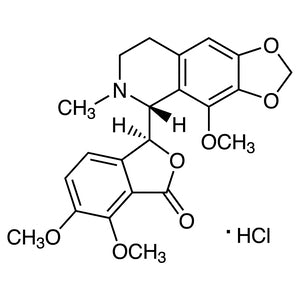
NoscapineHydrochloride TCI N0963
Regular price Rp 3.392.550,00Regular priceRp 2.387.700,00Sale price Rp 3.392.550,00 -
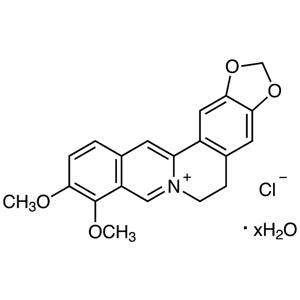
BerberineChlorideHydrate TCI B0450
Regular price From Rp 557.550,00Regular priceRp 405.300,00Sale price From Rp 557.550,00 -
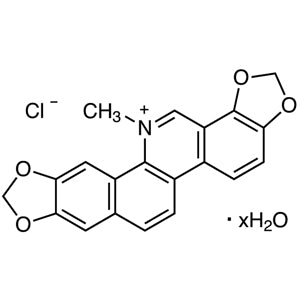
SanguinarineChlorideHydrate TCI A3229
Regular price From Rp 5.009.550,00Regular priceRp 3.518.550,00Sale price From Rp 5.009.550,00 -
ChelerythrineChloride TCI C3584
Regular price From Rp 7.712.250,00Regular priceRp 5.408.550,00Sale price From Rp 7.712.250,00 -
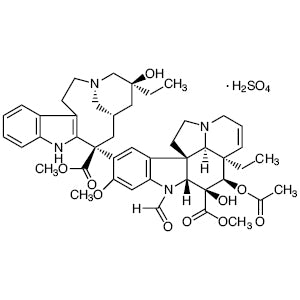
VincristineSulfate TCI V0129
Regular price Rp 4.636.800,00Regular priceRp 3.258.150,00Sale price Rp 4.636.800,00 -
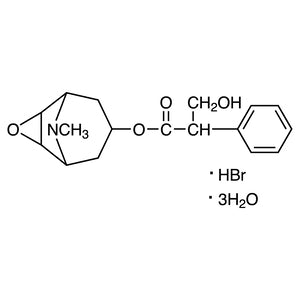
ScopolamineHydrobromideTrihydrate TCI S0021
Regular price From Rp 2.730.000,00Regular priceRp 1.924.650,00Sale price From Rp 2.730.000,00 -
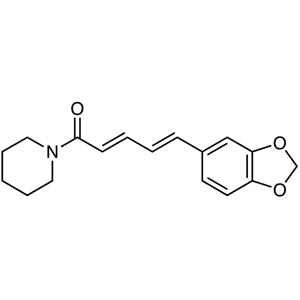
Piperine TCI P0460
Regular price From Rp 822.150,00Regular priceRp 590.100,00Sale price From Rp 822.150,00