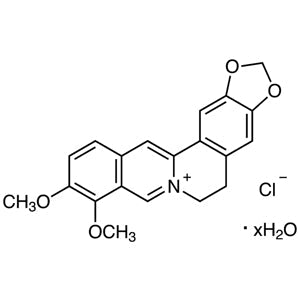
Berberine Chloride Hydrate is a chemical compound widely used in laboratory experiments, particularly in the fields of chemistry and biology. It functions as a basic dye, capable of binding to various substrates, which facilitates identification and analysis in research settings. As an alkaloid derived from plants, Berberine Chloride Hydrate exhibits chemical stability and is suitable for qualitative and quantitative testing applications. Its unique properties make it a valuable tool for researchers seeking reliable and consistent results in their experiments.
The compound’s solubility in both organic solvents and water, along with its ability to change color under specific conditions, makes it a preferred choice for staining and analytical processes. These characteristics allow it to be used effectively in colorimetric assays and other chemical analyses. Additionally, its resistance to certain temperatures and pH levels ensures its usability in diverse laboratory environments. This stability and versatility contribute to its widespread application in both academic and industrial research.
In Indonesian laboratories, Berberine Chloride Hydrate is commonly used in biochemical, pharmacological, and qualitative analysis studies. It serves as a key component in the identification of chemical compounds and in the testing of various properties. Its availability and reliability make it an essential reagent for researchers working in these fields, supporting both basic and advanced experimental work.
TCI brochures (PDF)
- Efflux Pump Research Reagents 2024-12-24 · p. 1
- Crude Medicine Ingredients for Cancer Research 2025-02-17 · p. 1
- Traditional Medicine/Crude Medicine Research Reagents 2024-09-11 · p. 1
- Alkaloids 2025-10-10 · p. 5
- Plant Research Reagents 2026-02-24 · p. 8
- Phytochemicals 2025-12-17 · p. 3
- Biochemical research utilizes Berberine Chloride Hydrate for its ability to bind to specific substrates, aiding in the identification of compounds and cellular components.
- Pharmacological studies benefit from its chemical stability and solubility, allowing it to be used in drug testing and formulation analysis.
- Qualitative analysis relies on its color-changing properties, making it ideal for detecting and analyzing chemical substances in solution.
- Laboratory staining procedures use it as a basic dye to highlight cellular structures and facilitate microscopic examination.
- Environmental testing incorporates it for assessing the presence of certain compounds in water and soil samples due to its reactivity and solubility.
| Brand | TCI |
|---|---|
| CAS number | 141433-60-5 |
| Molecular formula | — |
| Purity | — |
| Category | Chemistry > Stains and Dyes (for Research and Experimental Use) > Basic Dyes (for Research and Experimental Use) |
| Pack sizes | Available in various quantities as per standard laboratory supply packaging |
| Physical form | Hydrate form, typically in powder or crystalline state |
| Storage | Store in a cool, dry place away from direct sunlight and moisture |
Berberine Chloride Hydrate should be stored in a cool, dry environment to maintain its chemical stability. It is recommended to keep it in airtight containers to prevent moisture absorption, which could affect its solubility and effectiveness. The compound should be protected from direct sunlight and high humidity to avoid degradation. In laboratory settings, it is important to handle the substance with care, using appropriate personal protective equipment such as gloves and safety goggles. Proper labeling of storage containers is essential to ensure safe handling and prevent accidental exposure. Regular inspection of storage conditions helps maintain the integrity of the compound for reliable experimental results.
—
Product Categories
- Biochemicals and ReagentsAlkaloidsIsoquinoline Alkaloids
- Biochemicals and ReagentsCrude Medicine Ingredients for Research and Experimental Use
- Biochemicals and ReagentsPharmaceutical Research Reagents (for Experimental Use)Pharmaceutical Research Reagents (Others)
- Cell BiologyNutrition ResearchPhytochemicals
- MicrobiologyEfflux Pump ResearchEfflux Pump Inhibitors
- Pharmaceutical Development and Drug Discovery ResearchPharmaceutical Research Reagents (for Experimental Use)Pharmaceutical Research Reagents (Others)
- Pharmaceutical Development and Drug Discovery ResearchCrude Medicine Ingredients for Research and Experimental Use
Produk Terkait
-
BerberineSulfate TCI B0451
Regular price From Rp 1.378.650,00Regular priceRp 979.650,00Sale price From Rp 1.378.650,00 -
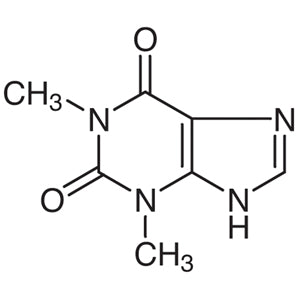
Theophylline TCI T0179
Regular price From Rp 557.550,00Regular priceRp 405.300,00Sale price From Rp 557.550,00 -
Theobromine TCI T0178
Regular price From Rp 1.272.600,00Regular priceRp 905.100,00Sale price From Rp 1.272.600,00 -
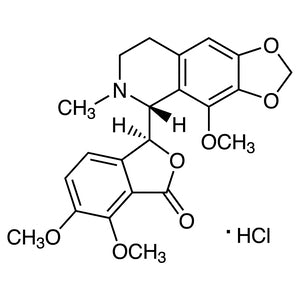
NoscapineHydrochloride TCI N0963
Regular price Rp 3.392.550,00Regular priceRp 2.387.700,00Sale price Rp 3.392.550,00 -
Reserpine TCI R0007
Regular price Rp 1.988.700,00Regular priceRp 1.405.950,00Sale price Rp 1.988.700,00 -
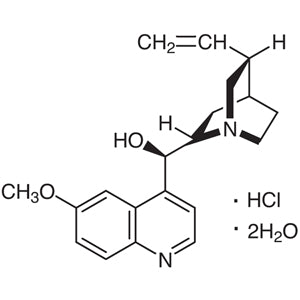
QuinineHydrochlorideDihydrate TCI Q0030
Regular price Rp 1.670.550,00Regular priceRp 1.183.350,00Sale price Rp 1.670.550,00 -
Quinine TCI Q0028
Regular price From Rp 3.232.950,00Regular priceRp 2.276.400,00Sale price From Rp 3.232.950,00 -
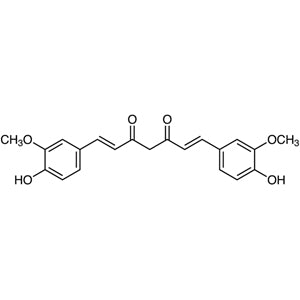
Curcumin(Natural) TCI C0434
Regular price From Rp 637.350,00Regular priceRp 445.200,00Sale price From Rp 637.350,00