


1-Phenylcyclopentanecarbonitrile is a chemical compound widely used in organic synthesis reactions within laboratory settings. It serves as a key building block for the development of complex molecular structures, particularly in the synthesis of heterocyclic and aromatic compounds. Its unique molecular structure, combining a cyclopentane ring with a nitrile group and a phenyl group, makes it a versatile reagent in various synthetic pathways. This compound is commonly found in research laboratories where the creation of new chemical entities is essential.
The compound is valued for its stable chemical structure and controlled reactivity, which allow it to participate in a wide range of chemical transformations. Its well-defined melting and boiling points make it easy to handle and process under laboratory conditions. Additionally, its neutral chemical properties and low reactivity with other substances contribute to its safety and reliability in experimental work. These characteristics make it a preferred choice for chemists seeking a reliable and predictable reagent.
In Indonesian laboratories, 1-Phenylcyclopentanecarbonitrile is frequently used in organic chemistry research conducted by universities and research institutions. It is particularly relevant for projects requiring complex building blocks with controlled reactivity. Its availability and consistent quality ensure that it remains a go-to compound for researchers in the field.
Related TCI products
- TCI A3039 103646-82-8 5-Amino-1-(p-tolyl)pyrazole-4-carbonitrile
- TCI P2253 2201-23-2 1-Phenylcyclohexanecarbonitrile
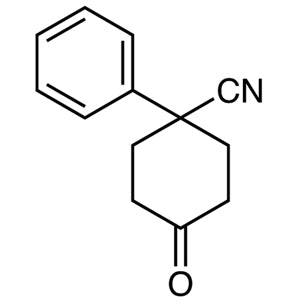
- TCI O0470 25115-74-6 4-Oxo-1-phenylcyclohexanecarbonitrile
- TCI C4103 24973-49-7 [1,1'-Biphenyl]-2-carbonitrile
- TCI C3167 4254-02-8 Cyclopentanecarbonitrile
- TCI B6956 690260-67-4 2'-Bromo-[1,1'-biphenyl]-3-carbonitrile
- Organic synthesis reactions benefit from this compound due to its ability to participate in substitution and catalytic processes.
- It is ideal for the preparation of heterocyclic compounds because of its structural versatility and reactivity.
- The compound supports the development of aromatic derivatives, making it valuable in pharmaceutical and material science research.
- Its stable nature allows it to be used in long-term storage and repeated experimental applications.
- It is commonly employed in academic research settings where controlled chemical transformations are required.
| Brand | TCI |
|---|---|
| CAS number | 77-57-6 |
| Molecular formula | — |
| Purity | — |
| Category | Chemistry > Building Blocks > Non-Heterocyclic Building Blocks |
| Pack sizes | Available in various quantities as per standard laboratory supply |
| Physical form | Solid |
| Storage | Store in a cool, dry place away from direct sunlight |
This compound should be stored in a cool, dry environment to maintain its chemical stability. It is recommended to keep it in airtight containers to prevent exposure to moisture and air. Due to its neutral chemical properties, it does not react readily with most substances, but standard laboratory safety protocols should still be followed. Avoid contact with incompatible materials and ensure proper ventilation when handling. The compound is generally safe to use under controlled laboratory conditions, making it suitable for routine chemical synthesis experiments.
—
Produk Terkait
-
5-Amino-1-(p-tolyl)pyrazole-4-carbonitrile TCI A3039
Regular price Rp 3.312.750,00Regular price -
1-Phenylcyclohexanecarbonitrile TCI P2253
Regular price Rp 2.491.650,00Regular price -
4-Oxo-1-phenylcyclohexanecarbonitrile TCI O0470
Regular price Rp 2.174.550,00Regular price -
[1,1'-Biphenyl]-2-carbonitrile TCI C4103
Regular price From Rp 2.094.750,00Regular price -
Cyclopentanecarbonitrile TCI C3167
Regular price From Rp 3.367.350,00Regular price -
2'-Bromo-[1,1'-biphenyl]-3-carbonitrile TCI B6956
Regular price From Rp 2.757.300,00Regular price -
3'-Bromo[1,1'-biphenyl]-4-carbonitrile TCI B5965
Regular price From Rp 2.359.350,00Regular price -
3'-Bromo[1,1'-biphenyl]-3-carbonitrile TCI B5964
Regular price From Rp 2.094.750,00Regular price


![[1,1'-Biphenyl]-2-carbonitrile (CAS 24973-49-7) - TCI C4103 - AMI Scientific](http://amiscientific.com/cdn/shop/files/TCI2510C4103.jpg?v=1769180472&width=533)

![2'-Bromo-[1,1'-biphenyl]-3-carbonitrile (CAS 690260-67-4) - TCI B6956 - AMI Scientific](http://amiscientific.com/cdn/shop/files/TCI2510B6956.jpg?v=1771058291&width=533)
![3'-Bromo[1,1'-biphenyl]-4-carbonitrile (CAS 160521-46-0) - TCI B5965 - AMI Scientific](http://amiscientific.com/cdn/shop/files/TCI2510B5965.jpg?v=1769180247&width=533)
![3'-Bromo[1,1'-biphenyl]-3-carbonitrile (CAS 1040141-34-1) - TCI B5964 - AMI Scientific](http://amiscientific.com/cdn/shop/files/TCI2510B5964.jpg?v=1769144661&width=533)