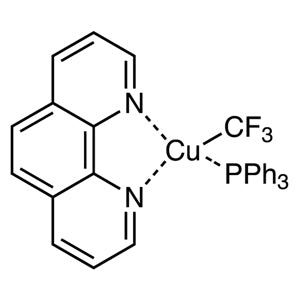
This material is a complex compound composed of 1,10-phenanthroline, trifluoromethyl, and triphenylphosphine bound to copper(I) ion. It plays a significant role in synthetic chemistry, particularly in fluorination reactions and substitution processes. Due to its unique chemical structure, it is widely used in laboratory settings for studying transition metal reactivity and catalytic reactions. Its ability to form stable complexes with various metals makes it a versatile reagent in organic and inorganic chemistry research.
The compound is highly reactive, especially towards organic and inorganic substances, which makes it an essential component in the synthesis of organophosphorus and organofluorine compounds. Its reactivity is further enhanced by the presence of the copper(I) ion, which facilitates electron transfer and coordination chemistry. The combination of the phenanthroline ligand and the phosphine group provides a stable yet reactive environment, making it suitable for a wide range of chemical transformations.
In Indonesian laboratories, this compound is commonly used in organic and inorganic chemistry research, particularly in synthetic and fluorination applications. It is a preferred choice for institutions and universities engaged in advanced chemical synthesis and catalytic studies. Its role in the development of complex organic molecules and its utility in transition metal chemistry make it a valuable asset in the laboratory setting.
Advantages (TCI brochure)
- Stable crystalline solids
- Applicable to the trifluoromethylation of various aryl iodides
- Trifluoromethylation reactions can be performed with easy handling
TCI brochures (PDF)
- Copper Complexes for Trifluoromethylation via Oxidative Cross-coupling 2018-10-30 · p. 1
- Trifluoromethylating Reagents 2024-08-27 · p. 4
- Fluorination Reagents, Fluorinated Building Blocks 2026-03-18 · p. 9
Related TCI products
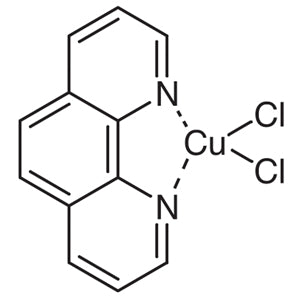
- TCI D3891 14783-09-6 Dichloro(1,10-phenanthroline)copper(II)
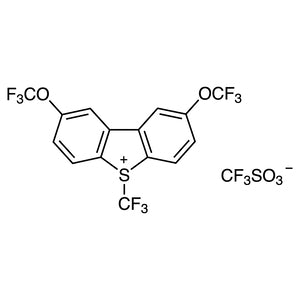
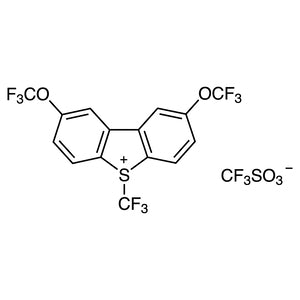
- TCI T4082 2833773-70-7 S-Trifluoromethyl-2,8-bis(trifluoromethoxy)dibenzothiophenium Triflate
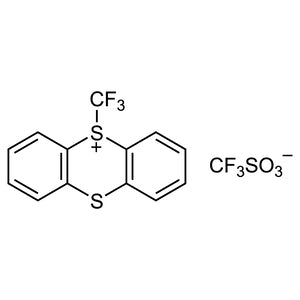
- TCI T4037 2648079-79-0 5-(Trifluoromethyl)-5H-thianthren-5-ium Trifluoromethanesulfonate
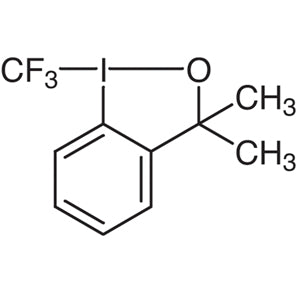
- TCI T2624 887144-97-0 1-Trifluoromethyl-3,3-dimethyl-1,2-benziodoxole
- TCI T2994 14243-64-2 (Triphenylphosphine)gold(I) Chloride
- TCI T2485 14221-02-4 Tetrakis(triphenylphosphine)platinum(0)
- Fluorination Reactions: This compound is ideal for fluorination processes due to its ability to facilitate the introduction of fluorine atoms into organic molecules.
- Transition Metal Catalysis: Its copper(I) ion and ligand structure make it suitable for catalytic reactions involving transition metals, enhancing reaction efficiency.
- Organophosphorus Synthesis: The presence of triphenylphosphine allows it to participate in the synthesis of organophosphorus compounds, which are important in pharmaceutical and agrochemical research.
- Heterocyclic Compound Formation: The compound's reactivity enables its use in the synthesis of heterocyclic structures, which are common in natural products and pharmaceuticals.
- Organofluorine Compound Development: Its fluorine-containing groups make it a key reagent in the development of organofluorine compounds, which have applications in materials science and medicine.
From the TCI brochure
- Trifluoromethylation of aryl iodides via oxidative cross-coupling (P2172 1.0 eq., aryl iodide 1.1 eq., DMF, 80 °C)
| Brand | TCI |
|---|---|
| CAS number | 1334890-93-5 |
| Molecular formula | — |
| Purity | — |
| Category | Chemistry > Synthetic Reagents > Fluorination Reagents |
| Pack sizes | Available in various quantities as per supplier specifications |
| Physical form | Solid or powder, depending on the specific formulation |
| Storage | Store in a cool, dry place away from moisture and light |
Data from the TCI brochure
| Yield (%) | 65 (R = H; P2172 (1.0 eq.), aryl iodide (1.1 eq.), DMF, 80 °C) |
|---|---|
| Yield (%) | 60 (R = CH3; P2172 (1.0 eq.), aryl iodide (1.1 eq.), DMF, 80 °C) |
| Yield (%) | 65 (R = OCH3; P2172 (1.0 eq.), aryl iodide (1.1 eq.), DMF, 80 °C) |
| Yield (%) | 80 (R = Cl; P2172 (1.0 eq.), aryl iodide (1.1 eq.), DMF, 80 °C) |
| Yield (%) | 60 (R = F; P2172 (1.0 eq.), aryl iodide (1.1 eq.), DMF, 80 °C) |
| Yield (%) | 70 (R = NO2; P2172 (1.0 eq.), aryl iodide (1.1 eq.), DMF, 80 °C) |
| Yield (%) | 85 (R = CN; P2172 (1.0 eq.), aryl iodide (1.1 eq.), DMF, 80 °C) |
| Yield (%) | 60 (R = CF3; P2172 (1.0 eq.), aryl iodide (1.1 eq.), DMF, 80 °C) |
Source: TCI brochure RR096 (2018-10-30)
This compound should be stored in a cool, dry environment to maintain its chemical integrity and reactivity. It is recommended to use airtight containers to prevent exposure to moisture and air, which can lead to degradation. Due to its high reactivity, it should be handled with care, using appropriate personal protective equipment such as gloves and safety goggles. It is important to ensure that the storage area is well-ventilated to minimize the risk of inhalation of any vapors. Avoid contact with incompatible materials to prevent unwanted chemical reactions. Proper labeling of storage containers is essential for safety and identification purposes.
References cited in the TCI brochure
- Olesya A. Tomashenko. Simple, Stable, and Easily Accessible Well‐Defined CuCF3 Aromatic Trifluoromethylating Agents Angewandte Chemie International Edition, 2011. doi:10.1002/anie.201101577
Produk Terkait
-
Dichloro(1,10-phenanthroline)copper(II) TCI D3891
Regular price From Rp 1.087.800,00Regular price -
S-Trifluoromethyl-2,8-bis(trifluoromethoxy)dibenzothiopheniumTriflate TCI T4082
Regular price From Rp 2.491.650,00Regular price -
5-(Trifluoromethyl)-5H-thianthren-5-iumTrifluoromethanesulfonate TCI T4037
Regular price From Rp 1.936.200,00Regular price -
1-Trifluoromethyl-3,3-dimethyl-1,2-benziodoxole TCI T2624
Regular price From Rp 5.672.100,00Regular price -
(Triphenylphosphine)gold(I)Chloride TCI T2994
Regular price From Rp 3.260.250,00Regular price -
Tetrakis(triphenylphosphine)platinum(0) TCI T2485
Regular price Rp 3.127.950,00Regular price -
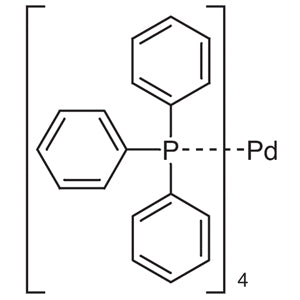
Tetrakis(triphenylphosphine)palladium(0) TCI T1350
Regular price From Rp 1.405.950,00Regular price -
2-Bromo-1,10-phenanthroline TCI B4456
Regular price From Rp 3.312.750,00Regular price