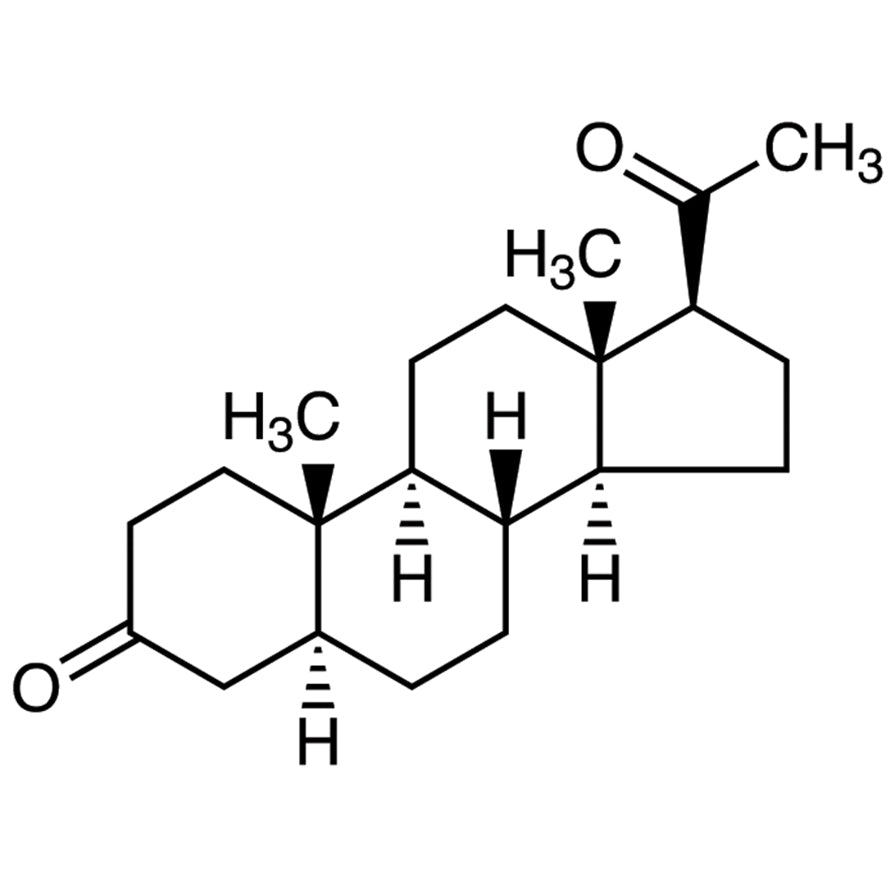
5alpha-Pregnane-3,20-dione from TCI, also known as 5α-dihydroprogesterone (5α-DHP), is a pregnane-class steroid formed when the enzyme 5α-reductase reduces progesterone. In biochemistry and pharmacology laboratories it serves as a reference standard, a material for studying steroid metabolism, and a precursor in the neurosteroid biosynthesis pathway that leads to allopregnanolone. Researchers who need to understand how tissues convert progesterone into compounds with different biological activities rely on this compound as a well-defined starting point for their investigations.
Laboratories choose this compound for its distinct role in the steroid metabolic pathway. Its pregnane skeleton carries two ketone groups, at positions 3 and 20, and the 5α configuration at the A/B ring junction makes it stereochemically different from the 5β isomer. This difference matters in chromatographic analysis and in studies of enzyme interactions. Because it is a pure compound supplied to the manufacturer's standard, it can be used for peak identification, for calibrating analytical methods, and as a defined substrate in enzymatic assays, for example when studying 3α-hydroxysteroid dehydrogenase activity.
In Indonesia, this material is relevant to pharmaceutical laboratories, university biochemistry and pharmacology departments, and research institutes working on steroid hormones and neuroendocrinology. Teams developing analytical methods for steroid profiling can use it to confirm retention times and separate 5α from 5β isomers. Academic groups studying progesterone metabolism or neurosteroid pathways can use it as a reliable reference material, which supports reproducible results across research projects and quality-focused laboratory work.
TCI brochures (PDF)
- Steroids 2026-07-28 · p. 5
Related TCI products
- TCI P0678 80-92-2 5beta-Pregnane-3alpha,20alpha-diol
- TCI P2623 1162-56-7 Pregna-4,6-diene-3,20-dione
- TCI P3084 128-20-1 5beta-Pregnan-3alpha-ol-20-one
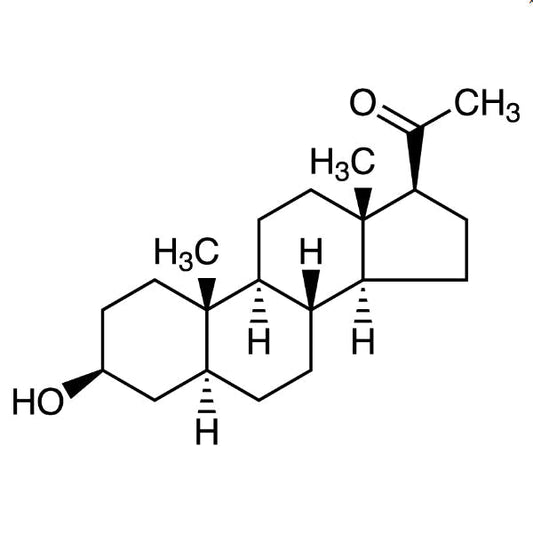
- TCI H1839 516-55-2 3beta-Hydroxy-5alpha-pregnan-20-one
- TCI H1527 302-23-8 17alpha-Hydroxyprogesterone Acetate
- TCI H1250 68-96-2 17alpha-Hydroxyprogesterone
- Steroid metabolism studies: as the 5α-reduced metabolite of progesterone, it helps researchers trace how progesterone is converted inside tissues and how downstream products form.
- Neurosteroid biosynthesis research: as a precursor in the pathway toward allopregnanolone, it gives researchers a defined intermediate for studying how neuroactive steroids are produced.
- Chromatographic peak identification: its specific 5α stereochemistry lets analysts tell it apart from the 5β isomer and confirm peak assignments in steroid separation methods.
- Analytical method calibration: as a pure compound supplied to the manufacturer's standard, it suits building calibration references for steroid analysis in pharmaceutical and research laboratories.
- Enzymatic assays: as a defined substrate it suits studies of enzyme activity such as 3α-hydroxysteroid dehydrogenase, where a characterized starting material keeps the kinetic data consistent.
| Brand | TCI (product code P2423) |
|---|---|
| CAS number | 566-65-4 |
| Molecular formula | — |
| Purity | — |
| Category | Life Science > Biochemicals and Reagents > Steroids |
| Pack sizes | available as listed in the TCI catalogue; please confirm current options with our team |
| Physical form | see the manufacturer's label and Safety Data Sheet |
| Storage | — |
- Synonyms: 5α-Dihydroprogesterone (5α-DHP)
Keep 5alpha-Pregnane-3,20-dione in its original, tightly closed manufacturer's container, in a cool, dry, well-ventilated place away from direct light, heat, and incompatible substances such as strong oxidizing agents. Follow the storage conditions on the TCI label and Safety Data Sheet. Because it is a biologically active steroid, handle it with suitable personal protective equipment, including gloves, a laboratory coat, and safety glasses, and avoid creating or breathing in dust. Weigh it in a fume hood or ventilated enclosure, label all working solutions clearly, and dispose of waste according to local regulations and your institution's chemical safety procedures.
—
Produk Terkait
-
5beta-Pregnane-3alpha,20alpha-diol TCI P0678
Regular price From Rp 1.988.700,00Regular priceRp 1.405.950,00Sale price From Rp 1.988.700,00 -
Pregna-4,6-diene-3,20-dione TCI P2623
Regular price From Rp 2.942.100,00Regular priceRp 2.072.700,00Sale price From Rp 2.942.100,00 -
5beta-Pregnan-3alpha-ol-20-one TCI P3084
Regular price From Rp 2.464.350,00Regular priceRp 1.738.800,00Sale price From Rp 2.464.350,00 -
3beta-Hydroxy-5alpha-pregnan-20-one TCI H1839
Regular price Rp 2.411.850,00Regular priceRp 1.702.050,00Sale price Rp 2.411.850,00 -
17alpha-HydroxyprogesteroneAcetate TCI H1527
Regular price From Rp 1.087.800,00Regular priceRp 775.950,00Sale price From Rp 1.087.800,00 -
17alpha-Hydroxyprogesterone TCI H1250
Regular price From Rp 1.908.900,00Regular priceRp 1.350.300,00Sale price From Rp 1.908.900,00 -
17alpha-HydroxyprogesteroneCaproate TCI H0994
Regular price Rp 2.464.350,00Regular priceRp 1.738.800,00Sale price Rp 2.464.350,00 -
11alpha-Hydroxyprogesterone TCI H0498
Regular price From Rp 1.670.550,00Regular priceRp 1.183.350,00Sale price From Rp 1.670.550,00