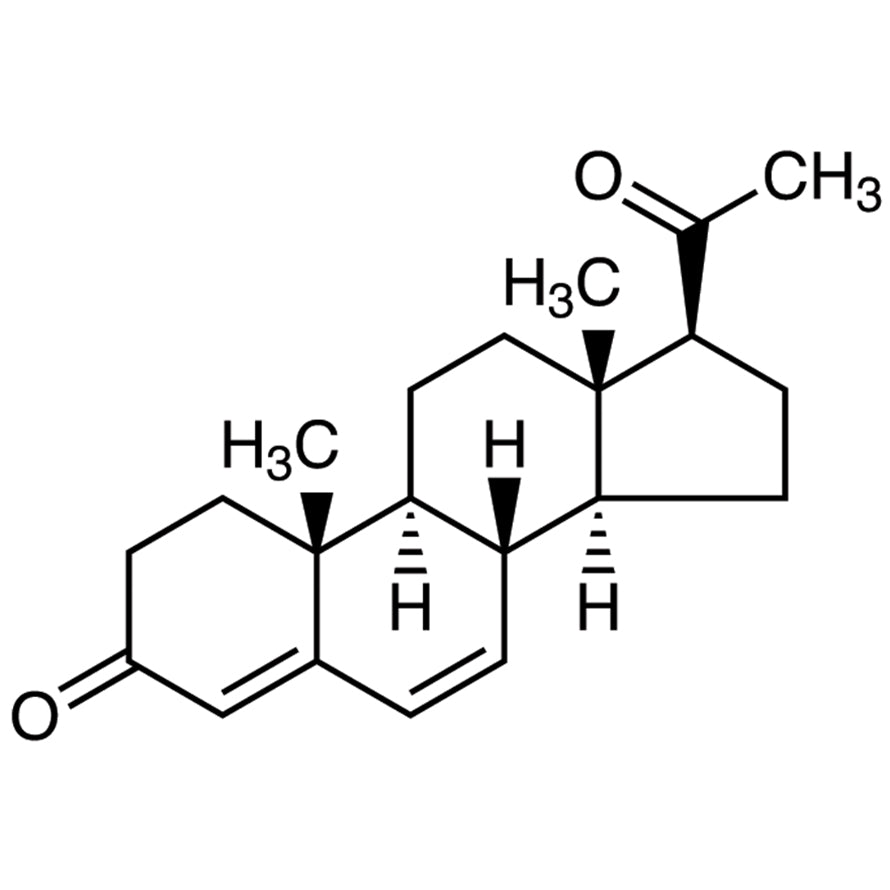
Pregna-4,6-diene-3,20-dione is a steroid compound widely used in scientific experiments related to hormonal metabolism and biochemical research. As a key component in steroid chemistry, it serves as a foundational building block for the synthesis of more complex steroid derivatives. Its structural similarity to progestins and other steroids makes it a versatile reagent in laboratory settings, where it is often employed as a substrate or catalyst in reactions requiring hormonal activation or specific biological interactions. This compound plays a critical role in various biochemical processes, enabling researchers to study the behavior of steroid-based molecules under controlled conditions.
The chemical properties of Pregna-4,6-diene-3,20-dione make it a preferred choice for high-precision research. It exhibits stability under certain conditions, though it remains sensitive to changes in chemical environment and temperature. Its complex molecular structure necessitates careful handling to ensure accurate experimental outcomes. These characteristics make it ideal for applications that demand strict control over chemical reactions and reliable reproducibility. Its reliability and consistency are essential for maintaining the integrity of scientific data in laboratory settings.
In Indonesian laboratories, Pregna-4,6-diene-3,20-dione is commonly used in biomedical, pharmacological, and organic chemistry research. Local researchers rely on this compound to investigate hormonal mechanisms, drug development, and steroid metabolism. Its availability supports a wide range of scientific inquiries, contributing to advancements in both academic and applied research fields. The compound’s utility in these contexts underscores its importance in the Indonesian scientific community.
- Hormonal Metabolism Studies: This compound is ideal for investigating the metabolic pathways of steroid hormones, providing insights into how these molecules are processed and regulated within biological systems.
- Drug Development Research: It serves as a key reagent in the synthesis of pharmaceutical compounds, supporting the development of new drugs targeting hormonal disorders and related conditions.
- Biochemical Reagent Use: Its structural similarity to progestins and other steroids makes it a valuable tool for biochemical assays and synthetic applications in organic chemistry.
- Biomedical Research Applications: It is frequently used in studies related to endocrinology and reproductive biology, aiding in the understanding of hormone function and interaction.
- Steroid Synthesis Protocols: Its role as a building block in the synthesis of complex steroid derivatives makes it essential for laboratories working on steroid-based research projects.
| Brand | TCI |
|---|---|
| CAS number | 1162-56-7 |
| Molecular formula | — |
| Purity | — |
| Category | Life Science > Biochemicals and Reagents > Steroids |
| Pack sizes | — |
| Physical form | — |
| Storage | — |
Pregna-4,6-diene-3,20-dione should be stored in a cool, dry place away from direct sunlight and sources of heat. It is recommended to keep the compound in a tightly sealed container to prevent exposure to moisture and air. Due to its sensitivity to environmental factors, it is important to maintain consistent storage conditions to preserve its chemical integrity. Researchers should avoid prolonged exposure to extreme temperatures and ensure proper ventilation when handling the compound. Proper labeling and storage practices help minimize the risk of contamination and ensure safe laboratory operations.
—
Produk Terkait
-
TCI B5774 5,10-Bis(4,4,5,5-tetramethyl-1,3,2-dioxaborolan-2-yl)naphtho[1,2-c:5,6-c']bis([1,2,5]oxadiazole)
Regular price Rp 10.255.350,00Regular price -
Dihydroiodide TCI B6569
Regular price From Rp 1.936.200,00Regular price -
Trifluoromethanesulfonate TCI B7003
Regular price From Rp 1.936.200,00Regular price
![5,10-Bis(4,4,5,5-tetramethyl-1,3,2-dioxaborolan-2-yl)naphtho[1,2-c:5,6-c']bis([1,2,5]oxadiazole) - TCI B5774 - AMI Scientific](http://amiscientific.com/cdn/shop/files/TCI2510B5774.jpg?v=1769180228&width=533)