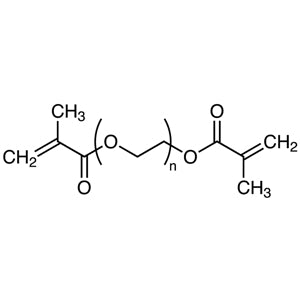
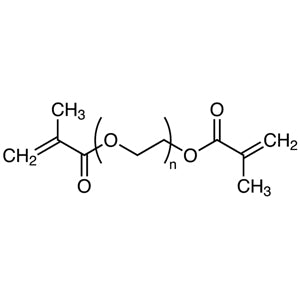
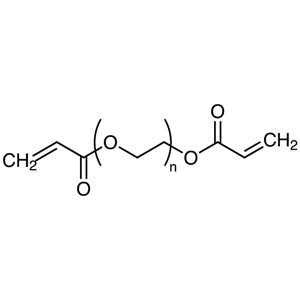
Polyethylene Glycol Dimethacrylate (PEGDMA) is a chemical compound widely used in laboratory settings for polymer synthesis and chemical reactions. As a monomer, it can undergo polymerization to form stable polymer structures, making it essential for materials science research. Its versatility allows it to be incorporated into various composite materials, coatings, and fillers, supporting both academic and industrial applications. In Indonesian laboratories, PEGDMA is a key component in the development of new materials and advanced chemical processes.
PEGDMA is valued for its chemical stability and good reactivity, which make it suitable for a wide range of chemical reactions. The stabilization with MEHQ (methyl ethyl glycol) enhances its shelf life and reduces the risk of degradation, ensuring consistent performance over time. This combination of stability and reactivity makes PEGDMA a preferred choice for researchers seeking reliable and effective chemical solutions. Its compatibility with various reaction conditions further supports its use in diverse laboratory environments.
In Indonesian laboratories, PEGDMA is commonly used in scientific research, particularly in the fields of chemistry, materials science, and engineering. It plays a crucial role in the development of innovative materials and composite structures. Its application is widespread in educational and research institutions, where it supports both fundamental and applied research. The material’s reliability and performance make it an essential tool for advancing scientific knowledge and technological development.
TCI brochures (PDF)
- Biomaterials Research Reagents 2025-02-19 · p. 12
- Monomers 2025-05-28 · p. 9
Related TCI products
- TCI T3488 2082-81-7 Tetramethylene Glycol Dimethacrylate (stabilized with MEHQ)
- TCI T3486 109-17-1 Tetraethylene Glycol Dimethacrylate (stabilized with HQ)
- TCI T1352 25852-47-5 Polyethylene Glycol Dimethacrylate (n=approx 4) (stabilized with MEHQ)
- TCI T0948 109-16-0 Triethylene Glycol Dimethacrylate (stabilized with MEHQ)
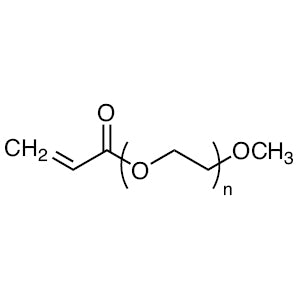
- TCI P2870 32171-39-4 Polyethylene Glycol Monomethyl Ether Acrylate (n=approx 13) (stabilized with MEHQ)
- TCI P2760 25852-47-5 Polyethylene Glycol Dimethacrylate (n=approx 14) (stabilized with MEHQ)
- Polymer synthesis and crosslinking applications benefit from PEGDMA's ability to form stable polymer networks, enhancing mechanical properties in composite materials.
- Coating formulations utilize PEGDMA for its compatibility with various resins, enabling the creation of durable and functional surface coatings.
- Material development in research labs relies on PEGDMA as a key monomer for creating flexible and biocompatible polymers used in medical and industrial applications.
- Chemical reaction studies use PEGDMA as a reactive component in controlled polymerization processes, allowing for precise control over molecular structure.
- Composite material research incorporates PEGDMA to improve the mechanical and thermal properties of polymer-based composites used in advanced manufacturing.
| Brand | TCI |
|---|---|
| CAS number | 25852-47-5 |
| Molecular formula | — |
| Purity | — |
| Category | Materials Science > Polymer/Macromolecule Reagents > Monomers |
| Pack sizes | — |
| Physical form | Liquid |
| Storage | Store in a cool, dark place away from heat and direct sunlight. |
PEGDMA should be stored in a cool, dark environment to maintain its stability and prevent degradation. It is recommended to use airtight containers made of glass or high-density polyethylene to protect it from moisture and contaminants. Proper labeling of containers is essential for safe handling and identification. Due to its chemical nature, it should be kept away from incompatible substances such as strong oxidizers. Adequate ventilation is necessary when handling PEGDMA to minimize exposure to vapors. Regular inspection of storage conditions ensures the material remains in optimal condition for laboratory use.
—
Product Categories
Produk Terkait
-
TetramethyleneGlycolDimethacrylate(stabilizedwithMEHQ) TCI T3488
Regular price Rp 3.763.200,00Regular price -
TetraethyleneGlycolDimethacrylate(stabilizedwithHQ) TCI T3486
Regular price From Rp 1.298.850,00Regular price -
PolyethyleneGlycolDimethacrylate(n=approx4)(stabilizedwithMEHQ) TCI T1352
Regular price From Rp 505.050,00Regular price -
TriethyleneGlycolDimethacrylate(stabilizedwithMEHQ) TCI T0948
Regular price From Rp 505.050,00Regular price -
PolyethyleneGlycolMonomethylEtherAcrylate(n=approx13)(stabilizedwithMEHQ) TCI P2870
Regular price From Rp 1.035.300,00Regular price -
PolyethyleneGlycolDimethacrylate(n=approx14)(stabilizedwithMEHQ) TCI P2760
Regular price From Rp 610.050,00Regular price -
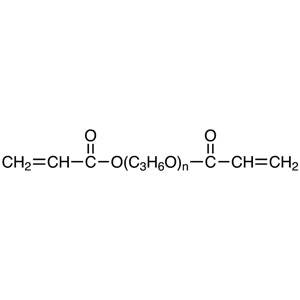
PolypropyleneGlycolDiacrylate(n=approx12)(stabilizedwithMEHQ) TCI P2759
Regular price From Rp 769.650,00Regular price -
PolyethyleneGlycolDiacrylate(n=approx14)(stabilizedwithMEHQ) TCI P2757
Regular price From Rp 557.550,00Regular price