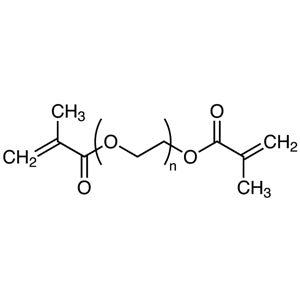
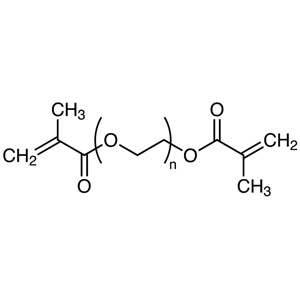
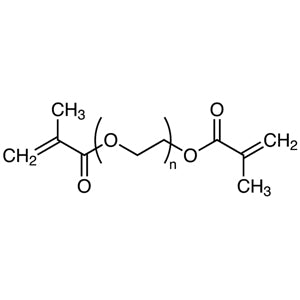
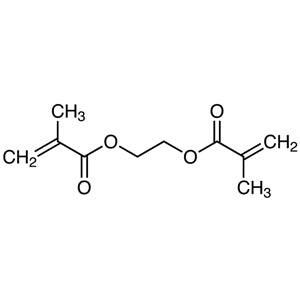
Triethylene Glycol Dimethacrylate (TEGDMA), with the CAS number 109-16-0, is a widely used chemical in materials science and polymer chemistry. As a monomer, it serves as a foundational component in the synthesis of composite resins, commonly applied in dental science, material engineering, and chemical research. Its high reactivity allows it to form cross-linked networks with other monomers, resulting in polymers with excellent mechanical and chemical properties. This material is essential for creating durable and functional materials in various scientific applications.
TEGDMA is known for its stable molecular structure and reactivity, making it a preferred choice in laboratory settings. Its ability to react with a variety of functional groups enables the development of advanced polymer systems. The inclusion of MEHQ (methyl-4-hydroxyphenylbutyl ether) as a stabilizer enhances its shelf life by preventing degradation due to exposure to air and light. This ensures consistent performance and reliability in experimental processes. The material’s versatility and compatibility with other reagents further contribute to its widespread use in research and development.
In Indonesian laboratories, TEGDMA is commonly used in polymer composite research and practical chemical applications. Its availability, reactivity, and ability to form strong, long-lasting structures make it a top choice for scientists and researchers. It is frequently employed in studies related to dental materials, polymer synthesis, and advanced material development. The material’s role in creating functional and durable materials underscores its importance in both academic and industrial research environments.
TCI brochures (PDF)
- Dental Materials Research Reagents 2026-07-23 · p. 1
- Drug Delivery System (DDS) Research Reagents 2025-01-29 · p. 3
- Biomaterials Research Reagents 2025-02-19 · p. 12
- Monomers 2025-05-28 · p. 9
Related TCI products
- TCI T3488 2082-81-7 Tetramethylene Glycol Dimethacrylate (stabilized with MEHQ)
- TCI T3486 109-17-1 Tetraethylene Glycol Dimethacrylate (stabilized with HQ)
- TCI T1352 25852-47-5 Polyethylene Glycol Dimethacrylate (n=approx 4) (stabilized with MEHQ)
- TCI P2760 25852-47-5 Polyethylene Glycol Dimethacrylate (n=approx 14) (stabilized with MEHQ)
- TCI P2709 25852-47-5 Polyethylene Glycol Dimethacrylate (n=approx 9) (stabilized with MEHQ)
- TCI N0780 1985-51-9 Neopentyl Glycol Dimethacrylate (stabilized with MEHQ)
- Dental material research utilizes TEGDMA for creating composite resins due to its reactivity and ability to form strong, durable structures.
- Polymer synthesis applications benefit from TEGDMA's capacity to cross-link with other monomers, leading to enhanced mechanical properties in the final product.
- Material engineering studies employ TEGDMA to develop advanced composite materials with tailored chemical and physical characteristics.
- Chemical research laboratories use TEGDMA as a key component in the formulation of various polymer-based systems for experimental and industrial applications.
- Industrial applications in Indonesia rely on TEGDMA for producing high-performance materials used in manufacturing and construction sectors.
| Brand | TCI |
|---|---|
| CAS number | 109-16-0 |
| Molecular formula | — |
| Purity | — |
| Category | Materials Science > Polymer/Macromolecule Reagents > Monomers |
| Pack sizes | — |
| Physical form | Liquid |
| Storage | Store in a cool, dark place away from heat and direct sunlight |
TEGDMA should be stored in a cool, dark environment to prevent degradation and maintain its chemical integrity. It is recommended to use airtight containers to minimize exposure to air and moisture. Due to its reactivity, it should be handled in a well-ventilated area, preferably with appropriate personal protective equipment. Avoid contact with incompatible substances to ensure safety. Proper labeling and storage conditions are essential to maintain the material’s effectiveness and safety in laboratory settings. Always follow standard laboratory safety protocols when working with this reactive chemical.
—
Product Categories
- Polymer/Macromolecule ReagentsMonomersAcrylic Monomers
- Biomaterials/Biocompatible Materials Research ReagentsDental Materials Research Reagents
- Biomaterials/Biocompatible Materials Research ReagentsMonomers and Macromonomers [Biomaterials/Biocompatible Materials Research Reagents]Acrylic Monomers [Biomaterials/Biocompatible Materials Research Reagents]
Produk Terkait
-
TetramethyleneGlycolDimethacrylate(stabilizedwithMEHQ) TCI T3488
Regular price Rp 3.763.200,00Regular priceRp 2.631.300,00Sale price Rp 3.763.200,00 -
TetraethyleneGlycolDimethacrylate(stabilizedwithHQ) TCI T3486
Regular price From Rp 1.298.850,00Regular priceRp 908.250,00Sale price From Rp 1.298.850,00 -
PolyethyleneGlycolDimethacrylate(n=approx4)(stabilizedwithMEHQ) TCI T1352
Regular price From Rp 505.050,00Regular priceRp 352.800,00Sale price From Rp 505.050,00 -
PolyethyleneGlycolDimethacrylate(n=approx14)(stabilizedwithMEHQ) TCI P2760
Regular price From Rp 610.050,00Regular priceRp 426.300,00Sale price From Rp 610.050,00 -
PolyethyleneGlycolDimethacrylate(n=approx9)(stabilizedwithMEHQ) TCI P2709
Regular price From Rp 610.050,00Regular priceRp 426.300,00Sale price From Rp 610.050,00 -
NeopentylGlycolDimethacrylate(stabilizedwithMEHQ) TCI N0780
Regular price From Rp 717.150,00Regular priceRp 500.850,00Sale price From Rp 717.150,00 -
EthyleneGlycolDimethacrylate(stabilizedwithHQ) TCI E0102
Regular price From Rp 452.550,00Regular priceRp 316.050,00Sale price From Rp 452.550,00 -
DiethyleneGlycolDimethacrylate(stabilizedwithMEHQ) TCI D1530
Regular price From Rp 610.050,00Regular priceRp 426.300,00Sale price From Rp 610.050,00