![2-[3-[(Prop-2-yn-1-yloxy)methyl]-3H-diazirin-3-yl]ethan-1-ol - AMI Scientific](http://amiscientific.com/cdn/shop/files/TCI2510P2843.jpg?v=1767136688&width=1946)
![2-[3-[(Prop-2-yn-1-yloxy)methyl]-3H-diazirin-3-yl]ethan-1-ol - AMI Scientific](http://amiscientific.com/cdn/shop/files/TCI2510P2843.jpg?v=1767136688&width=1445)
TCI P2843 is a specialized chemical compound used in chemical biology, particularly in applications requiring molecular binding or crosslinking between molecules. This compound is designed to facilitate interactions with various biomolecules such as proteins, nucleic acids, and lipids. Its unique structure allows it to serve as a versatile tool for constructing complex molecular architectures or connecting molecules in biomedical and pharmacological research. In the laboratory, it plays a crucial role in enabling precise and controlled chemical reactions that are essential for advanced scientific investigations.
The compound is favored for its chemical stability under specific conditions, making it suitable for high-precision chemical reactions. Its reactive nature allows it to interact effectively with a wide range of substrates without compromising the integrity of the target molecules. The complex molecular structure also provides flexibility in experimental design, enabling researchers to tailor their approaches to specific research goals. This adaptability and reliability make TCI P2843 a preferred choice for laboratories engaged in molecular interaction studies and biomolecular analysis.
In Indonesian laboratories, TCI P2843 is commonly used in applied research such as drug development, biomolecular analysis, and molecular interaction studies. Its relevance is driven by the growing demand for advanced chemical tools in local research institutions. Researchers in Indonesia rely on this compound to support their work in understanding molecular behavior and designing new therapeutic strategies. Its application aligns with the needs of local scientists working in the field of chemical biology.
TCI brochures (PDF)
- Photoreactive Labeling Agents 2024-02-15 · p. 1
- Photo-reactive Crosslinkers 2024-11-07 · p. 1
- Cross-linkers 2026-04-14 · p. 4
- Bioconjugation Reagents 2026-07-07 · p. 5
Related TCI products
- TCI N1200 2945911-70-4 4-Nitrophenyl [2-[3-[(Prop-2-yn-1-yloxy)methyl]-3H-diazirin-3-yl]ethyl] Carbonate
- TCI S0863 91990-88-4 N-Succinimidyl 4-Benzoylbenzoate
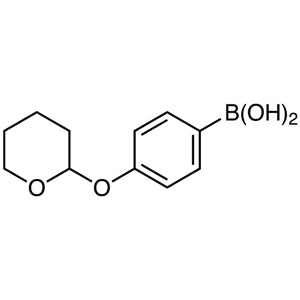
- TCI T3325 182281-01-2 4-(Tetrahydro-2H-pyran-2-yloxy)phenylboronic Acid (contains varying amounts of Anhydride)
- TCI T2452 5,10,15,20-Tetrakis[3,5-bis(per-O-methyl-alpha-cyclodextrin-6-yloxy)phenyl]-21H,23H-porphine
- TCI T2451 5,10,15,20-Tetrakis[4-(per-O-methyl-alpha-cyclodextrin-6-yloxy)phenyl]porphyrin
- TCI T2450 1,1,1-Tris[4-(per-O-methyl-alpha-cyclodextrin-6-yloxy)phenyl]ethane
- Drug development research benefits from TCI P2843 as it enables precise molecular crosslinking essential for creating targeted therapeutic agents.
- Biomolecular analysis utilizes this compound to study interactions between proteins, nucleic acids, and other biomolecules in complex systems.
- Molecular interaction studies rely on TCI P2843 to investigate how different molecules bind and communicate within biological environments.
- Crosslinking applications in pharmacology use this compound to stabilize and analyze molecular structures during drug discovery processes.
- Structural biology experiments employ TCI P2843 to construct and manipulate complex molecular frameworks for detailed biochemical analysis.
From the TCI brochure
- Building block for synthesis of photoreactive labeling reagents that add an alkyne moiety to the target molecule by photo-crosslinking with diazirine moieties
| Brand | TCI |
|---|---|
| CAS number | 174762-28-8 |
| Molecular formula | — |
| Purity | — |
| Category | Chemistry > Chemical Biology > Linkers and Crosslinkers |
| Pack sizes | Available in standard laboratory quantities |
| Physical form | Solid or liquid, depending on formulation |
| Storage | Store in a cool, dry place away from light and moisture |
Data from the TCI brochure
| Kemasan | 100mg |
|---|
Source: TCI brochure LL105 (2024-02-15)
TCI P2843 should be stored in a cool, dry environment, away from direct sunlight and moisture to maintain its chemical stability. It is recommended to use airtight containers to prevent exposure to air and potential degradation. When handling, researchers should wear appropriate personal protective equipment, including gloves and safety goggles, to minimize direct contact. The compound should be kept in a well-ventilated area to ensure safe handling. It is important to follow standard laboratory safety protocols to avoid any unintended reactions or exposure. Proper storage and handling practices are essential to preserve the compound’s effectiveness and ensure safe use in research settings.
References cited in the TCI brochure
- Takenori Tomohiro. Cross‐linking chemistry and biology: development of multifunctional photoaffinity probes The Chemical Record, 2005. doi:10.1002/tcr.20058
- Makoto Hashimoto. Recent Progress in Diazirine‐Based Photoaffinity Labeling European Journal of Organic Chemistry, 2008. doi:10.1002/ejoc.200701069
- Yoshinori Kashiwayama. Identification of a Substrate-binding Site in a Peroxisomal β-Oxidation Enzyme by Photoaffinity Labeling with a Novel Palmitoyl Derivative Journal of Biological Chemistry, 2010. doi:10.1074/jbc.m110.104547
- Elaine W. S. Chan. Developing Photoactive Affinity Probes for Proteomic Profiling: Hydroxamate-based Probes for Metalloproteases Journal of the American Chemical Society, 2004. doi:10.1021/ja047044i
- Kazuhiko MATSUDA. Insecticidal and Neural Activities of Candidate Photoaffinity Probes for Neonicotinoid Binding Sites Bioscience, Biotechnology, and Biochemistry, 2001. doi:10.1271/bbb.65.1534
- Michaela Wiegand. Synthesis of Photoactive α‐Mannosides and Mannosyl Peptides and Their Evaluation for Lectin Labeling European Journal of Organic Chemistry, 2006. doi:10.1002/ejoc.200600449
- Daniela M. Dankbar. A study on photolinkers used for biomolecule attachment to polymer surfaces Analytical and Bioanalytical Chemistry, 2006. doi:10.1007/s00216-006-0871-x
- Shuai Wei. Grafting Organic and Biomolecules on H-Terminated Porous Silicon from a Diazirine Chemistry Letters, 2006. doi:10.1246/cl.2006.1172
- Naoki Kanoh. Immobilization of Natural Products on Glass Slides by Using a Photoaffinity Reaction and the Detection of Protein–Small‐Molecule Interactions Angewandte Chemie International Edition, 2003. doi:10.1002/anie.200352164
Product Categories
- Chemical BiologyLinkers and CrosslinkersHeterobifunctional Cross-Linkers
- Chemical BiologyLinkers and CrosslinkersPhoto-reactive Crosslinkers
- Chemical BiologyBioconjugationHeterobifunctional Cross-Linkers
- Chemical BiologyBioconjugationPhoto-reactive Crosslinkers
- Pharmaceutical Development and Drug Discovery Research ReagentsLinkers and CrosslinkersHeterobifunctional Cross-Linkers
- Pharmaceutical Development and Drug Discovery Research ReagentsLinkers and CrosslinkersPhoto-reactive Crosslinkers
- Biochemicals and ReagentsBioconjugationHeterobifunctional Cross-Linkers
- Biochemicals and ReagentsBioconjugationPhoto-reactive Crosslinkers
- Pharmaceutical Development and Drug Discovery ResearchBioconjugationHeterobifunctional Cross-Linkers
- Pharmaceutical Development and Drug Discovery ResearchBioconjugationPhoto-reactive Crosslinkers
- Pharmaceutical Development and Drug Discovery ResearchLinkers and CrosslinkersHeterobifunctional Cross-Linkers
- Pharmaceutical Development and Drug Discovery ResearchLinkers and CrosslinkersPhoto-reactive Crosslinkers
Produk Terkait
-
4-Nitrophenyl[2-[3-[(Prop-2-yn-1-yloxy)methyl]-3H-diazirin-3-yl]ethyl]Carbonate TCI N1200
Regular price Rp 8.877.750,00Regular price -
N-Succinimidyl4-Benzoylbenzoate TCI S0863
Regular price From Rp 3.738.000,00Regular price -
4-(Tetrahydro-2H-pyran-2-yloxy)phenylboronicAcid(containsvaryingamountsofAnhydride) TCI T3325
Regular price From Rp 1.776.600,00Regular price -
TCI T2452 5,10,15,20-Tetrakis[3,5-bis(per-O-methyl-alpha-cyclodextrin-6-yloxy)phenyl]-21H,23H-porphine
Regular price Rp 5.062.050,00Regular price -
TCI T2451 5,10,15,20-Tetrakis[4-(per-O-methyl-alpha-cyclodextrin-6-yloxy)phenyl]porphyrin
Regular price Rp 3.922.800,00Regular price -
TCI T2450 1,1,1-Tris[4-(per-O-methyl-alpha-cyclodextrin-6-yloxy)phenyl]ethane
Regular price Rp 5.857.950,00Regular price -
TCI B3026 2,2-Bis[4-(per-O-methyl-alpha-cyclodextrin-6-yloxy)phenyl]propane
Regular price Rp 5.857.950,00Regular price -
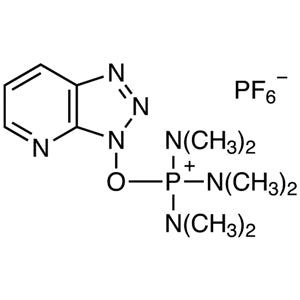
(7-Azabenzotriazol-1-yloxy)tris(dimethylamino)phosphoniumHexafluorophosphate TCI A2782
Regular price Rp 2.094.750,00Regular price
![2945911-70-4 4-Nitrophenyl [2-[3-[(Prop-2-yn-1-yloxy)methyl]-3H-diazirin-3-yl]ethyl] Carbonate - AMI Scientific](http://amiscientific.com/cdn/shop/files/TCI2510N1200.jpg?v=1767130925&width=533)


![5,10,15,20-Tetrakis[3,5-bis(per-O-methyl-alpha-cyclodextrin-6-yloxy)phenyl]-21H,23H-porphine - AMI Scientific](http://amiscientific.com/cdn/shop/files/TCI2510T2452.jpg?v=1767142906&width=533)
![5,10,15,20-Tetrakis[4-(per-O-methyl-alpha-cyclodextrin-6-yloxy)phenyl]porphyrin - AMI Scientific](http://amiscientific.com/cdn/shop/files/TCI2510T2451.jpg?v=1767142902&width=533)
![1,1,1-Tris[4-(per-O-methyl-alpha-cyclodextrin-6-yloxy)phenyl]ethane - AMI Scientific](http://amiscientific.com/cdn/shop/files/TCI2510T2450.jpg?v=1767142898&width=533)
![2,2-Bis[4-(per-O-methyl-alpha-cyclodextrin-6-yloxy)phenyl]propane - AMI Scientific](http://amiscientific.com/cdn/shop/files/TCI2510B3026.jpg?v=1767089265&width=533)