N-Succinimidyl 4-Benzoylbenzoate is a chemical compound widely used in biochemical and organic chemistry experiments. It belongs to the category of linkers and crosslinkers, playing a crucial role in the conjugation of biological molecules such as proteins and nucleic acids. This compound enables researchers to study molecular interactions by chemically linking two molecules through specific reactions. Its versatility makes it an essential tool in various laboratory applications, supporting both fundamental and applied research.
The compound is known for its chemical stability and high reactivity, which are key factors in its preference among researchers. Its molecular structure allows it to react with amino groups, making it particularly useful in biochemical applications. The reactivity and stability ensure that it performs reliably under various experimental conditions, contributing to the accuracy and reproducibility of results. These properties make it a trusted choice for both academic and industrial research settings.
In Indonesian laboratories, N-Succinimidyl 4-Benzoylbenzoate is commonly used in biochemistry, pharmaceutical, and organic chemistry research. It is a valuable resource for institutions and universities conducting experiments that require molecular conjugation. Its availability supports the advancement of scientific research in Indonesia, particularly in fields where crosslinking and molecular interaction studies are essential.
Advantages (TCI brochure)
- Benzophenones excited by UV (near 360 nm) induce hydrogen abstraction from target molecules
- Reaction efficiency remains high due to reversibility of the excited state
- Photoexcited benzophenones are not water-reactive
TCI brochures (PDF)
- Photo-reactive Crosslinkers 2024-11-07 · p. 2
- Cross-linkers 2026-04-14 · p. 4
- Bioconjugation Reagents 2026-07-07 · p. 5
- Reagents for Biological Research 2025-03-11 · p. 31
Related TCI products
- TCI S0968 55750-61-3 N-Succinimidyl Maleimidoacetate
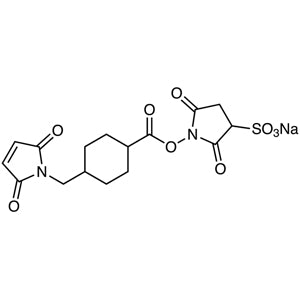
- TCI S0883 92921-24-9 3-Sulfo-N-succinimidyl 4-(N-Maleimidomethyl)cyclohexane-1-carboxylate Sodium Salt
- TCI S0853 64987-85-5 N-Succinimidyl 4-(N-Maleimidomethyl)cyclohexanecarboxylate
- TCI S0852 42014-51-7 N-Succinimidyl Bromoacetate
- TCI S0844 39028-27-8 N-Succinimidyl Iodoacetate
- TCI S0427 55750-62-4 N-Succinimidyl 3-Maleimidopropionate [Cross-linking Reagent]
- Bioconjugation studies benefit from this compound's ability to link biomolecules, facilitating the development of targeted therapies and diagnostic tools.
- Protein labeling applications utilize its reactivity with amino groups to attach fluorescent or radioactive tags for tracking molecular behavior.
- Crosslinking in structural biology helps researchers study protein-protein interactions and molecular architecture in complex systems.
- Drug development research employs it to create conjugates that enhance drug delivery and targeting efficiency in therapeutic applications.
- Molecular interaction analysis in biochemical assays relies on its capacity to form stable linkages for studying dynamic biological processes.
From the TCI brochure
- Photoaffinity labeling
- Photoaffinity microarray
| Brand | TCI |
|---|---|
| CAS number | 91990-88-4 |
| Molecular formula | — |
| Purity | — |
| Category | Chemistry > Chemical Biology > Linkers and Crosslinkers |
| Pack sizes | Available in standard laboratory quantities |
| Physical form | Solid powder |
| Storage | Store in a cool, dry place away from light |
This compound should be stored in a cool, dry environment, away from direct sunlight and sources of heat. It is recommended to keep it in a sealed container to prevent moisture absorption and maintain its chemical integrity. Proper ventilation should be ensured when handling the material to minimize exposure. Due to its reactivity, it should be handled with care using appropriate personal protective equipment. It is advisable to store it in a dedicated chemical storage cabinet to ensure safety and prevent accidental contamination. Regular inspection of storage conditions is recommended to maintain optimal performance and safety standards in the laboratory.
References cited in the TCI brochure
- Günther F. Ross. Synthesis of Trifunctional PNA−Benzophenone Derivatives for Mitochondrial Targeting, Selective DNA Binding, and Photo-Cross-Linking Bioconjugate Chemistry, 2003. doi:10.1021/bc034050f
- Yongwon Jung. Photoactivable Antibody Binding Protein: Site-Selective and Covalent Coupling of Antibody Analytical Chemistry, 2009. doi:10.1021/ac8014565
- Alex J. Hughes. Microfluidic Western blotting Proceedings of the National Academy of Sciences, 2012. doi:10.1073/pnas.1207754110
Product Categories
- Chemical BiologyLinkers and CrosslinkersHeterobifunctional Cross-Linkers
- Chemical BiologyLinkers and Crosslinkers
- Chemical BiologyLinkers and CrosslinkersPhoto-reactive Crosslinkers
- Chemical BiologyBioconjugationHeterobifunctional Cross-Linkers
- Chemical BiologyBioconjugationPhoto-reactive Crosslinkers
- Pharmaceutical Development and Drug Discovery Research ReagentsLinkers and CrosslinkersHeterobifunctional Cross-Linkers
- Pharmaceutical Development and Drug Discovery Research ReagentsLinkers and Crosslinkers
- Pharmaceutical Development and Drug Discovery Research ReagentsLinkers and CrosslinkersPhoto-reactive Crosslinkers
- Biochemicals and ReagentsBioconjugationHeterobifunctional Cross-Linkers
- Biochemicals and ReagentsBioconjugationPhoto-reactive Crosslinkers
- Pharmaceutical Development and Drug Discovery ResearchBioconjugationHeterobifunctional Cross-Linkers
- Pharmaceutical Development and Drug Discovery ResearchBioconjugationPhoto-reactive Crosslinkers
- Pharmaceutical Development and Drug Discovery ResearchLinkers and CrosslinkersHeterobifunctional Cross-Linkers
- Pharmaceutical Development and Drug Discovery ResearchLinkers and Crosslinkers
- Pharmaceutical Development and Drug Discovery ResearchLinkers and CrosslinkersPhoto-reactive Crosslinkers
Produk Terkait
-
N-SuccinimidylMaleimidoacetate TCI S0968
Regular price Rp 6.306.300,00Regular priceRp 4.425.750,00Sale price Rp 6.306.300,00 -
3-Sulfo-N-succinimidyl4-(N-Maleimidomethyl)cyclohexane-1-carboxylateSodiumSalt TCI S0883
Regular price From Rp 2.121.000,00Regular priceRp 1.498.350,00Sale price From Rp 2.121.000,00 -
N-Succinimidyl4-(N-Maleimidomethyl)cyclohexanecarboxylate TCI S0853
Regular price From Rp 1.696.800,00Regular priceRp 1.202.250,00Sale price From Rp 1.696.800,00 -
N-SuccinimidylBromoacetate TCI S0852
Regular price Rp 3.658.200,00Regular priceRp 2.573.550,00Sale price Rp 3.658.200,00 -
N-SuccinimidylIodoacetate TCI S0844
Regular price Rp 2.623.950,00Regular priceRp 1.850.100,00Sale price Rp 2.623.950,00 -
N-Succinimidyl3-Maleimidopropionate[Cross-linkingReagent] TCI S0427
Regular price From Rp 1.510.950,00Regular priceRp 1.072.050,00Sale price From Rp 1.510.950,00 -
N-Succinimidyl3-Maleimidobenzoate[Cross-linkingReagent] TCI S0398
Regular price From Rp 1.351.350,00Regular priceRp 960.750,00Sale price From Rp 1.351.350,00 -
N-SuccinimidylAcrylate TCI S0814
Regular price From Rp 3.207.750,00Regular priceRp 2.258.550,00Sale price From Rp 3.207.750,00